Listen to New Voices on Studs Terkel our partnership with 826CHI-here! Read the Story


Showing 436 - 450 of 3671 results
-

-
Sister Dorothy Gartland in conversation with Studs Terkel
May. 2, 1985 Discussing the arrest and subsequent trial of peace demonstrators at the Great Lakes Naval Base near Waukegan, Illinois with Sister Dorothy Gartland.
-
Sister Darlene Nicgorski discusses the sanctuary movement
Mar. 13, 1985 Discussing the sanctuary movement with Darlene Nicgorski, a member of the School Sisters of St Francis, an international community of women who serve in educational and pastoral ministries. The sanctuary movement began in the United States in the early 1980's.
-
Sister Betty Campbell and Father Peter Hind discuss El Salvador
Sep. 3, 1981 Sister Betty Campbell and Father Peter Hind discuss their missionary trips to Latin America. They talk about their time in Peru, Brazil, and El Salvador and working against difficult governments to help struggling people. They also recall some of violence they witnessed or heard about during the El Salvador Civil War, including the execution of four American missionary women.
-
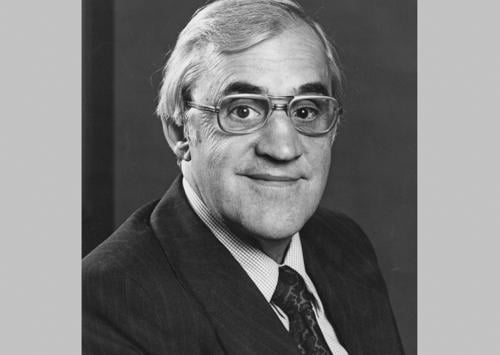
Sir Roy Shaw discusses the arts
Oct. 1, 1985 Secretary General of the British Arts Council Sir Roy Shaw and Studs Terkel discuss making the arts accessible for everyone and how the arts are a benefit to communities. Studs Terkel reads a quote from Kingsley Amos.
-
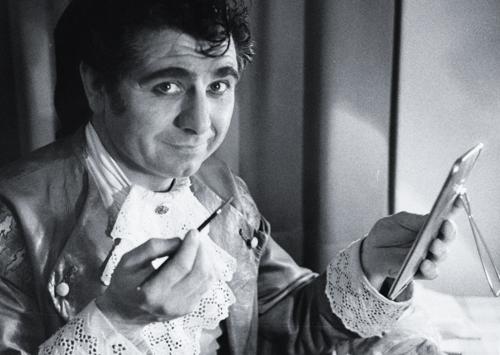
Sir Geraint Evans discusses his career in opera
Dec. 9, 1969 Sir Geraint Evans discusses his career in opera. He also discusses his life in Wales and the Welsh language.
-
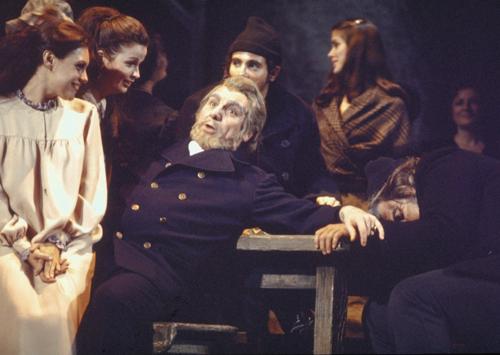
Sir Geraint Evans discusses his career as an operatic performer
Oct. 2, 1974 Sir Geraint Evans discusses opera and his time as a performer. Includes an in-depth discussion of the opera Peter Grimes.
-
Sir George Bolton of Bank of London discusses British economic depression
Sep. 23, 1970 Sir George Bolton discusses how the 1929 American stock market crash affected international banking and investment and how economy and culture relate to each other.
-
Sir Georg Solti talks with Studs Terkel
Feb. 1, 1995 Studs engages the former Chicago Symphony Orchestra conductor, Sir Georg Solti, in a wide-ranging conversation about his life and career. From his early studies in Budapest with Béla Bartók, his string of good-luck opportunities before, during, and after World War II, meeting Toscanini in Lucerne, and starting on top conducting in Frankfurt, London, and finally Chicago. He discusses his many German and European musical influences and contemporaries, and stresses the importance of education, arts funding, and hard work.
-
Sir Cedric Hardwicke discusses today's theatre
Oct. 14, 1960 According to Sir Cedric Hardwicke, plays are only fashionable in New York City even though people all around the country are hungry to see a good play. In England around Christmas time, Hardwicke says children are exposed to plays at an early age, unlike here in the states, where there aren't any plays geared toward children.*Please note: some sections have been edited out from the original recording due to copyright considerations
-
Singer-songwriters Florence Reece and Pete Seeger discuss writing songs
Mar. 17, 1978 Known for their songs about the working class, both Florence Reece and Pete Seeger talk about how they come about writing the lyrics to songs. Seeger says unbeknownst to them, anyone can write a song. Included within this interview, Seeger plays the banjo and Reece sings a song.
-
Singer Tony Bennett pays tribute to Irving Berlin
May. 10, 1989 On the eve of Irving Berlin's 101st birthday, both Studs Terkel and Tony Bennett talk about his album, "Bennett/Berlin," which is Bennett's tribute to Irving Berlin. When talking about his 90th album, Bennett explained none of Berlin's songs are dated. When asked about his own career, Bennett explained that he's learned more from his failures than he's learned from his successes.
-
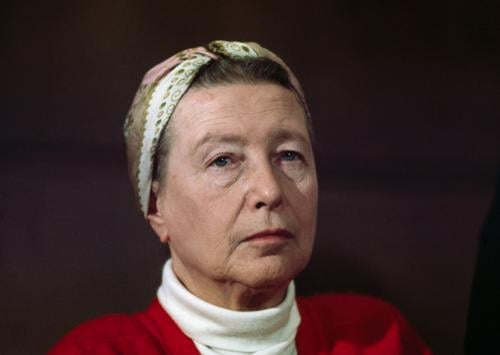
Simone de Beauvoir discusses the art of writing
May. 4, 1960 Studs Terkel interviews writer and artist Simone de Beauvoir at her home in Paris, France, where they discuss her family history, early writing career and artistic influences, individualism, and the creative commitment required to be a successful writer.
-
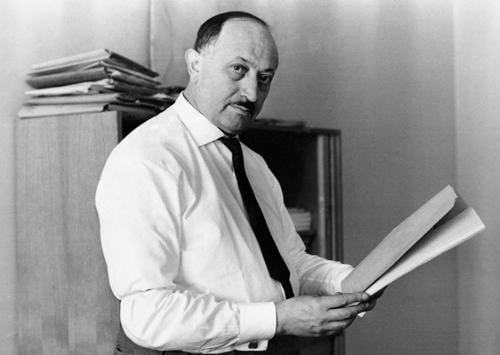
Simon Wiesenthal discusses World War II and The Sunflower
Mar. 12, 1976 Simon Wiesenthal discusses his advocacy work after surviving the Holocaust and the publication of The Sunflower in 1969.
-
Simon Estes, bass baritone opera singer, discusses his life and career in classical opera
Feb. 10, 1982 Simon Estes, bass-baritone opera singer, is in Chicago for four performances of George Fredric Handel's Oratorio "Saul." He talks with Studs about growing up, his education, and his career in classical music and opera. The following songs were removed due to copyright restrictions. "Symphony No.