Listen to New Voices on Studs Terkel our partnership with 826CHI-here! Read the Story


Showing 3526 - 3540 of 3671 results
-
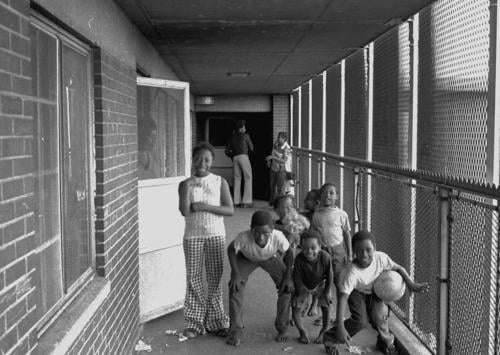
Alex Kotlowitz discusses his book "There Are No Children Here"
Feb. 28, 1991 Discussing the book "There Are No Children Here: The Story of Two Boys Growing up in the Other America" with author Alex Kotlowitz. Includes excerpt from WFMT doumentary, "Born to Live".
-

Albert John Luthuli discusses the struggle for democratic rule in South Africa
Mar. 1963 Albert John Luthuli, President of the African National Congress, Nobel Peace Prize winner, and Zulu Chief, discusses politics of South Africa. The interview includes discussions about his early life and education, and his teaching career, becoming chief of the Zulus, and working as the President of the African National Congress. He also explains his thoughts on peaceful methods of fighting against discrimination and apartheid in South Africa.
-
Albert Finney, Ronald Harwood in conversation with Studs Terkel
Mar. 7, 1991 Discussing the play "Another Time," with playwright Ronald Harwood and actor Albert Finney.
-
Albert Alvarez discusses his book "Beyond All This Fiddle: Essays, 1955-1967;" part 2
1972 Albert Alvarez, poet, writer and critic, discusses how technology advancement is changing society. Specifically he discusses war in general, the Holocaust and advancements in destructive weapons. "Beyond All This Fiddle: Essays, 1955-1967."
-
Albert Alvarez discusses his book "Beyond All This Fiddle: Essays, 1955-1967," [part 1] and Jack LaPorte [part 2]
1972 Part 2 of a discussion with Jack LaPorte while Studs was in England. Conversation cuts out at 05:06 and begins the coversation with Al Alvarez. Albert Alvarez, poet, writer and critic, discusses how technology advancement is changing society. He specifically discusses war in general, the Holocaust and advancements in destructive weapons. He speaks fondly of Sylvia Plath, and discusses his current book, "Beyond All This Fiddle: Essays, 1955-1967."
-
Alan Watts discusses Zen Buddhism
Dec. 1, 1960 Zen Buddhism, explains Watts, offers a change in one's basic consciousness and of one's basic existence. Zen is a way of liberation from the illusion of oneself. It's not just about the inside of one's self but it's about the outside, too. Zen is not something exotic. It needn't be imported from Japan, said Watts.
-
Alan Watts discusses and reads from his book "In My Own Way"
1970 In Alan Watts' autobiography, "In My Own Way," he explains that the song "Onward Christian Soldier" is militant, and of a militant religion, whereas Zen Buddhism is not militant at all. Watts also says that most of the troubles that go in the world are created by people that take life too seriously.
-
Alan Stone, Steven Larson and Judith Erickson, members of the Chicago Opera Theater, discuss the opera "Regina"
Mar. 29, 1982 Studs interviews Alan Stone, Steven Larson, and Judith Erickson about the opera, "Regina," playing at the Chicago Opera Theater. They describe the variety of music and dances in the opera. Stone, Larson, and Erickson name the cast and their roles and describe the characters. Each share how they came to be in theater. Stone explains how the company started. Larson describes the orchestra and the chorus. Erickson reads some of the lyrics of the aria, "The Best Thing of All," at the end of act one. Stone, Larson, and Erickson read various lines from the opera.
-
Alan Schneider discusses Samuel Beckett and Edward Albee
Stage director Alan Schneider talks about his work with playwrights, Samuel Beckett and Edward Albee. Plays include "Waiting for Godot," "A Delicate Balance," and "Whose Afraid of Virginia Woolf?"
-
Alan Lomax discusses collecting international folk music ; part 2
Jun. 30, 1959 This 1959 broadcast was recorded after Alan Lomax traveled Europe collecting folk music.
-
Alan Lomax discusses collecting international folk music ; part 1
Jun. 30, 1959 This 1959 broadcast was recorded after Alan Lomax traveled Europe collecting folk music.
-
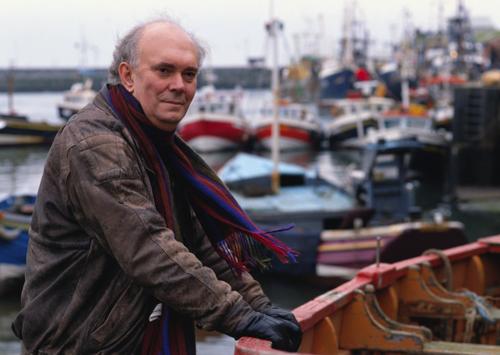
Alan Ayckbourn discusses his background and career
May. 27, 1994 His total love for the theatre began when Alan Ayckbourn worked backstage, and then worked the lights. He eventually began writing plays. To date, he has written 47 of them. Ayckbourn admits that his plays may be dark but he explained that he tries to add some humor into them, too. When writing a play, and without any notes, Ayckbourn said, he'll take four or five days to write out an entire play on a word processor.
-
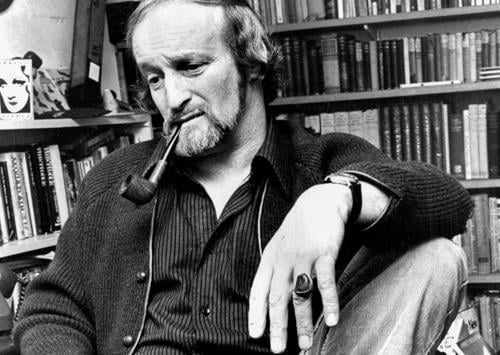
Al Alvarez discusses about literature and poetry
1980 Poet, critic and writer Al Alvarez talks about his personal experiences and how it interlaces with literature and poetry.
-
Aileen Ward discusses the biography "John Keats: The Making of a Poet"
1963 Author, professor, and John Keats biographer, Aileen Ward, discusses and reads from the biography “John Keats: The Making of a Poet.” Ward discusses Keats’ schooling, his relationship with Fanny Brawne, and Keats’ work in comparison to his contemporaries such as Percy Bysshe Shelley. Ward reads Keats’ 1818 poem entitled “Isabella, or the Pot of Basil.” Studs plays a recording of Ralph Richardson reading Keats’ 1819 poem “Ode on a Grecian Urn.”*Please note: some sections have been edited out from the original recording due to copyright considerations
-
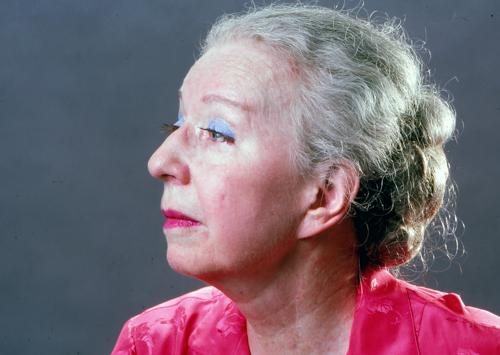
Agnes de Mille dicusses her career as a dancer and choreographer
May. 11, 1960 Dancer and choreographer Agnes de Mille discusses her career.