Listen to New Voices on Studs Terkel our partnership with 826CHI-here! Read the Story


Showing 3376 - 3390 of 3671 results
-
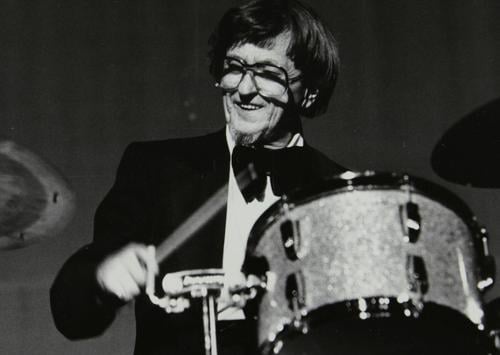
Barrett Deems discusses jazz drumming
Mar. 27, 1979 Barrett Deems discusses his upbringing where he began drumming at age 4 and recalls touring with Louis Armstrong and other musicians. He also talks about meeting drummers in Africa. Music is played throughout: "Flip"- Joe Venuti, "Shine"- Barrett Deems Hottet, "Now You Has Jazz"- Bing Crosby and Louis Armstrong (from "High Society"), "Muskrat Ramble"- Louis Armstrong, "Struttin' with Some Barbecue"- Louis Armstrong, "Slipped Disc"- Benny Goodman, "Stompin' at the Savoy"- Louis Armstrong. Music has been removed from this recording for copyright reasons.
-

Bard Lindeman and Dr. Quentin Young discuss medical care
Feb. 17, 1975 Bard Lindeman and Dr. Quentin Young discuss medical care, medical reform, medical insurance, and pharmaceutical companies. Includes a clip of an elderly woman talking about the price of drugs.
-
-
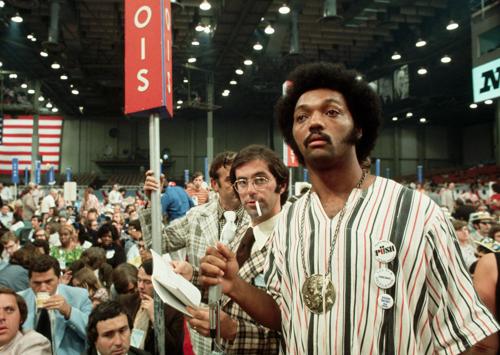
Barbara Reynolds discusses her book "Jesse Jackson, the Man, the Movement, the Myth"
May. 27, 1975 Discussing "Jesse Jackson, the Man, the Movement, the Myth" and interviewing the author Barbara Reynolds.
-
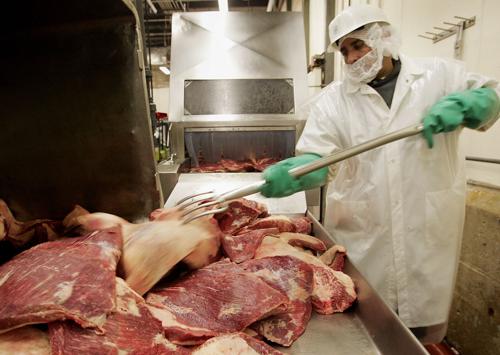
Barbara Kopple discusses her documentary "American Dream"
Mar. 20, 1992 Academy Award winning documentarian Barbara Kopple talks with Studs about her documentary "American Dream" and the battle fought and lost by union workers in Austin, Minnesota during the mid-80s. They set the backdrop in the small, tight-knit community that Hormel Foods had such a profound impact on, how the UFCW international union declined to support the local union, the gripping dynamics between family members who crossed picket lines, and the healing that occurred when the film was screened in the town several years later.
-
Barbara Kingsolver discusses her book "Holding the Line: Women in the Great Arizona Mine Strike of 1983"
Sep. 17, 1990 Since no men were allowed to picket against the Phelps Dodge Corp., Mexican American women showed up and according to Kingsolver’s book, “Holding the Line,” the picket lines were a brand new experience for the women. Some of the women had to get their husbands’ permission to picket. The group of women found their lives transformed not only with their cause but with new bonds of friendship from the other women.
-
Barbara Jefford discusses theater career ; part 2
Apr. 4, 1962 British actress Barbara Jefford of the Royal Shakespeare Company discusses her current roles of Lady Macbeth and St. Joan and her reflection of the female roles she portrayed over the years. Jefford was the youngest recipient of the Order of the British Empire for her services in theater and was best known for her role as Molly Bloom in the 1967 film Ulysses.
-
Barbara Jefford discusses her acting career ; part 1
Apr. 4, 1962 British actress Barbara Jefford of the Royal Shakespeare Company discusses her current roles of Lady Macbeth and St. Joan and her reflection of the female roles she portrayed over the years. Jefford was the youngest recipient of the Order of the British Empire for her services in theater and was best known for her role as Molly Bloom in the 1967 film Ulysses.
-
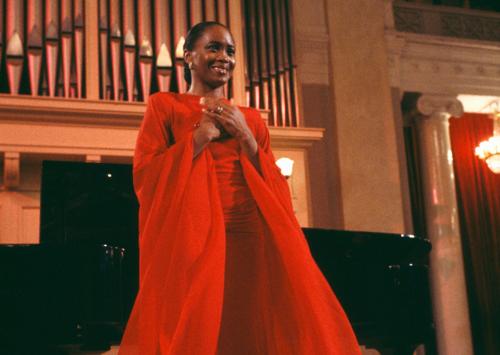
Barbara Hendricks discusses her career, music education, and opera
Apr. 3, 1978 Barbara Hendricks discusses her career, music education, and opera. Includes a clip of Jennie Tourel's voice.
-
Barbara Gaines in conversation with Studs Terkel
Feb. 6, 1992 Discussing a production of the play "Pericles," with Barbara Gaines, Director of the Shakespeare Repertory theater. Program includes an excerpt of a November 1962 interview with French actor, director and producer Jean Louis Barrault.
-
Barbara Ehrenreich discusses her book "Fear of Falling: The Inner Life of the Middle Class"
Sep. 18, 1989 Discussing the book "Fear of Falling: The Inner Life of the Middle Class" (published by Pantheon) with the author, political essayist Barbara Ehrenreich.
-
Barbara Cook discusses her musical Broadway career and shift into opera with her soprano voice
Feb. 13, 1981 Studs interviews Barbara Cook about her work in musical theater from Broadway to opera. Cook speaks about the composers and writers she has worked with. She explains some of her songs such as “Ice Cream” and “Grass Harp” and describes her first Carnegie concert. Studs quotes Leonard Bernstein, who speaks to Cook’s talent. Cook describes how she went from Broadway to opera and shares how she chooses the songs that she performs. She discusses the art of her talent. The musical pieces are removed from this edited version of the original recording.
-
Barbara Carroll discusses her life as a jazz pianist
Jul. 12, 1989 Barbara Carroll demonstrates her piano skills, discusses her career as a singer and musician, and shares her passion for jazz music.
-
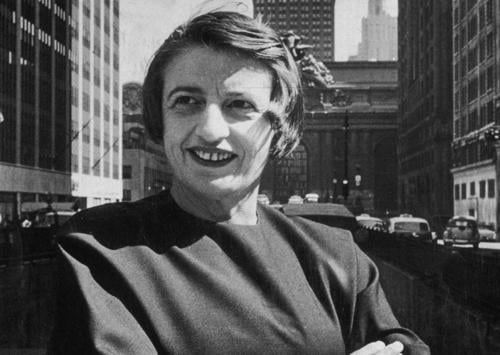
Barbara Branden discusses "The Passion of Ayn Rand"
Aug. 26, 1986 Discussing "The Passion of Ayn Rand" (published by Doubleday) with the author Barbara Branden.
-
Barbara Blaine, Ruth Graff, and Nina Polcyn-Moore discuss the Catholic Worker Movement
1986 Interviewing Catholic workers Barbara Blaine, Ruth Graff, and Nina Polcyn-Moore. They discuss their lives, Catholic worker houses, and poverty. Includes an interview with Dorothy Day. Content Warning: This conversation has the presence of outdated, biased, offensive language. Rather than remove this content, we present it in the context of twentieth-century social history to acknowledge and learn from its impact and to inspire awareness and discussion.