Listen to New Voices on Studs Terkel our partnership with 826CHI-here! Read the Story


Showing 2596 - 2610 of 3671 results
-
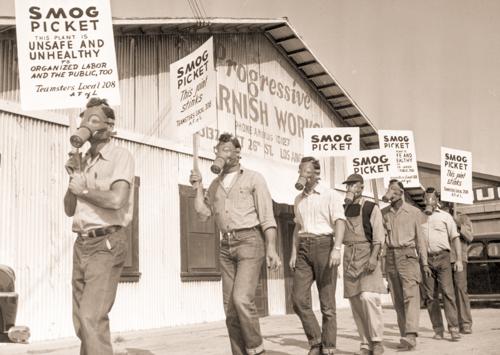
Dr. Bertram Carnow and Bob and Joan Ericksen discuss occupational illnesses and pollution
Nov. 21, 1974 Both Bob and Joan Ericksen ask why is a school being built not only by two highways but right next door to a paint factory. They contend that the paint fumes can't be good for anyone to breath. Instead of asking their patients where they work, Dr. Carnow believes more doctors need to ask, "What do you do?", to determine if they're working with any hazardous materials that may harm their health.
-

Dr. Beatrice Tucker, Sheri Daniels, and Barbara Brasa discuss issues of training and legality in the midwifery profession
Mar. 15, 1978 CONTENT WARNING: This conversation has the presence of outdated, biased, offensive language. Rather than remove this content, we present it in the context of twentieth-century social history to acknowledge and learn from its impact and to inspire awareness and discussion.
-

Dr. Aviva Weissman discusses Planned Parenthood and the use of contraception
Mar. 24, 1966 Dr. Aviva Weissman discusses the emergence of family planning services in England and the importance of women having access to contraception and other services. Weissman discusses her experience with families who have benefitted from the services of Planned Parenthood.
-
-
Dr. Alan Solem and Dr. John Engel discuss their upcoming research trip to Australia
Jun. 9, 1976 Dr. Alan Solem, a malacologist, and Dr. John Engle, a bryologist, from the Field Museum discuss a research trip they plan to take to Australia. The two doctors also discuss climate and ecology in the Americas and in Australia. Dr. Solem will be researching land snails and Dr. Engel moss and liverworts.
-

Dr Eugene Mindel discusses the book "They Grow in Silence: The Deaf Child and His Family"
1970 Dr. Eugene Mindel, child psychologist and author, discusses his book, "They Grow in Silence: The Deaf Child and His Family,". Dr. Mindel and Studs talk about deaf children and how they learn to communicate without the ability to hear or speak. Studs reads an excerpt from the book about a deaf person feeling locked into themselves. Studs and Dr. Mindel talk about the the book "In this sign" by Joanne Greenberg a novel that portrays the isolation and loneliness of the deaf couple and the struggle of their hearing daughter.
-
Douglas W. Druick discusses the book "Odilon Redon: Prince of Dreams, 1840-1916"
Aug. 30, 1994 Douglas W. Druick, scholar and curator of the Art Institute of Chicago, discusses his book "Odilon Redon: Prince of Dreams, 1840-1916." The interview explores Redon's life and art work, including his techniques he developed because of the time period he lived in.
-
Douglas Turner Ward discusses the play “The River Niger”
Dec. 4, 1973 Theater director Douglas Turner Ward talks with Studs Terkel about the play "The River Niger." Further discussion is had about the play's writer, Joseph Walker, as well as the story and characters, and the play's connection to the African-American community.
-
Douglas Dowd discusses his book "Blues For America: A Critique, A Lament, and Some Memories"
May. 5, 1997 Author Douglas Dowd discusses topics from his book "Blues For America: A Critique, A Lament, and Some Memories," including war, religion, and American history.
-

Dotson Rader discusses his book "I ain't marchin'anymore" with Studs Terkel
Feb. 26, 1971 The program starts with a short clip of Studs Terkel interviewing Peggy Terry talking about The Great Depression and American propaganda during Vietnam War. After that clip. Dotson Rader starts to talk about his book "I ain't marchin' anymore"
-
Dorothy Parker discusses her plays and the state of literature
Feb. 6, 1959 Dorothy Parker’s thoughts as a critic and writer on the state of American literature.
-
Dorothy and Frank Koehl discuss China's cultural revolution and the impact it had on society and politics in China
Aug. 2, 1971 Studs interview with Dorothy and Frank Koehl about the time they spent doing research in China with the Committee of Concerned Asian Scholars. The interview starts with workers singing followed by a short musical from an Asian flute. They discuss the change in China's politics and society after the revolution. Specific topics in the interview include education, women's liberation, the arts, and medical care in China with some comparisons to Korea.
-
Doris May Lessing discusses the inspiration behind "The Four-Gated City"
Jun. 10, 1969 Doris May Lessing discusses the inspiration behind "The Four-Gated City", her thoughts about science and humanity, and her predictions for the future.
-
Doris Lessing and Arnold Wesker discuss this primitive society ; part 2
Dorris Lessing says in this society, we are all savages. According to Lessing, in 10 years, millions will die of starvation. Arnold Wesker says we live in a society of chaos and as a society, our end goal is produce something to deal with and eliminate the chaos.
-
Doris Kearns Goodwin talks about her book "Lyndon Johnson and the American Dream"
1976 Doris Kearns Goodwin talks about her book and her relationship with President Johnson.