Listen to New Voices on Studs Terkel our partnership with 826CHI-here! Read the Story


-

Four peace marchers discuss The Continental Walk
Sam Day, Susan Laflamme, Bernie Noven, and Seldon Osbourne are all participants of The Continental Walk for disarmament and social justice. They're taking part in the walk to make the public aware of how much money is put into military and nuclear weapons. As a group, they feel strongly about not wanting people's lives and their worlds to blow up around them.*Please note: some sections have been edited out from the original recording due to copyright considerations
-
Former prisoners, Bill "Popeye" Stuart and Lowell Fentress discuss their time in prison
Apr. 19, 1979 After having spent 40 years and 27 years, respectively, both Bill “Popeye” Stuart and Lowell Fentress first talk about getting drunk on seeing a living tree in person, upon their release from prison. Both Stuart and Fentress agree there can be no rehabilitation of an inmate in prison while the prison culture is nothing but repression. They also talk about crooked guards that traffic drugs and about the gangs taking over the prisons.
-
Former President Jimmy Carter and Rosalynn Carter discuss their book "Everything To Gain"
Jun. 5, 1987 From the book, “Everything to Gain: Making the Most of the Rest of Your Life”, in a country with such great wealth, to see so many (people) without a place to live is devastating, according to Rosalynn Carter, and President Jimmy Carter said it was embarrassing. Their backgrounds, their time in the White House, the homeless and Habitat for Humanity are some of the topics covered in the Carters’ book. At the time when the Carters started to write this book, they had been married for 40 years. Mr. Carter revealed that writing this book together was the worst experience they shared.
-
Former halfway house residents discuss halfway houses
Oct. 16, 1973 Discussion about halfway houses with a panel of former halfway house residents.
-
Folk singer Mary Travers talks about music and her career
Nov. 18, 1976 Folk singer Mary Travers - of the group Peter, Paul & Mary - talks about some of the artists that inspired her, like Pete Seeger and The Weavers.*Please note: some sections have been edited out from the original recording due to copyright considerations
-
-
-
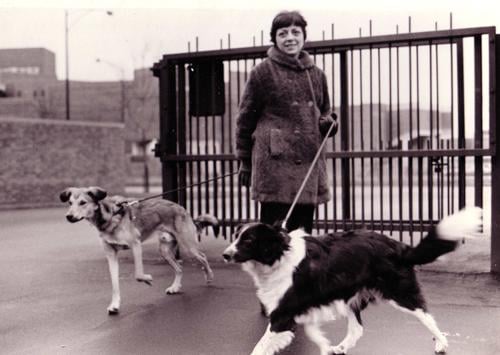
Florence Scala discusses her friendship with Jessie Binford of Hull House
Jul. 18, 1966 Even after Jessie Binford left Hull House due to its demolition, she corresponded with Florence Scala through hand-written letters. Scala learned that Binford was a country girl who lived in the big city of Chicago. Scala reads some of her letters from Binford. There is also an excerpt of Jessie Binford.
-
Florence Scala and Studs Terkel on the site of Hull House as it is dismantled ; part 2
Jul. 9, 1963 The tour continues on Maxell and Halsted Streets. Anita is sad to be leaving a place where she was born & raised. Mrs. Belmont said the mayor promised housing but they're currently living in a hotel. A 17-year resident of Hull House, Mrs. Morales says there will never be another place like it. The general feeling from everyone was that of sadness in having to leave their homes and businesses.
-
Florence Scala and Studs Terkel on the site of Hull House as it is dismantled ; part 1
Jul. 9, 1963 Florence Scala gives Studs Terkel a guided tour of the area around Hull House. Terkel talks to people in the neighborhood. Mr. Briata spoke of how he would go to Hull House once a week to take a bath. Mrs. Picardi liked the area because it had good schools for her kids. Together they visit Scala's favorite butcher, who will have to relocate his business after 40 years.
-
-

Flemming Flindt and company discusses "Miraculous Mandarin," a performance of the Royal Danish Ballet
Oct. 1, 1968 Studs interviews Flemming Flindt, director, choreographer, and dancer of Royal Danish Ballet, in Denmark during a practice session. They discuss the "Miraculous Mandarin" ballet and the history behind it. Studs asks about the history of ballet in Denmark and the history of the Royal Danish Ballet. Flindt describes the choreography and scores of the ballet. They discuss how technology has changed the production and audiences of ballet.
-
-

First Lieutenant Louis Font discusses life at West Point Military Academy; part 2
1970 Lieutenant Louis Font discusses daily life at West Point Military Academy and being a conscientious objector; part 2.
-

First Lieutenant Louis Font discusses how he became a conscientious objector as a West Point Military Academy graduate; part 1
1970 First Lieutenant Louis Font discusses the events and thought process that led to becoming conscientious objector to the Vietnam War as a recent West Point Military Academy graduate. He also talks about daily life at West Point; part 1.