Listen to New Voices on Studs Terkel our partnership with 826CHI-here! Read the Story


Showing 46 - 60 of 429 results
-
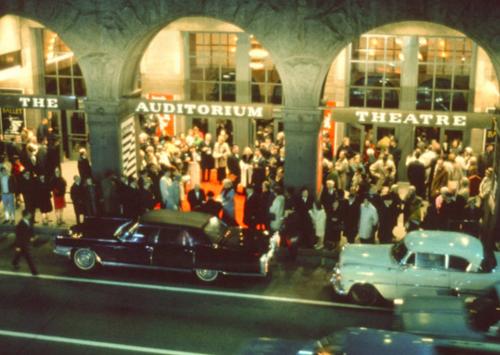
Studs Terkel discusses the Auditorium Theater with friends ; part 2
Jun. 1, 1967 Studs Terkel sits down with three guests who convey their memories of the Auditorium Theater in Chicago. Mary Garden, John Glickman and architect Harry Weese all agree that the theater's acoustics were extraordinary and there wasn't a bad seat in the house. Weese helped Chicago rediscover the Auditorium.
-

Studs Terkel discusses George Bernard Shaw with Stanley Weintraub
1970 Studs discusses the life and work of Irish playwright, critic, and political activist George Bernard Shaw with historian and biographer Stanley Weintraub. The focus of the interview is Weintraub's book, Journey to Heartbreak: The Crucible Years of Bernard Shaw 1914-1918.*Please note: some sections have been edited out from the original recording due to copyright considerations
-
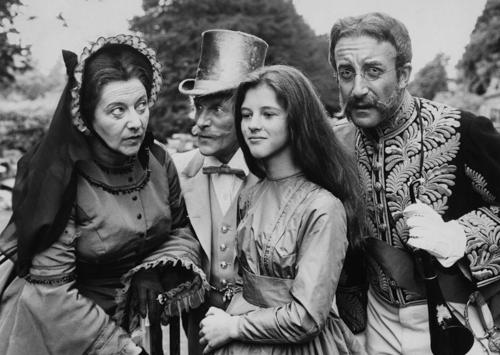
Studs Terkel discusses childhood, imaginiation, science, social history, politics, medicine and theater with Jonathan Miller in London, England
Jonathan Miller reminisces about his childhood in Regent Park, London and offers his opinion on philosophy and the changing English class structure with the loss of the Indian empire. His remake of "Alice in Wonderland" for BBC 1 is reviewed and he states he is most interested in the human imagination.
-
Studs Terkel comments and presents the Sophiatown Church of Christ the King ; part 3
1963 Presenting performances at the Sophiatown Church of Christ the King while Studs was in South Africa. They talked how they brought folk music back to South Africa.
-
Studs Terkel comments and presents the Sophiatown Church of Christ the King ; part 2
1963 Presenting performances at the Sophiatown Church of Christ the King while Studs was in South Africa. They talked how they brought folk music back to South Africa.
-

Studs Terkel comments and presents the Sophiatown Church of Christ the King ; part 1
1963 Presenting performances at the Sophiatown Church of Christ the King while Studs was in South Africa. They talked how they brought folk music back to South Africa.
-
Steppenwolf Theatre members discuss the play "The Caretaker”
Sep. 24, 1985 Interviewing producer Harold Pinter and actors Jeff Perry and Gary Sinise. They discuss their careers and present excerpts from Steppenwolf Theatre’s production “The Caretaker.”
-
Stanley Elkin and Frank Galati discuss "The Dick Gibson Show"
Nov. 9, 1979 Novelist Stanley Elkin has come into town to see Frank Galati's adaptation of Elkin's book, "The Dick Gibson Show." The book has a lot to do with how radio has become a talk show. Various cast members re-enact scenes from "The Dick Gibson Show."
-
Stanislaw Pchenikov and Valentin Nikolaevich Pluchek discuss theater with Studs Terkel ; part 2
Jan. 19, 1962 Studs Terkel discusses Russian theater with Stanislaw Pchenikov and Theater director Valentin Nikolaevich Pluchek.
-
Soviet intellectuals discuss Soviet arts and culture
May. 28, 1962 Soviet intellectuals Tamara Mamedova, Nicolai Pogodin, and Anatol Safronov talk with Studs Terkel about their work with the Institute for Soviet-American Relations (U.S.) and Soviet arts and culture.
-
Skip Kennon and David Rounds discuss the play "Herringbone"
Oct. 21, 1981 Skip Kennon wrote the music for "Herringbone", a one-man musical where all ten parts are played by the actor David Rounds. Madness, depression and schizophrenia are discussed as possible themes of the play.
-
Sir Cedric Hardwicke discusses today's theatre
Oct. 14, 1960 According to Sir Cedric Hardwicke, plays are only fashionable in New York City even though people all around the country are hungry to see a good play. In England around Christmas time, Hardwicke says children are exposed to plays at an early age, unlike here in the states, where there aren't any plays geared toward children.*Please note: some sections have been edited out from the original recording due to copyright considerations
-
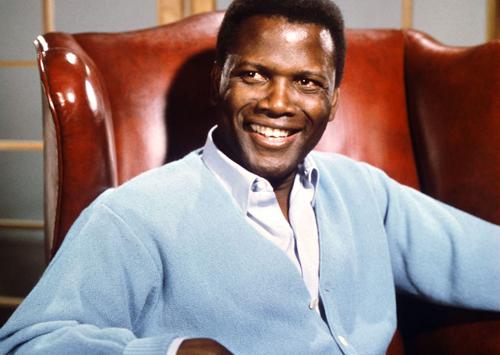
Sidney Poitier discusses his book "This Life"
Jun. 13, 1980 Actor and director Sidney Poitier offers his reflections about his autobiographical memoir, "This Life". Poitier explains how he never had ambitions to be an actor and yet he stumbled into acting when looking through the clasisfied ads. There's a story about his agent trying to settle a negotiation on Poitier's behalf. Poitier's agent told the others involved that Poitier was offered a film in Hollywood. Believing it was a cheap ploy, the agent was told to tell Poitier to go onto Hollywood, and the rest is history for Sidney Poitier.
-
Shelley Berman reads from and discusses his role in "The Value of Names"
Apr. 4, 1983 In the play, "The Value of Names," Shelley Berman plays Benny Silverman, a role which he says is him, an actor from the Hollywood black list. Berman said being in Chicago, acting the role and working with the cast has been THE best experience of his life and when the show closes, it will be the saddest day of his life. The director of the play, Sandy Shinner, said she knew of the Hollywood black list but didn't know about all the personal stories. There is an excerpt of Vic Navasky.
-
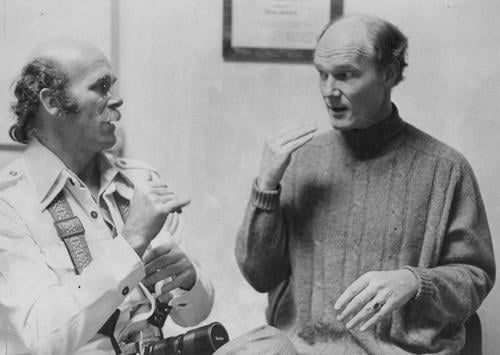
Several members of the cast of The Theater for the Deaf discuss their production ; Couples with a brief interview with John Cage and "Music for Carillon" is played.
Apr. 23, 1968 Rilla Bergman, Lou Fant, and Bill Reese converse with Studs about The National Theater for the Deaf and the production they are presenting. Two of the actors Ms. Bergman and Mr. Reese discuss what it took to learn, as hearing people, the best ways to express themselves with sign language. They all talk about how much more expressive the actors in the Deaf Theater have to be to convey the message of the piece they are presenting.