Listen to New Voices on Studs Terkel our partnership with 826CHI-here! Read the Story


Showing 121 - 135 of 185 results
-
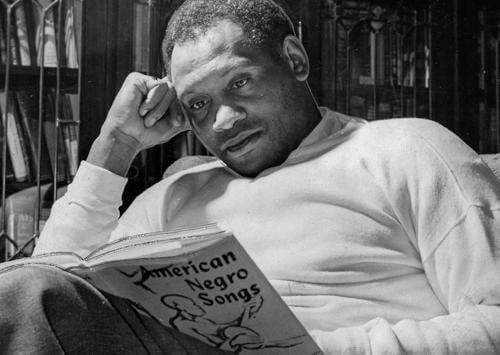
Gathering of friends discussing Paul Robeson
May. 8, 1970 Recorded live on Chicago's South Side. Robeson is ill at the time of recording. Speakers: Earl Dickerson, Etta Moten Barnett, Judge Sidney Jones, J. Mayo "Ink" Williams, Joan Brown (possibly Abena Joan Brown), Charles Hamilton, Margaret Burroughs, [John Gray's sister], [Stevens?]
-
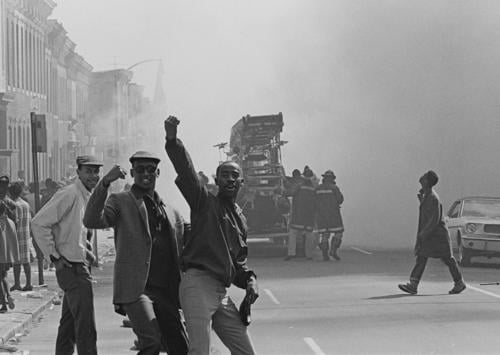
Garrett O'Connor discusses "Reflections in the rubble."
Feb. 1, 1970 Psychiatrist Dr. Garrett O'Connor discusses his article "Reflections in the rubble: some thoughts in the aftermath of civil disorder." Topics of conversation include his experiences working in community clinics with blue collar workers and African Americans; the ways that poverty, racism, and classism are maintained by the American economy; the Martin Luther King, Jr.
-

Gage Park residents discuss race relations and racial integration at Gage Park High School ; part 2
Aug. 4, 1970 A diverse panel of Gage Park residents discuss racial integration at Gage Park High School, neighborhood change, and race relations in general.
-
Gage Park residents discuss race relations and racial integration at Gage Park High School ; part 1
Aug. 4, 1970 A diverse panel of Gage Park residents discuss racial integration at Gage Park High School, neighborhood change, and race relations in general.
-
From the Wax Museum - 009 - South African writer Alan Paton discusses life in South Africa
1963 South African writer Alan Paton likened the white South African people to the ostrich. Paton said the ostrich keeps its head in the sand, and some people do the same in South Africa, too. With their heads in the sand, they don’t see any problems existing. Paton said he can not understand his country’s government. He can’t understand why the Black people are not allowed to own homes. Because of the government, Paton also talks about having to be careful about what he writes and he says the Americans are very lucky to have their U.S. Constitution.
-
Fred Freed discusses the atom bomb
Author Fred Freed discusses the history of the atom bomb, its impact on the world, and the scientists involved in its making. He also touches on Japan during World War II and the bombings of Hiroshima and Nagasaki.
-
Fred Christy and Frank Carney discuss life in Chicago ; part 1
1968 Fred Christy and Frank Carney discuss life, family, youth, and demographics in Chicago. Includes Studs Terkel interviewing a group of teenagers who call themselves the D.J.'s. about their life and ambitions.
-
Frank Carney, Susie Gelaga, Linda Gelaga, Molly Gelaga and Fred Christy discuss the youth of Chicago ; part 2
1968 Interviewing Frank Carney, Susie Gelaga, Linda (daughter-in-law), Molly (daughter), and Fred Christy. They discuss the youth in Chicago, their own life experiences, and wants.
-
Frank Carney, Susie Gelaga, Linda Gelaga, Molly Gelaga and Fred Christy discuss the youth in Chicago ; part 1
1968 Interviewing Frank Carney, Susie Gelaga, Linda (daughter-in-law), Molly (daughter), and Fred Christy. They discuss the youth of Chicago and their own life experiences.
-
Excerpts from the Division Street recordings Oral Histories, regarding race, religion and humanity
1970 Studs presents excerpts from the Division Street recordings, regarding race, religion and humanity.
-

Erich Lüth talks with Studs Terkel on life under Hitler and its aftermath ; part 2
1968 Studs continues his interview with Erich Luth in Hamburg, Germany. The audio breaks at 25:23 and continues on a Sat at 25:28 till its conclusion at 35:43. Erich Luth conveys stories of humanity by both German prisoners towards Russian prisoners whose treatment was dictated by the Nazi party to not offer any winter clothing or shoes to provide comfort. The German laborers provided a human solidarity that brought them food, clothes, and soap.
-
Ellen Afterman, Clinton Sanders, and Spellman Young discuss the drug epidemic
1980 Ellen Afterman and Clinton Sanders (authors of "Drugs and Your Life") and Spellman Young discuss drug use through the lenses of race, sex, and socioeconomic status.
-
Edward W. Said discusses Palestine, history of and struggles in the Middle East
Oct. 1, 1984 Edward W. Said talks about the importance of language in shifting perceptions of Middle Eastern people, refutes some opinions about Palestine, identities, and overlapping Eastern and Western cultures.
-
Edward Scobie discusses his book "Black Britannia"
Jan. 17, 1973 There is a great deal of history to be found in Edward Scobie's book, "Black Britannia: A History of Blacks in Britain," including description of the anti-Black attitude of some of the English people.*Please note: some sections have been edited out from the original recording due to copyright considerations
-
Edward Crowther discusses racism and oppression in South Africa
Bishop C. Edward Crowther discusses racism and oppression in South Africa. His commentary also touches on economic issues, labor policy, and violence as a way of communication.