Listen to New Voices on Studs Terkel our partnership with 826CHI-here! Read the Story


Showing 181 - 195 of 558 results
-

Mazatl Galindo and Alejandro Galindo discuss traditional and folk music from South and Central America
Nov. 23, 1982 Chilean folk songs have been removed due to copyright restrictions: "If We Are Americans;" a flute song for the harvest celebration; the song "Jacinto Cenobio;" song ["Winos Poinas"]; a Mexican flute song; the song "La Fiesta De San Benito;" the song "La Pulque;" and the song "El Condor Pasa." but are discussed within the program.
-
Maya Angelou discusses her early life and African American culture and people
Apr. 1, 1960 Angelou discusses: her early life; her international travels; dancing; blues and jazz music; and the book "Youngblood" by John Oliver Killens. In this program "In the Evening (When the Sun Goes Down)" and "Joe Turner No. 2 (Blues of 1892)" by Big Bill Broonzy, "I Ain't Gonna Pick No More Cotton" by Sam Lightnin' Hopkins is played, as well as other musical selections.
-
Maya Angelou discusses her early life and African American culture and people
Apr. 1, 1960 Angelou discusses: her early life; her international travels; dancing; blues and jazz music; and the book "Youngblood" by John Oliver Killens. Musical selections have been removed due to copyright.
-
Maya Angelou and Tom Wicker discuss life and culture in the U.S. South
Jul. 1, 1979 Poet Maya Angelou and journalist Tom Wicker discuss life in the U.S. South and how the region’s history has shaped its culture. Topics of discussion include social dynamics and race in the South, the concept of “home” and what it means to return to one’s roots, and religion in the South. Angelou reads excerpts of her poetry, including “Still I Rise” and “Phenomenal Woman,” and shares spiritual songs from her childhood.
-
Max Morath discusses his career and jazz music
Jun. 18, 1970 Max Morath discusses his career, jazz music, and history.
-
Maurice Weddington talks his music career as a renowned composer in Europe
Mar. 24, 1983 Self-taught composer Maurice Weddington talks about his music career from his early years when he was raised on the West Side of Chicago to his performances around Western Europe.
-
Mattiwilda Dobbs discusses her career as coloratura soprano opera singer
Mar. 14, 1975 Studs interview with Mattiwilda Dobbs, first female and black to perform at La Scala. Dobbs describes her musical beginning as a child within a musical family in Atlanta, Georgia. She explains her training and professional background with various opera houses and theaters. The musical pieces are removed from this edited version of the original recording.
-
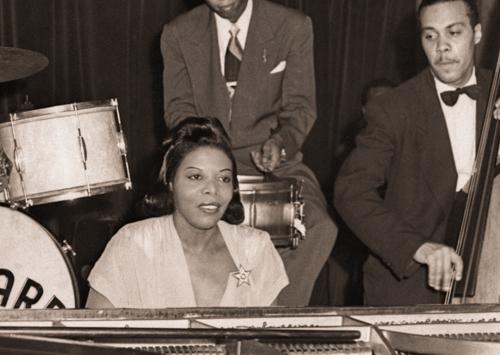
Mary Lou Williams and her manager Father Peter O'Brien discuss Williams' career
Sep. 15, 1978 Studs Terkel interviews Mary Lou Williams and her manager, Father Peter O'Brien. They discuss music, musicians, and instruments. Some clips of piano music playing at the end.
-
Mary Collins discusses her husband, Lee Collins, autobiography “Oh, Didn’t He Ramble” and his career as a Jazz musician
Sep. 3, 1974 Studs interviews Mary Collins about her husband, Lee Collins. They discuss the book that she and Lee wrote together until his death in 1960. Mary shares interesting stories of Lee’s experiences when he toured. She and Studs reflect on the other artists that Lee Collins worked with and those that influenced his music. Mary shares the story of how she and Lee reconnected in Chicago. She explains how Lee’s depression because of his health led to his attempted suicide and the horrible way he was treated at the psychiatric hospital.
-
Martina Arroyo discusses her opera career ; part 2
Aug. 1969 When the announcement was made, to let the audience know the opera singer they came to see would not be performing but that Martina Arroyo would be singing the part of Aida, Arroyo recalls that you could hear the crowd groan all the way in Chicago. Arroyo talks about singing in the operas. She also talks about even though she may have a starring role in the opera, the show is not hers, but rather everyone in the company works hard to put out a good production.
-
Martina Arroyo discusses her opera career ; part 1
Aug. 1969 When the announcement was made, to let the audience know the opera singer they came to see would not be performing but that Martina Arroyo would be singing the part of Aida, Arroyo recalls that you could hear the crowd groan all the way in Chicago. Arroyo talks about singing in the operas. She also talks about even though she may have a starring role in the opera, the show is not hers, but rather everyone in the company works hard to put out a good production.
-
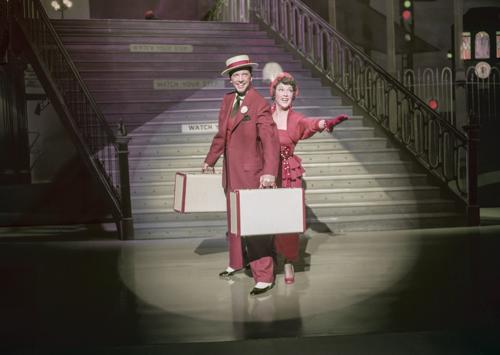
Martin Gottfried discusses his book "Broadway Musicals"
Nov. 15, 1979 Martin Gottfried discusses his book "Broadway Musicals" and the history of the musicals by evaluating the different big name composers, lyricists, and directors of Broadway.
-
Martin Duberman discusses his book "Paul Robeson"
Feb. 28, 1989 Martin Duberman, historian and biographer, discusses his latest work which focuses on the singer, actor, and political activist Paul Robeson. Robeson was known for his performance in Showboat and Emperor Jones.
-
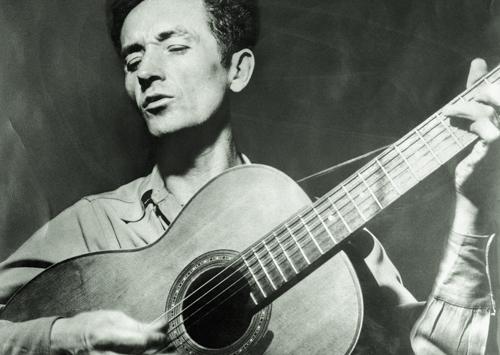
Marjorie Guthrie discusses Huntington's disease and Woody Guthrie
Marjorie Guthie, the widow of folk singer of Woody Guthrie is in town for a fundraiser, raising money for Huntington's disease. Woody Guthrie died of the disease, which was passed down from his mother. Marjorie Guthrie also reflects on her courtship with Woody and she also talks about his music.
-
Marilyn Horne and Henry Lewis discuss their careers and opera music, part 1
Jun. 1, 1966 Marilyn Horne and Henry Lewis discuss their careers, opera music, and their operatic roles. They also discuss cross-gender roles in opera and Marilyn Horne's role as Romeo in the opera "Capuleti e i Montecchi" by Vincenzo Bellini. Includes clips of Marilyn Horne singing an opera song at the beginning, an opera song by Gioachino Rossini, and a song from Charles Gounod's opera "Sapho."*Please note: some sections have been edited out from the original recording due to copyright considerations