Listen to New Voices on Studs Terkel our partnership with 826CHI-here! Read the Story


Showing 166 - 180 of 512 results
-

John Griffin discusses his book "The Devil Rides Outside"
Jan. 1, 1960 While inside a monastery, John Griffin wrote his book, "The Devil Rides Outside". Griffin talks about the first half of his book - life inside of a monastery. He also talks about how hearing music influences his writing.*Please note: some sections have been edited out from the original recording due to copyright considerations
-
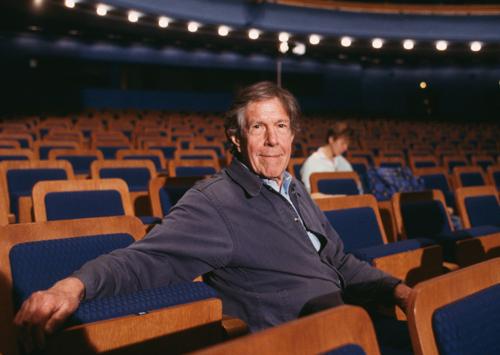
John Cage discusses his music, life, influences, and career
Aug. 13, 1992 John Cage discusses his music, life, influences, and career. Rebroadcast of an interview with John Cage to celebrate his life and what would have been soon his 80th birthday. Includes a clip of John Cage reading/ telling a story in 1969 to Studs Terkel.
-
Joan Kufrin discusses her book "Uncommon Women"
Mar. 21, 1982 Discussing the book, 'Uncommon Women', published in 1981. The book chronicles the lives of Gwendolyn Brooks, Julie Harris, Sarah Caldwell, Maria Tallchief, Alice Neel, Mary McCarthy, Eugenia Zukerman, Roberta Peters, and Mary Lou Williams, discussing the impressive things they have accomplished in their respective professions ranging from poetry, to opera, to literature, and art and abstraction.
-
Joan Didion reads from and discusses her novel "A Book of Common Prayer"
Apr. 7, 1977 Joan Didion describes the main characters Charlotte and Charlotte's ex-husbands, Warren and Leonard of her novel, "A Book of Common Prayer". Didion said she based her novel from the song, "If I Ever Cease to Love You". A fan of Didion, who after reading her novel, made the comparison and asked Didion, "So you knew my ex-husband, too?"
-
Jimmy Breslin discusses his book “The Gang That Couldn't Shoot Straight” ; part 2
Jimmy Breslin discusses and reads excerpts from “The Gang That Couldn't Shoot Straight,” his novel about a Brooklyn Mafia boss.
-
Jimmy Breslin discusses his book “The Gang That Couldn't Shoot Straight” ; part 1
Jimmy Breslin discusses and reads excerpts from “The Gang That Couldn't Shoot Straight,” his novel about a Brooklyn Mafia boss. Content Warning: This conversation has the presence of outdated, biased, offensive language. Rather than remove this content, we present it in the context of twentieth-century social history to acknowledge and learn from its impact and to inspire awareness and discussion.
-
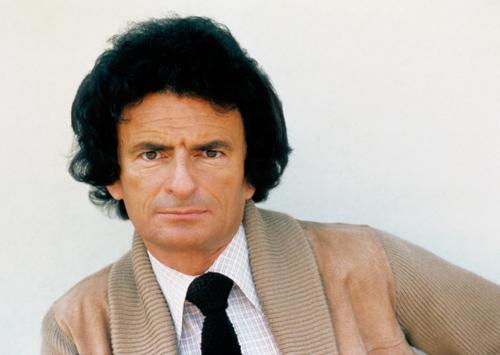
Jerzy Kosinski discusses his book "Being There"
1970 Jerzy Kosinski discusses his book "Being There". Includes Studs Terkel reading from Kosinski's book "Being There".
-
Jean Shepherd discusses his book "In God We Trust: All Others Pay Cash"
Dec. 1, 1966 Jean Shepherd discusses his book "In God We Trust: All Others Pay Cash." Includes earlier clips of Shepherd speaking and excerpts of him reading from the book.*Please note: some sections have been edited out from the original recording due to copyright considerations
-
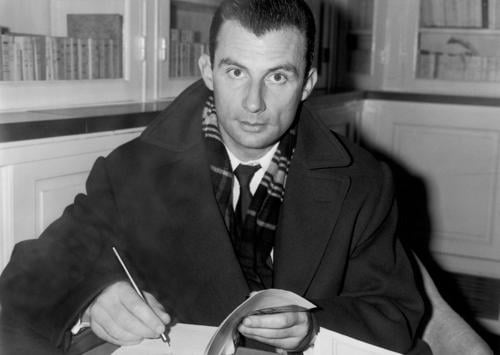
Jean Cau discusses his book "La pitié de Dieu" ; part 2
Nov. 1, 1962 When asked how he found time to write his book, Jean Cau said he took vacation time from his full time job. Cau was also asked if he wrote his book using a typewriter and Cau explained that he did all his writing with his own penmanship because he hated machinery, like the typewriter. In conclusion, Cau said he was writing a play about the Algerian War and its paratroopers. The play he finished writing was about the life and death of Adolf HiItler.
-
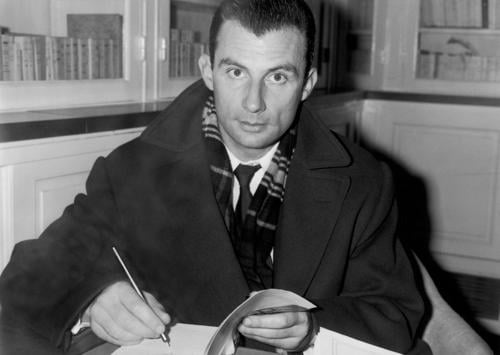
Jean Cau discusses his book "La pitié de Dieu" ; part 1
Nov. 1, 1962 Through an interpreter, Jean Cau discusses his book "La pitié de Dieu", or translated, "The Mercy of God". Cau's book is about four prisoners and their interactions with one another. Cau explained, in one way or another, with a reference to Kafka, we are all condemned and it will be a great surprise to all to learn what we are guilty of.
-
Jean Auel discusses her novel, "The Clan of the Cave Bear"
Sep. 10, 1980 Jean Auel discusses her novel, "The Clan of the Cave Bear," including the anthropological research that informed her writing, feminism in her main character, Ayla, and the book's themes of cooperation, adaptation, tribal memory, and reverence for life. Includes excerpts from the book and recordings of pygmy music made by anthropologist Colin Turnbull.
-
-
James T. Farrell on his book "The Silence of History" as it is part of a new cycle of books
Mar. 9, 1963 Discusses future literary plans as well as past works (the Studs Lonigan trilogy in particular). Also, briefly on Chicago.
-
James Mills discusses his book "Report to the Commissioner," his newest publication
Oct. 3, 1972 James Mills, a novelist and journalist, talks to Studs about his book "Report to the Commissioner". Mr. Mills and Studs discuss the story and Mr. Mills goes in depth into the process of police detectives working a case. Studs plays an excerpt of a Chicago policeman talking about working on the tactical squad on the police force. The policeman tells of how they go into a neighborhood as civilians to stop crime.
-
James Graham-Lujan discusses the works of Federico Garcia Lorca; part 2
1964 James Graham-Lujan concludes by talking about Garcia Lorca's most celebrated plays, Blood Wedding, Yerma, and The House of Bernarda Alba. Tragedy is brought about due to the passion of a woman in each of the plays.