Listen to New Voices on Studs Terkel our partnership with 826CHI-here! Read the Story


Showing 91 - 105 of 314 results
-

Lois Wille discusses the many problems at Crane High School
Dec. 14, 1965 Lois Wille caused an uproar with the story she wrote for the Chicago Daily News, "Inside a Slum High School." According to Wille's investigation, a lack of money, over crowding of students, lights that don't work in the school and no books were among some of the problems that Wille found at Crane High School. Students also had a pessimistic view, explained Wille, as she found students didn't believe the teachers and counselors cared what theyd do after they got out of high school but they just wanted them to get out and leave Crane.
-
-
Lily (Rose Rigsby) Lowell and two men from St. Timothy's talk with Studs Terkel
1966 Discussion of Division Street: America [Continuation of interview at the end of 1925659-3-1]
-
Leonard Dubi, Denise Ponzetti and Mary Lou Wolff discuss the Citizen's Action Program and community activism in Chicago
1967 Father Leonard Dubi and community advocates Denise Ponzetti and Mary Lou Wolff discuss the Citizen's Action Program and community activism in Chicago.
-
Leon Depres discusses discrimination, corruption, and segregation in Chicago
Feb. 3, 1975 Interviewing lawyer and alderman, Leon Despres. Depres discusses Richard Daley’s time as mayor of Chicago and political events during his terms. Content Warning: This conversation includes racially and/or culturally derogatory language and/or negative depictions of Black and Indigenous people of color, women, and LGBTQI+ individuals. Rather than remove this content, we present it in the context of twentieth-century social history to acknowledge and learn from its impact and to inspire awareness and discussion.
-
-
Lawrence (Bud) Freeman discusses his career as a tenor sax jazz musician
Dec. 1, 1980 Studs interviews Bud Freeman about his career in Jazz and his book, "Working" as well as his album, "Complete Bud Freeman." Freeman shares stories about his dad and brother during his childhood. He discusses various songs from his album and shares stories about his interactions with other jazz musicians. Studs reads a few passages from Freeman's book. They discuss how Freeman's creative practices and how his music has changed over the years. Musical pieces are removed from this edited version of the original recording.
-
Lawrence (Bud) Freeman discusses his career as a jazz tenor sax player and his album "Complete Bud Freeman"
Apr. 15, 1982 Studs interviews Lawrence Freeman about his career in jazz. Studs notes that he first interviewed Freeman in 1939 as his first guest on his radio program with WGES. Freeman shares the names and events of influences in his life. He describes his interactions with other jazz musicians throughout his career and shares some stories about his brother, father, and childhood. Studs quotes Mark Miller of the Toronto Globe, music critic, for what he notes about Freeman.
-

Laurie Abraham reads from and discusses her book "Mama Might Be Better Off Dead"
Oct. 1, 1993 What started out as a 5-piece article on health care became Laurie Abraham's book, "Mama Might Be Better Off Dead: The Failure of Health Care in Urban America". Through her stories, Abraham points out the many hardships and catch-22 scenarios of some poor families. One woman, after caring for her mother all day, Julie, wanted to work part time in the evenings. However, she soon learned that she'd be making too much money and she'd no longer be eligible for Medicaid for herself and her children.
-
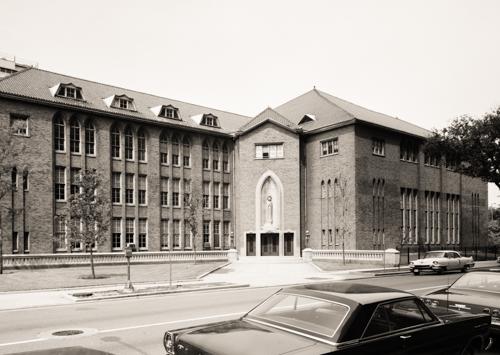
King Solomon discusses his life and Barry Byrne discusses Frank Lloyd Wright
1968 Both interviews incomplete. King Solomon as Kid Pharaoh, hot dog shop owner in Chicago, and former prize fighter. Mr. Solomon talks about his business and how he has earned his place. He talks about being a gambler, and speaks of being "rough" and receiving his money in an unorthodox manner, "protection" so to speak. The Interview ends abruptly at 13:42. At 13:43 interview begins with Barry Byrne architect and student of the "Prairie Style" talks about his education with Frank Lloyd Wright. He speaks fondly of "father"(Frank Lloyd Wright) and his time studying under him.
-
Kermit Eby discusses his book "Protests of an ex-organization man."
Nov. 21, 1961 *Please note: some sections have been edited out from the original recording due to copyright considerations
-
Kenneth and Sarah Vaux discuss landscape architect Calvert Vaux
Mar. 19, 1982 Kenneth and Sarah Vaux discuss the father of landscape architecture Calvert Vaux and his influence on other landscape architects including Frederick Law Olmsted. Kenneth and Sarah focus their discussion on public parks and how these parks were a response against industrialization and served to provide a space for the working class to gather in nature. This program includes an excerpt of an interview with labor activist Edward Sadlowski discussing the working class’ interest in nature, books, theater, and music.
-
Kenan Heise in conversation with Studs Terkel
Jan. 18, 1990 Discussing the book "The Chicagoization of America, 1893-1917" (published by Chicago Historical Bookworks) with Chicago author Kenan Heise.
-
Julia Koscis discusses her family's daily work and life ; part 4
Julia Koscis discusses being an immigrant, racism and daily life. She talks with Studs about her fears of African Americans upon arriving at Ellis Island, New York from Hungary, and living closely with them before moving on to Dayton, Ohio. She discusses some of her life before moving to Chicago from Dayton, Ohio.
-
Julia Koscis discusses her family's daily work and life ; part 2
Julia Koscis discusses living as a single parent family in 1940's Chicago. She discusses her three sons and their working and daily life. She also discussed meeting her second husband.