Listen to New Voices on Studs Terkel our partnership with 826CHI-here! Read the Story


Showing 256 - 270 of 314 results
-

Discussing red-lining with C.A.P. panel; Hazel Montgomery, Bernie Willow, Stanley Nappolomi
Jan. 14, 1975 As members of CAP (Citizens Action Program), Bernie Willow, Hazel Montgomery and Stanley Nappolomi all have their questions and concerns about the communities in which they reside and who gave the banks the right to determine which neighborhoods and communities are deteriorating. An outspoken, almost militant member, Bernie Willow, points out that the charters of savings and loans institutions was to loan money out so people could reside in the neighborhoods. Many of the establishments, Willow says, have dropped the word “Loan” from the businesses.
-
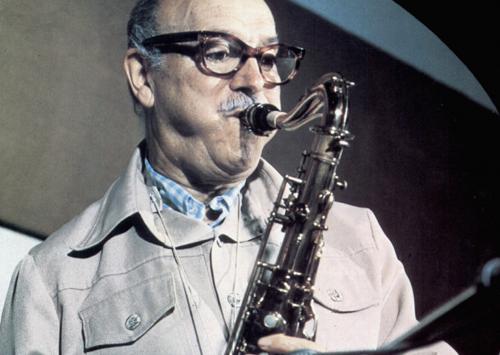
Discussing jazz and interviewing Bud Freeman
Sep. 16, 1974 Saxophonist Lawrence "Bud" Freeman discusses his career at the time of his book, "You Don't Look Like A Musician," with talk of his music and his colleagues in The World's Greatest Jazz Band.
-
Discussing Italians in Chicago with a panel of guests
Mar. 16, 1981 Discussion about Italians in Chicago
-
Discussing Chicago architecture with Carl Condit and Maurice English ; part 2
1964 Condit wrote the book The Chicago School of Architecture: A History of Commercial and Public Building in the Chicago Area, 1875-1925, and English edited The Testament of Stone: Themes of Idealism and Indignation from the Writings of Louis Sullivan.
-
Discussing Chicago architecture with Carl Condit and Maurice English ; part 1
1964 Condit wrote the book The Chicago School of Architecture: A History of Commercial and Public Building in the Chicago Area, 1875-1925, and English edited The Testament of Stone: Themes of Idealism and Indignation from the Writings of Louis Sullivan.
-
Discussing "A Journey through Newberry library" and with Lawrence Towner
Sep. 28, 1964 about The Newberry Library
-
Dick Simpson discusses the book he edited "Chicago's Future: An Anthology of Reports, Speeches, and Scholarship Providing an Agenda for Change"
Jul. 8, 1980 Dick Simpson, a professor of political science and former Chicago alderman, speaks with Studs Terkel about the book he edited "Chicago's Future: An Anthology of Reports, Speeches, and Scholarship Providing an Agenda for Change," Jane Byrne’s administration, and the infrastructure of Chicago’s political leadership. Terkel plays a few audio clips of an interview he previously conducted with Byrne.
-
Dick Simpson discusses neighborhood government system
Mar. 1, 1979 Dick Simpson, alderman of Chicago, discusses neighborhood governments. He describes the history, explains the uses of wards, and shows how the system can work in light of a recent election in Chicago. Studs reads an article about the recent election by Mike Royko.
-
Dick Simpson discusses his book, Strategies for Change: How to Make the American Political Dream Work"
Sep. 27, 1976 Alderman Dick Simpson discusses his book, "Strategies for Change: How to Make the American Political Dream Work," and his work as the 44th Ward Alderman. He explains the assembly system that now runs the 44th Ward, where members are able to bind him to a vote if the majority decides. He also discusses how the assembly has already changed redlining, the school system, truck load limits, and high rise development within their neighborhood.
-
Denis Mitchell and Studs discuss film while in London
1962 *Please note: some sections have been edited out from the original recording due to copyright considerations
-
Dempsey Travis discusses jazz artists and recalls his early memories of Chicago jazz
Feb. 1, 1989 Dempsey Travis presents a jazz program and discusses the life, the music, and the community of Chicago jazz from before The Great Depression until World War II. Travis discusses 1920s-1930s Chicago for Black families including rent parties, breakfast dances, employment opportunities, union strikes, and jazz.
-
Dempsey Travis discusses his memories of Jazz artists
May. 23, 1989 Dempsey Travis, author and jazz historian, recalls his memories meeting Jazz artists of the 1920-1940s. Some artists discussed include Jimmie Lunceford, Sy Oliver, Duke Ellington, Chick Webb, Chu Berry, Andy Kirk and others. Travis also discusses his father and his own time playing Jazz.
-
Dempsey Travis discusses his book "An Autobiography of Black Jazz"
Nov. 7, 1983 Dempsey Travis talks about his book, "An Autobiography of Black Jazz," as he recalls his childhood memories of Jazz, Blues, and Boogie-Woogie artists that he met.
-
Dempsey Travis discusses big band jazz players
Nov. 21, 1994 Dempsey Travis, real estate entrepreneur and civil rights activist turned historian and author, recalls his earlier days meeting and listening to many of the African American jazz artists. Some of the musicans mentioned are Louis Armstrong, Jimmie Lunceford, Fletcher Henderson, Duke Ellington, Earl Hines, Art Tatum, Cab Calloway, Nat King Cole, and Benny Goodman.
-
David T. Dellinger discusses his book "From Yale to Jail"
Apr. 23, 1993 The early influences of his father, his time in prison, and a bomb being sent to his home are among the topics covered in Dellinger’s book, “From Yale to Jail: The Story of a Moral Dissenter”. Dellinger is best known for being one of the Chicago Eight. He recalls a time in Lincoln Park, IL when he was warned to get out of there quickly because the police were told to attack Dellinger and his group.