Listen to New Voices on Studs Terkel our partnership with 826CHI-here! Read the Story


Showing 121 - 135 of 204 results
-

Frank Donner discusses the article he wrote "Theory and Practice of American Political Intelligence" ; part 1
Surveillance, informants, and provocateurs are some of topics covered by Frank Donner with his article, "Theory and Practice of American Political Intelligence". Donner explained that intelligence practices exist so that everyone has something to fear.
-
Frank Carney, Susie Gelaga, Linda Gelaga, Molly Gelaga and Fred Christy discuss the youth of Chicago ; part 2
1968 Interviewing Frank Carney, Susie Gelaga, Linda (daughter-in-law), Molly (daughter), and Fred Christy. They discuss the youth in Chicago, their own life experiences, and wants.
-
Former prisoners, Bill "Popeye" Stuart and Lowell Fentress discuss their time in prison
Apr. 19, 1979 After having spent 40 years and 27 years, respectively, both Bill “Popeye” Stuart and Lowell Fentress first talk about getting drunk on seeing a living tree in person, upon their release from prison. Both Stuart and Fentress agree there can be no rehabilitation of an inmate in prison while the prison culture is nothing but repression. They also talk about crooked guards that traffic drugs and about the gangs taking over the prisons.
-
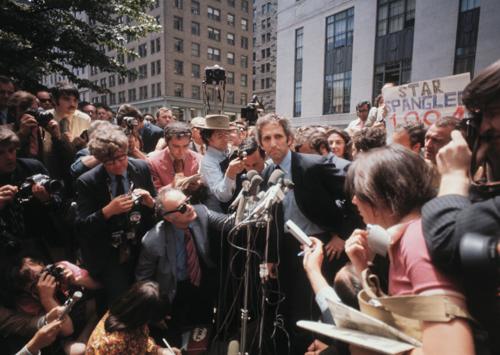
Eqbal Ahmad, Daniel Ellsberg, Anthony Lukas and Anthony Russo talk with Studs Terkel ; part 3
Jun. 9, 1972 Eqbal Ahmad, Daniel Ellsberg, Anthony Lukas and Anthony Russo discuss Anthony Russo's trial and treatment he endured during his time from conviction to release in federal prison compared to the treatment of prisoners tortured in Vietnam.
-
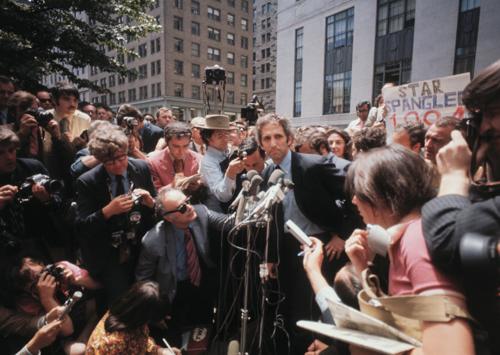
Eqbal Ahmad, Daniel Ellsberg, Anthony Lukas and Anthony Russo talk with Studs Terkel ; part 2
Jun. 9, 1972 Daniel Ellsburg, Eqbal Ahmad, Anthony Lukas, and Anthony Russo discuss Anthony Russo's time in jail, the leak of the Pentagon Papers, Vietnam War, torture of Vietnam prisoners being ignored, corruption in politics, and working for Rand.
-
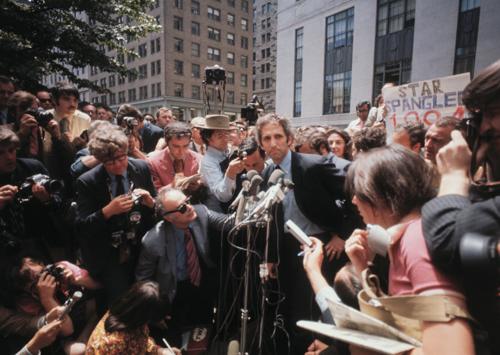
Eqbal Ahmad, Daniel Ellsberg, Anthony Lukas and Anthony Russo talk with Studs Terkel ; part 1
Jun. 9, 1972 Eqbal Ahmad, Daniel Ellsberg, Anthony Lukas and Anthony Russo discuss their introduction into becoming activitsts, leaking the Pentagon Papers, Nixon Administration, and their philosophy on working for men in power.
-
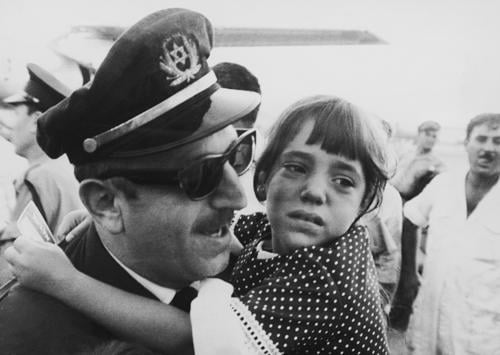
Elizabeth Rich discusses her book "Flying Scared: WhyWe Are Being Skyjacked and How to Put a Stop to It"
1970 After writing the book “Flying High” about her experiences as an airline stewardess, Elizabeth Rich moved on to research the trend of skyjacking in her second book “Flying Scared: Why We Are Being Skyjacked and How to Put a Stop to It.” Rich is one of the first people to conduct a study on these crimes, and criticizes both the US government and Federal Aviation Administration for essentially ignoring repeated skyjacking.
-
Elizabeth Drew discussing her book, "Washington Journal: The Events of 1973-1974"
Oct. 3, 1975 Elizabeth Drew discussing her book, "Washington Journal: The Events of 1973-1974," about the uncertain times during the Watergate scandal. She describes the Saturday Night Massacre and the military alert that were attempts to cover-up Watergate, along with how people working inside the White House felt during these events.
-
Eliot Asinof discusses his book, "Eight Men Out: The Black Sox and the 1919 World Series
May. 5, 1963 Eliot Asinof, author, discusses his book, "Eight Men Out: The Black Sox and the 1919 World Series." Asinof talks about some of the Black Sox team members and their stories through the games, the sensation, and the trial. Early American baseball players such as Babe Ruth and Connie Mack and reporters such as Ring Larder are also mentioned.
-
Dr. Willard Gaylin discusses his book "In the service of their country"
1970 Dr. Willard Gayelin talks about and reads from his book "In the Service of Their Country." He talks about the imprisonment of conscientious objectors who did not want to participate in the war.
-
Dr. Thomas Szasz discusses his book "The Manufacture of Madness: A Comparative Study of the Inquisition and the Mental Health Movement"
1970 Dr. Thomas Szasz discusses his book "The Manufacture of Madness: A Comparative Study of the Inquisition and the Mental Health Movement" and the ways that mental illness has been used to control and maintain the status quo, scapegoat certain kinds of people, and label people as "other." Szasz asserts his belief that mental illness and mental health cannot be defined, that depression and schizophrenia are not diseases, and the distinction between individuals seeking mental health treatment and those who are institutionalized against their will.
-
Dr. Samuel Epstein discusses his book, "Hazardous Waste in America"
Mar. 14, 1983 Dr. Samuel Epstein, author and Director of Occupational and Environmental Medicine, at the University of Illinois Medical School, talks about his book, "Hazardous Waste in America." Dr. Epstein explains the four types of hazardous waste, (nuclear, petroleum, mining, and fossil fuels) and describes how they can better be disposed of including burning, recycling/renewing, and interim storage. He also describes a case study of Hoffman-Taff in Verona, Missouri.
-
Dr. Carlo Levi discusses Italian literature; Julio & Phillipo sing nursery rhymes, Maria Caniglia discusses opera; part 2
1962 Dr. Carlo Levi talks about the differences in Italian and American literature in the first part. In the second part, children Julio and Phillipo sing Italian nursery rhymes. In the last part, Maria Caniglia and husband Pino Donati discuss opera; part 2.
-
Dr. Carlo Levi discusses his exile and humanity in southern Italy after WW2; part 1
1962 Dr. Carlo Levi talks about his book "Christ Stopped at Eboli", the human condition, and compassion for those suffering during and after World War 2.
-
Donna A. Demac discusses censorship and her book "Liberty Denied"
Jun. 16, 1988 In her book, “Liberty Denied: The Current Rise of Censorship in America,” Donna Demac points out that we, as a society, are not as free as we think we are. Demac can’t understand why anyone would want to keep people from reading great pieces of literature. While some groups called certain books anti-Christian, Demac said no one has ever died from reading a four-letter word.