Listen to New Voices on Studs Terkel our partnership with 826CHI-here! Read the Story


Showing 61 - 75 of 204 results
-

Marya Mannes discusses her book "Last Rights"
Feb. 1, 1974 Euthanasia is the topic of Marya Mannes' book, "Last Rights: A Case for the Good Death". With cases of terminally ill patients, Mannes advocates having compassion and allowing one to chose a good and gentle death.*Please note: some sections have been edited out from the original recording due to copyright considerations
-
Mary Harding discusses her time in a Bolivian prison
Apr. 30, 1973 Former ex-nun Mary Harding was accused of being a part of a group that was going to overthrow the Bolivian government. At the first meeting with counsel from the American Embassy, Harding could barely walk because she was kicked and punched over and over for information. Harding spent four of her five weeks in prison in solitary confinement.*Please note: some sections have been edited out from the original recording due to copyright considerations
-
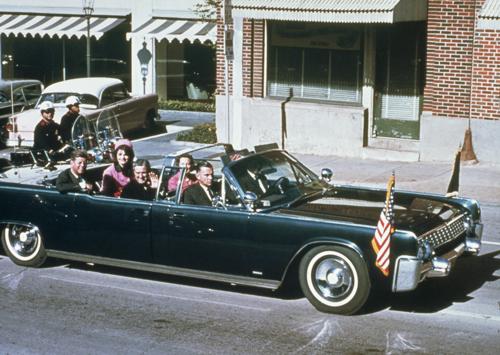
Mark Lane discusses his book "Rush to Judgement"
1968 Studs Terkel and American lawyer Mark Lane dive into Lane’s best-selling book, “Rush to Judgement,” which is a critique of the Warren Commission’s methods and findings, based on Lane’s own investigations and research. He discusses his struggle to publish the book, after several cancelled contracts with publishers, and critical reviews the book received, which he believes are weakly based. This interview includes interviews with three witnesses of JFK’s assassination, collected by Lane during his investigations.
-
Marion Clark and Rudy Maxa discuss their book, "Public Trust, Private Lust: Sex, Power, and Corruption on Capitol Hill"
Jul. 12, 1977 Marion Clark and Rudy Maxa, investigative journalists, discuss their book, "Public Trust, Private Lust: Sex, Power, and Corruption on Capitol Hill." The two recall how Elizabeth Ray contacted them about an affair she was having with U.S. Representative Wayne Hays, who was using taxpayer's money to pay her. The journalists also discuss Koreagate and other corruptions going on in Washington D.C. in the 1970s.
-
Marcel Marceau discusses the art of mime ; part 2
Mar. 21, 1973 Marcel Marceau, world renown mime, talks about when he performed in prisons in France, Germany, and Chicago, including death row inmates who he could not see. He also discusses moments where he met famous silent actors such as Charlie Chaplin, Harpo Marx, and Stan Laurel. They then discuss childhood and aging. Content Warning: This conversation has the presence of outdated, biased, offensive language. Rather than remove this content, we present it in the context of twentieth-century social history to acknowledge and learn from its impact and to inspire awareness and discussion.
-

Louis Font and Ed Fox discuss their time in the military and the Vietnam War
Jun. 11, 1971 Louis Font and Ed Fox discuss their time in the military, the Vietnam War, military rituals, and West Point military academy. They express their anti-war sentiments and describe atrocities committed in Vietnam.
-

Lisa Richette discusses her book The Throwaway Children ; part 2
Lisa Richette, lawyer and judge, discusses her book "The Throwaway Children", published in 1969. She discusses issues of juvenile justice and the law regarding juveniles.
-

Lisa Richette discusses her book The Throwaway Children ; part 1
Lisa Richette, lawyer and judge, discusses her book "The Throwaway Children", published in 1969. She discusses issues of juvenile justice and the law regarding juveniles.
-
Leonard Boudin discusses various cases he's tried
May. 20, 1986 Dr. Benjamin Spock, Paul Robeson and Jimmy Hoffa are a few of Leonard Boudin's clients. Although some people were outraged Boudin welcomed Hoffa as a client, Boudin's belief had always remained that whether a person be good or bad, that person is, like all people, entitled to civil liberties and good representation. Boudin lastly explained he liked law students and that from what he witnessed, he was hopeful for their/our futures.
-
Leon DesPres, Quentin Young, and Bob Volen discuss being spied upon by the police and the FBI
Mar. 30, 1978 Leon DesPres, Quentin Young, and Bob Volen discuss being spied upon by the Police and the FBI. They discuss the nature of spying, protests, and lawsuits. Includes the song "Die Gedanken Sind Frei" sung at the end.
-
Ken Wooden discussing "Weeping in the playtime of others"
May. 12, 1976 Discussing the book "Weeping in the playtime of others" with the author Ken Wooden.
-
John T. Scopes discusses the "Scopes Monkey Trial" of 1925
Oct. 20, 1960 John T. Scopes was a young teacher who taught biology. He was arrested because in Tennessee, no theory of the origin of man could be taught in schools. Clarence Darrow, an attorney from Chicago, defended Scopes in the "Scopes Monkey Trial" of 1925. Scopes was found guilty and was fined $100.
-
John Peter Jones talks with Studs Terkel about his book "The Feather Pluckers"
Apr. 1, 1965 John Peter Jones discusses English youth, the working class, and his book, "The Feather Pluckers."
-
-
John Dinges discusses his book "Assassination on Embassy Row"
Sep. 6, 1980 Because there' s murder, torture, prison terms and terrorism involved, Studs Terkel, mentions that this book reads like a crime novel. "Assassination on Embassy Row," is John Dinges' account of what happened to Orlando Letelier in Washington, D.C. in 1976.