Listen to New Voices on Studs Terkel our partnership with 826CHI-here! Read the Story


Showing 31 - 45 of 352 results
-

Talking about Josephine Herbst, with Elinor Langer
Sep. 12, 1984 The author and professor discusses her biography - Josephine Herbst: The Story She Could Never Tell - about the journalist and novelist who covered the Great Depression and The Spanish Civil War, and wrote proletarian novels on life in the 1920s and 1930s.*Please note: some sections have been edited out from the original recording due to copyright considerations
-
Talking about George Washington, with Garry Wills
Jun. 22, 1984 The American journalist and historian joins Studs to talk about political morality and the uses of power, as further described in his book, Cincinnatus: George Washington and The Enlightenment.*Please note: some sections have been edited out from the original recording due to copyright considerations
-
Talking about film and film writing, with Pauline Kael
May. 2, 1980 The American film critic talks about how she attempts, through her writing, to evoke the feelings she experiences while watching movies. Studs asks about her latest collection, When the Lights Go Down: Film Writings, 1975-1980.*Please note: some sections have been edited out from the original recording due to copyright considerations
-
Talking about America, with Richard Reeves
Jun. 14, 1982 While traveling for his book - American Journey: Traveling with Tocqueville in Search of Democracy in America - Richard Reeves was surprised to learn how much people really loved America and being Americans.*Please note: some sections have been edited out from the original recording due to copyright considerations
-
Sydney J. Harris discusses his book "Pieces of Eight"
Nov. 3, 1982 Journalist and author Sydney J. Harris discusses the essays in his new book "Pieces of Eight." Harris previously wrote for the "Chicago Daily News" and as of the time of this interview, was writing for the "Chicago Sun-Times."
-
Studs Terkel talks with journalist Dieter Strand in Stockholm
Nov. 20, 1973 Journalist Dieter Strand discusses his upbringing in Germany, political apathy and natural characteristics of Swedes. The two also review the urbanization, Protestant work ethic and Strand's writing. Recorded in Stockholm.
-

Studs Terkel talks with Erich Lüth on his first hand experiences living in Hamburg through the rise and fall of Hitler ; part 1
1968 Erich Lüth discusses his experiences, observations, and accounts of life in Hamburg, Germany during the rise and fall of Hitler. He recounts how as a member of Parliament he brought in Hitler's, "Mein Kampf" and read portions aloud and was laughed at by his colleagues. He states they were blind to what Hitler declared in his book he would do and some are still blind by wanting to rub out their past, their history.
-
-
Studs Terkel interviews writer Tom Wolfe ; part 3
Sep. 1, 1968 Studs Terkel and Tom Wolfe discuss Wolfe's recent work. At the time of the interview, Wolfe had recently released "The Electric Kool-Aid Acid Test", his chronicle of Ken Kesey and his colleagues, and a collection of articles, "The Pump House Gang".
-
Studs Terkel interviews writer Tom Wolfe ; part 1
Sep. 1, 1968 Studs Terkel and Tom Wolfe discuss Wolfe's recent work. At the time of the interview, Wolfe had recently released "The Electric Kool-Aid Acid Test", his chronicle of Ken Kesey and his colleagues, and a collection of articles, "The Pump House Gang".
-
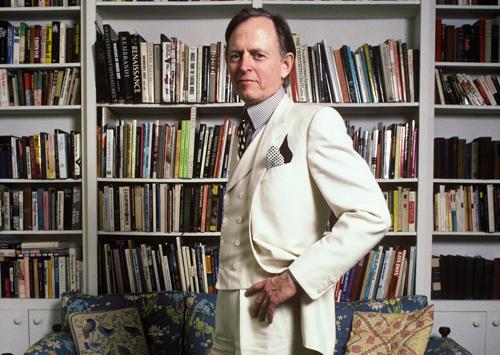
Studs Terkel interviews Tom Wolfe ; part 2
Jul. 26, 1965 Studs Terkel and Tom Wolfe discuss Wolfe's first collection of essays, "The Kandy-Kolored Tangerine-Flake Streamline Baby". Terkel and Wolfe begin their conversation by listening to and discussing an excerpt from an interview with a young motorcycle enthusiast named Chuck. Topics of conversation include Wolfe's writing process and personal history, the generation gap, class and income disparity, motorcycle culture, Las Vegas, and stock car racing.
-
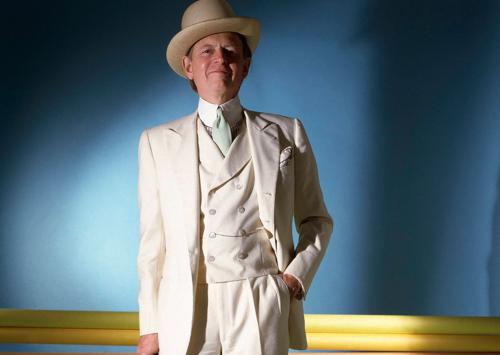
Studs Terkel interviews Tom Wolfe ; part 1
Jul. 26, 1965 Studs and Tom Wolfe discuss Wolfe's first collection of essays, "The Kandy-Kolored Tangerine-Flake Streamline Baby". Terkel and Wolfe begin their conversation by listening to and discussing an excerpt from an interview with a young motorcycle enthusiast named Chuck. Topics of conversation include Wolfe's writing process and personal history, the generation gap, class and income disparity, motorcycle culture, Las Vegas, and stock car racing.
-
Studs Terkel discusses journalism and mass media with Norman Corwin
1968 Studs discusses poetry and mass media with American writer Norman Corwin, who was visiting Chicago to receive an honorary award from Columbia College. Works discussed include Corwin's radio address, "On A Note of Triumph," which the author delivered on May 8, 1945 to mark the end of World War II in Europe, and "Ballad for Americans", a cantata produced by Corwin on CBS radio in 1939. Topics include Corwin's personal and professional history, the process of writing "for the ear", World War II, the dawn of the nuclear age, and the television's role in eclipsing radio in popularity.
-
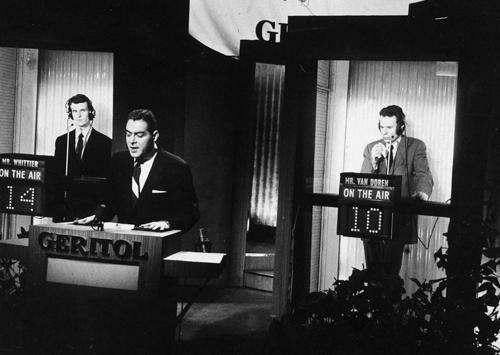
Studs Terkel discusses investigative journalism with author Fred J. Cook
May. 13, 1966 Studs and investigative journalist Fred J. Cook discuss Cook's book "The Corrupted Land: The Social Morality of Modern Americans" (Macmillan, 1966). The main topics of conversation are social morality and the corruption of the American business ethic. Terkel and Cook discuss unsung heroes, television quiz scandals,
-
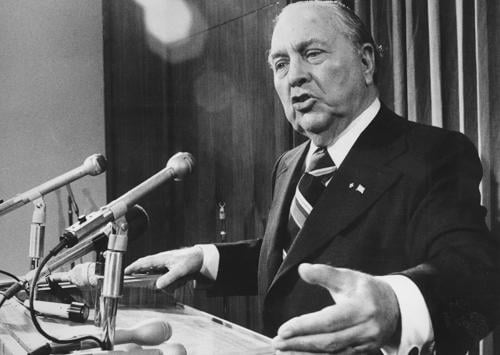
Studs Terkel discusses contemporary Chicago politics with Dick Simpson and Mike Royko
Jul. 22, 1971 Discussing Mayor Daley and nepotism in government with Alderman Dick Simpson, and author-journalist Mike Royko. Includes clips of Mayor Daley defending his appointment of Thomas P. Keane, son of Alderman Tommy E. Keane. Also includes Mike Royko reading his column from the "Chicago Daily News" July 22, 1971.