Listen to New Voices on Studs Terkel our partnership with 826CHI-here! Read the Story


Showing 136 - 150 of 460 results
-

-
Michel Block discusses his career
Jul. 20, 1978 Belgian-French pianist Michel Block discusses his career and accomplishments.
-
Michael Smith in conversation with Studs Terkel
Almanac - 386. 12/6/1985
-
Michael Feinstein discusses George and Ira Gershwin
Feb. 26, 1990 Interviewing Michael Feinstein, American singer, pianist, and music revivalist, about his music and his work cataloging Ira Gershwin’s collection of phonograph records.
-
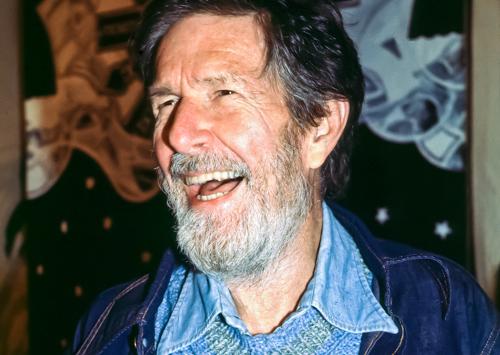
Merce Cunningham and John Cage discuss music and dance
Jan. 14, 1971 Merce Cunningham, choreographer and John Cage musician and composer speak about music and dance. The two gentlemen discuss with Studs how music and dance come together to create the avant-garde of art in both worlds (music and dance).
-
Members of the Shanghai Quartet discuss their backgrounds
May. 17, 1989 The day before their concert performance at North Park College, the Shanghai Quartet was at the WFMT studios. Betty Bucchari explained her job was to search for great musicians that were not well-known. The Li brothers were destined to play the violins, as their parents were music teachers for 15 years.
-
Members of the Mexican ensemble Los Folkloristas discuss their music and culture
Feb. 5, 1991 Ernesto Anaya, Hector Sanchez, José Ávila, Olga Alanís, and Rosalinda Renoso discuss the influence of Mexican culture and history in the music they perform and the instruments they use.
-
Members of the Fine Arts Quartet discuss chamber music
Oct. 1, 1964 Studs Terkel interviews the members of the Fine Arts Quartet, 1st violin Leonard Sorkin, 2nd violin Abram Loft, viola Gerald Stanick, and cello George Sopkin. The members of Fine Arts Quartet discuss the following: Elizabeth Sprague Coolidge's contributions to chamber music in America, the centennial anniversary of Coolidge's birth, the history of chamber music in America, the nature of their rehearsals, and their performances.
-
Members of the Earth Club radio show discuss their musical repertoires
Feb. 14, 1994 Howard Levy, Stuart Rosenberg, and Johnny Frigo reminisce about their discovery of musical genres that inspired them and discuss the early roots of folk music.
-
Meg Christian discusses feminism and the women's music industry
Sep. 16, 1981 Meg Christian discusses songwriting and the music industry, especially her work in the feminist movement.
-
Mazatl Galindo and Alejandro Galindo discuss traditional and folk music from South and Central America
Nov. 23, 1982 Chilean folk songs have been removed due to copyright restrictions: "If We Are Americans;" a flute song for the harvest celebration; the song "Jacinto Cenobio;" song ["Winos Poinas"]; a Mexican flute song; the song "La Fiesta De San Benito;" the song "La Pulque;" and the song "El Condor Pasa." but are discussed within the program.
-
Max Morath discusses his career and jazz music
Jun. 18, 1970 Max Morath discusses his career, jazz music, and history.
-
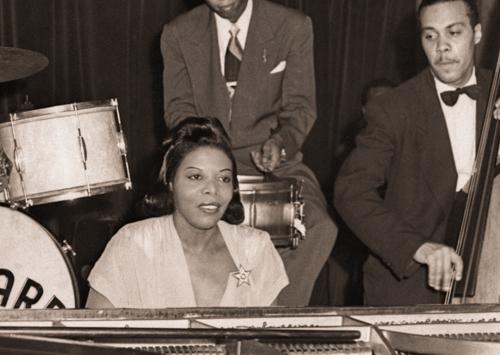
Mary Lou Williams and her manager Father Peter O'Brien discuss Williams' career
Sep. 15, 1978 Studs Terkel interviews Mary Lou Williams and her manager, Father Peter O'Brien. They discuss music, musicians, and instruments. Some clips of piano music playing at the end.
-
Mary Collins discusses her husband, Lee Collins, autobiography “Oh, Didn’t He Ramble” and his career as a Jazz musician
Sep. 3, 1974 Studs interviews Mary Collins about her husband, Lee Collins. They discuss the book that she and Lee wrote together until his death in 1960. Mary shares interesting stories of Lee’s experiences when he toured. She and Studs reflect on the other artists that Lee Collins worked with and those that influenced his music. Mary shares the story of how she and Lee reconnected in Chicago. She explains how Lee’s depression because of his health led to his attempted suicide and the horrible way he was treated at the psychiatric hospital.
-
Martina Arroyo discusses her opera career ; part 2
Aug. 1969 When the announcement was made, to let the audience know the opera singer they came to see would not be performing but that Martina Arroyo would be singing the part of Aida, Arroyo recalls that you could hear the crowd groan all the way in Chicago. Arroyo talks about singing in the operas. She also talks about even though she may have a starring role in the opera, the show is not hers, but rather everyone in the company works hard to put out a good production.