Listen to New Voices on Studs Terkel our partnership with 826CHI-here! Read the Story


Showing 16 - 30 of 136 results
-

Russell Barrett discusses his book, "Integration at Ole Miss"
Mar. 9, 1965 Political science professor and author Russell Barrett discusses and reads excerpts from his book, “Integration at Ole Miss.” He examines the legal challenges, apathy, and aggression that contributed to the build up of racial tensions leading to the enrollment of the University of Mississippi’s first black student — James Meredith — and the resulting riots and violence. Includes a recording of the Chad Mitchell Trio singing "Alma Mater (About Ole Miss)."*Please note: some sections have been edited out from the original recording due to copyright considerations
-

Rosa Parks and Myles Horton discuss the Highlander Folk School, the Montgomery Bus Boycott, and the American Civil Rights Movement
Jun. 8, 1973 Rosa Parks and Myles Horton discuss the importance of the Highlander Folk School, the Montgomery Bus Boycott, and the American Civil Rights Movement. The story of these two prominent figures of the Civil Rights Movement have intervened in their fight for social equality. Includes a fragment of an interview with E. D. Nixon well known civil rights leader.
-
-
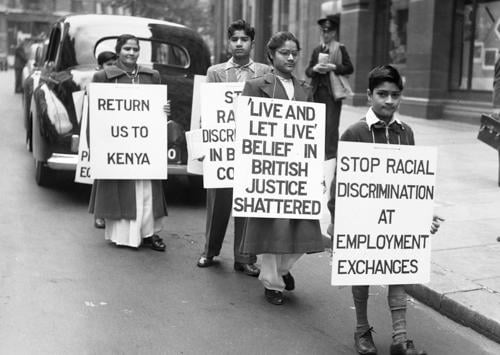
Richard Titmuss discusses poverty and how it keeps reoccurring
1968 Economist Richard Titmuss discusses the cycle and repetition of poverty, economic inequality, and obstacles for immigrants with Studs Terkel. “Fire Brigade” by Attila the Hun is played, as well as “Dance of Zalongo” and a Nepalese piece of music.
-
Richard and Patricia Waterman talk with Studs Terkel ; part 1
1953 Terkel interviews anthropologists Richard and Patricia Waterman. This interview is done in two parts.
-
Richard Carbray, Howard Schomer, Joseph Sittler and Gordon Zahn talk to Studs Terkel ; part 2
Jan. 18, 1965 Discussing "Father Roberts and Vatican III" and interviewing Richard Carbray, Howard Schomer, Joseph Sittler and Gordon Zahn
-
Richard Carbray, Howard Schomer, Joseph Sittler and Gordon Zahn talk to Studs Terkel ; part 1
Jan. 18, 1965 Discussing "Father Roberts and Vatican III" and interviewing Richard Carbray, Howard Schomer, Joseph Sittler and Gordon Zahn
-
-
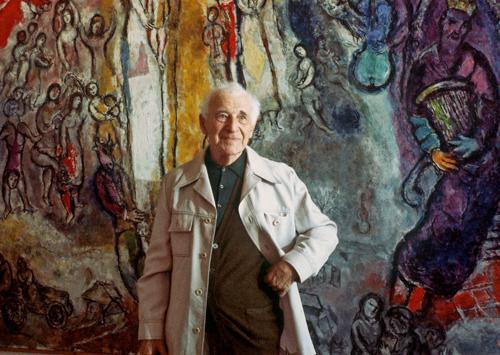
Representatives discuss the Center for Human Understanding ; part 2
May. 5, 1963 Representatives discuss the Center for Human Understanding (part 2 of 2). Center for Human Understanding conference in Washington D.C. Includes interview with [Raghav Heer]. Interviews [Chaumont Hosie]. Note: lengthy interviews in French (translated).
-
R.D. Laing discusses his book "The Divided Self: An Existential Study in Sanity and Madness" ; Part 2
1968 Content Warning: This conversation has the presence of outdated, biased, offensive language. Rather than remove this content, we present it in the context of twentieth-century social history to acknowledge and learn from its impact and to inspire awareness and discussion. Scottish psychiatrist and author R.D. Laing covers his latest outlook on the ideology of madness, with a specific focus on schizophrenia.
-
Professor Adolph Baker, Jurgen Hinze, Professor Richard Lewenton and Father William Wallace discuss science and politics; part 1
Jan. 12, 1971 Professors Adolph Baker, Jurgen Hinze, Richard Lewenton, and Father William Wallace discuss science and politics. The four professors explore question such as whether scientists be involved in political decisions. World War II and Vietnam War are used as examples by the scientists. An earlier interview with scientists Edward Teller and Albert Szent-Gyorgy is played.
-
Paul Schilpp talks with Studs Terkel
May. 20, 1965 Interviewing philosopher Paul Schilpp.
-
Omar Shapli discusses his career
May. 17, 1982 Reflections on the career of actor, drama teacher, WFMT announcer, and former member of The Compass Players.*Please note: some sections have been edited out from the original recording due to copyright considerations
-
Noted Norwegian adventurer and ethnographer Thor Heyerdahl discusses his most recent book
Oct. 9, 1981 Noted Norwegian adventurer and ethnographer Thor Heyerdahl discusses his most recent book "The Tigris Expedition: In Search of Our Beginnings" in which Heyerdahl and a crew of 10 men built a reed boat in Iraq and sailed it through the Persian Gulf, around the Horn of Africa, to Pakistan and eventually the Red Sea. Their goal was to prove that the ancient peoples of Mesopotamia and the Indus Valley could have been in contact through marine trade and migration.
-
Nicholas Von Hoffman discusses his novel, "Two Three Many More" with Studs Terkel
1970 Nicholas Van Hoffman discusses the characters of his novel, "Two Three Many More" about campus protests against the Vietnam War. Political viewpoints, regulations, and character analysis are discussed. Von Hoffman opens the interview with a reading from the opening of the book that mentions peace, solidarity, and disunity. Terkel and Von Hoffman read excerpts together from the book.