Listen to New Voices on Studs Terkel our partnership with 826CHI-here! Read the Story


Showing 301 - 315 of 1202 results
-

Meridel Le Sueur discusses her book "Ripening: Selected Work, 1927-1980," published in 1981
Mar. 30, 1982 Meridel Le Sueur discusses the publication of her selected works and her life as an activist, fighting for socialist ideals and women's rights. She goes on to discuss the time she spent with Native American Navajo tribes and their theory of nonlinear time.*Please note: some sections have been edited out from the original recording due to copyright considerations
-
-
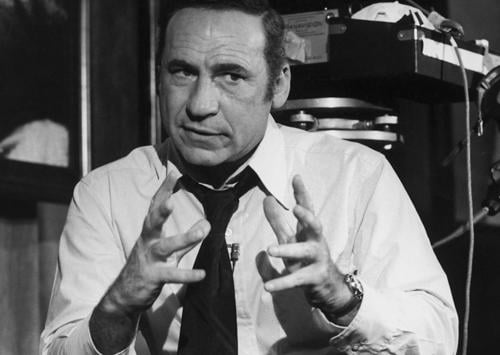
Mckinley Olson discusses the book "Unacceptable Risk: The Nuclear Power Controversy." and the dangers of atomic energy
Aug. 23, 1974 The interview begins with Mr Olson reading the first 3 paragraphs of his book. McKinley Olson discusses the dangers of atomic energy plants and the book "Unacceptable Risk: The Nuclear Power Controversy." Mr Olson describes several forms of alternative/renewable energy sources as a safe replacement of nuclear energy.
-
Maya Angelou discusses her early life and African American culture and people
Apr. 1, 1960 Angelou discusses: her early life; her international travels; dancing; blues and jazz music; and the book "Youngblood" by John Oliver Killens. In this program "In the Evening (When the Sun Goes Down)" and "Joe Turner No. 2 (Blues of 1892)" by Big Bill Broonzy, "I Ain't Gonna Pick No More Cotton" by Sam Lightnin' Hopkins is played, as well as other musical selections.
-
Maya Angelou discusses her early life and African American culture and people
Apr. 1, 1960 Angelou discusses: her early life; her international travels; dancing; blues and jazz music; and the book "Youngblood" by John Oliver Killens. Musical selections have been removed due to copyright.
-
Maya Angelou discusses her book “Gather Together in My Name”
May. 13, 1974 Writer and poet Maya Angelou talks about her life, Creole influences, and her book “Gather Together in My Name” with Studs Terkel. Angelou reads an excerpt from the book and the recording opens with Angelou reading one of her poems.
-
Maya Angelou discusses her book "I Know Why the Caged Bird Sings"
Mar. 13, 1970 Angelou discusses her book "I Know Why the Caged Bird Sings" and recites "When I Think About Myself." She talks about growing up in Stamps, Arkansas, and her family. Copyrighted material has been removed.
-
Maya Angelou and Tom Wicker discuss life and culture in the U.S. South
Jul. 1, 1979 Poet Maya Angelou and journalist Tom Wicker discuss life in the U.S. South and how the region’s history has shaped its culture. Topics of discussion include social dynamics and race in the South, the concept of “home” and what it means to return to one’s roots, and religion in the South. Angelou reads excerpts of her poetry, including “Still I Rise” and “Phenomenal Woman,” and shares spiritual songs from her childhood.
-
-
Maurice Sendak discusses his ideas for books
1970 After having received the Caldecott Medal for "Where the Wild Things Are," Maurice Sendak knew he had to do a different kind of book. Sendak recalled his trips to Brooklyn as a child and how going out to eat was a huge treat. From there, Sendak's book, "Night Kitchen," was born.
-
Maurice Sendak discusses his book "Where the Wild Things Are"
Dec. 19, 1990 Monsters, imagination and violence in children's literature are all topics of Maurice Sendak's book, "Where the Wild Things Are." When writing the book, Sendak used his own experiences as a little boy, remembering that the monsters in the family were relatives on his mother's side. There are two excerpts of composer Oliver Knussen.
-
Maud Russell social worker, educator, and writer, discusses U.S./China relations
Jun. 1, 1976 Ms. Russell was a social worker with the YWCA in China from 1917-1943, and the executive director of the Committee for a Democratic Far Eastern Policy from 1946-1952. Ms Russell speaks of her time and work in China, about U.S./China relations and the cultural revolution taking place in China. Includes excerpt of Joshua Horn talking about a worker who got burned while working at a steel factory in China. He speaks of the outpouring help for the man from the community of Shanghi.(1934055-3-1)
-
Mary Norris Lloyd discusses her book " A Dream of Mansions"
Mar. 8, 1962 Social activist and author Mary Norris Lloyd discusses her work and its reflection on Christian morality and views on the South. Topics covered include segregation, racism, and religion and how it has coincides with the issues of race.
-
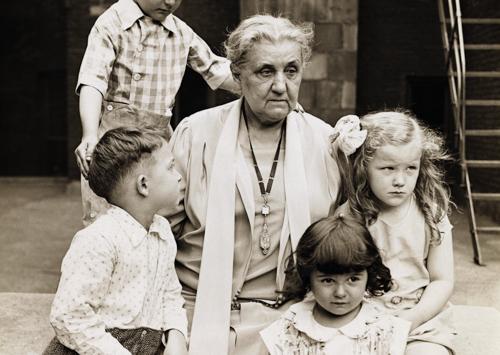
Mary Lynn McCree Bryan talks about her book "Eighty Years at Hull House"
Jan. 13, 1970 Discussing the book, "Eighty Years at Hull House," and interviewing the co-author, Mary Lynn McCree Bryan. Mary Lynn McCree Bryan discusses the Hull House and its founders in Chicago, Illinois. Includes two clips of Florence Scala speaking: one about nature and about a tree that was taken down at Hull House and one about Jane Addams. Includes a clip of Jessie Binford discussing Jane Addams.
-
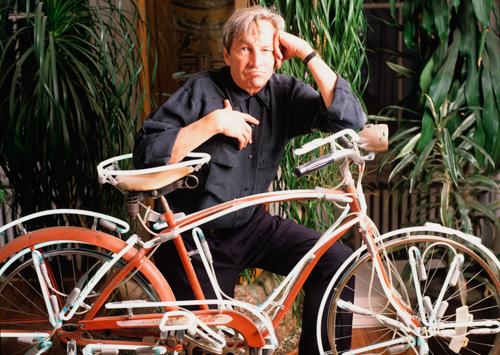
Mary Lynn Kotz discusses her book "Rauschenberg, Art and Life"
Oct. 29, 1991 In Mary Lynn Kotz's book, "Rauschenberg, Art and Life," Kotz recounts the works and story of 20th century art pioneer Robert Rauschenberg. They survey his career beginning in Port Arthur, TX, discussing his Depression-era upbringing which caused him to reuse and salvage virtually any object and transform it into art, his studies in Paris, made possible by the G.I.