Listen to New Voices on Studs Terkel our partnership with 826CHI-here! Read the Story


Showing 46 - 60 of 94 results
-

Interviewing Alexander Tcherepnin
Jun. 8, 1964 A wide-ranging conversation with the Russian composer, pianist, and music professor - about his time in Chicago and his upcoming departure for New York.*Please note: some sections have been edited out from the original recording due to copyright considerations
-
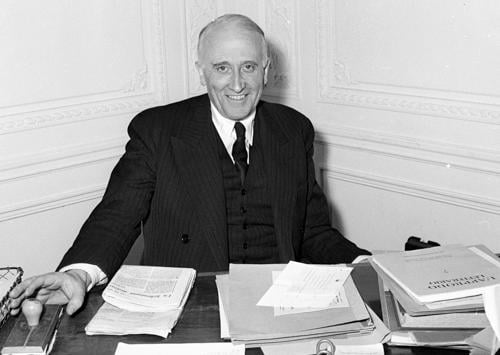
Henry Barraud, French composer, discusses his musical compositions
May. 5, 1960 While visiting Paris, France Studs talks with Henry Barraud. Monsieur Barraud speaks of writing three different types of Opera: Grand Opera, Opera Comique, and Opera Bouffe. Monsier Barraud and Studs discusses a bit of each piece. They end their time discussing the other forms of music that he writes and his work with Paris Radio.
-
Harvey Phillips and Dr. Frederick Fennell discuss their holiday ensemble the TubaSantas
Dec. 13, 1994 Presenting music by the TubaSantas with Harvey Phillips and Dr. Frederick Fennell. Program may include a live performance. "Generic Version"-Re-edited on 12/6/1995
-
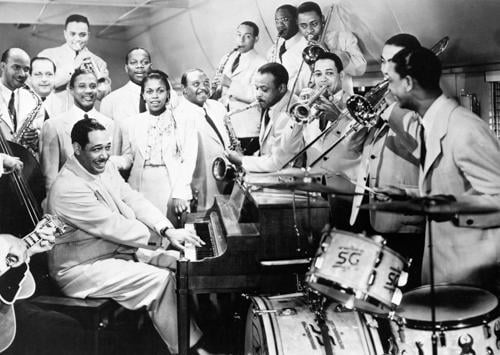
Harriet Choice discusses the career of Duke Ellington and promotes the Grant Park 5th Annual Tribute to Duke Ellington concert
Aug. 25, 1978 Studs interviews Harriet Choice, Jazz critic for the Chicago Tribune. They reflect on the music, talent and career of Duke Ellington. Choice describes several Ellington songs and the history behind them. She shares how Duke created music and wrote specifically for individual people. Studs reads what Ellington wrote about his song “Harlem Airshaft.” Choice and Terkel reflect on Ellington’s music and those who made music with him. Choice shares how a Duke Ellington performance at the Newport Jazz Festival rejuvenated Ellington’s career.
-
George Flynn discusses his career as a contemporary American composer and explains how worldly events influence his compositions
Nov. 1, 1982 Studs rebroadcasts an interview he did five years ago with George Flynn, composer and head of the music department at DePaul University. Flynn explains the creative part of his music and how worldly events such as the Vietnam War help him and other musicians like him, write their avant-garde music. Flynn defines some of his compositions that include: "Wound," "American Rest," and "Canal." He shares the people and events in his life from a teenager who have influenced his work.
-
-
-
Fela Sowande discusses his career and Nigerian music ; part 3
Jul. 3, 1962 Fela Sowande discusses his career, music, and compares African culture and music to Western culture and music. Includes two songs that are sung by tenor Max Worthley. Includes a clip of a Nigerian Youth song. Includes performance by a Nigerian skiffle band. Sowande was inspired by [Anthony Gregascoigne], an English poet he met in England.
-
Fela Sowande discusses his career and Nigerian music ; part 2
Jul. 3, 1962 Fela Sowande discusses his career, different types of Nigerian and African music, the Yoruba people, and religion. Includes clips of an African Yoruba pagan hymn "Oyigiyigi," a Christian version of that hymn, and an organ version of that hymn. Includes Sowande's song "Roll de Ol' Chariot." Quotes a poem by [Anthony Gregascoigne], an English poet he met in England.
-
Fela Sowande discusses his career and Nigerian music ; part 1
Jul. 3, 1962 Fela Sowande discusses his career, Nigerian music, and compares African culture and Western culture. Includes clips of musical performances by Highlife musicians and orchestra. Music: A clip of high-life music, "Folk Symphony for Full Orchestra."
-
Elsa Charleston and Abraham Stokman discuss classical music
Nov. 24, 1975 Presenting music soprano Elsa Charleston and pianist Abraham Stokman.
-
Ella Jenkins discusses her music and her influences
Dec. 7, 1963 Using a Trobriand drum and harmonica, Ella Jenkins plays examples of call and response music with Studs. A few of her popular songs play between their discussion. Ella explains how her music came to be from the Chicago neighborhood streets with influences from her Uncle and other blues and folk musicians. Songs played include "Tahboo," "Miss Mary Mack," "You'll Sing a Song and I'll Sing a Song," "Come Dance By the Ocean," and "Dulce." Songs have been removed due to copyright restrictions.
-
Ella Jenkins discusses call and response music
Jul. 17, 1993 Using past recordings, Ella discusses how she works with children to help them find their rhythms using call and response music and percussion. She explains the West African and Latin music influences within her own music. Music played includes Jenkins' own music such as "Miss Mary Mack," "Tahboo," and "Where Has My Little Dog Gone?" She also plays song written by Carl Orff and performed by the Chorus of the Children's Opera Group, such s "Pat-a-Cake," and "Name-Calling." Untitled West African music is also played. Music has been removed due to copyright restrictions.
-
Edith Mason discusses her childhood and career in the opera
1966 Studs replays his interview with Edith Mason 21 years ago. Madam Mason discusses her childhood as it pertains to her career. She shares her training and study in Paris. Mason recalls the many composers and conductors she has worked with and the various opera companies she worked for. The musical numbers are removed from this edited version of the original recording.
-
Edith Mason discusses her career in opera ; part 2
1966 They talk about other performers Madam Mason worked with. Edith shares her view on the difference between opera in her day and the current opera. Parts of this version appears to be a duplicate of another, but there are a few parts that are not duplicates. The musical pieces are removed from this edited version of the original recording.