Listen to New Voices on Studs Terkel our partnership with 826CHI-here! Read the Story


Showing 31 - 45 of 70 results
-

Interview with David Hobman
1966 Interviewing British social worker David Hobman.
-

Horace Cayton discusses is book "Long Old Road" ; part 3
Sep. 7, 1966 Content Warning: This conversation includes racially and/or culturally derogatory language and/or negative depictions of Black and Indigenous people of color, women, and LGBTQI+ individuals. Rather than remove this content, we present it in the context of twentieth-century social history to acknowledge and learn from its impact and to inspire awareness and discussion.
-
Horace Cayton discusses his book "Long Old Road" ; part 2
Sep. 7, 1966 Content Warning: This conversation has the presence of outdated, biased, offensive language. Rather than remove this content, we present it in the context of twentieth-century social history to acknowledge and learn from its impact and to inspire awareness and discussion. Loneliness and hardships of both fitting in and finding a job are covered in the continuation of Horace Cayton's, "Long Old Road: An Autobiography." By living in a middle class home in Seattle with a full time Japanese servant, Cayton was seen as better off than most people.
-
Horace Cayton discusses his book "Long Old Road" ; part 1
Sep. 7, 1966 Content Warning: This conversation includes racially and/or culturally derogatory language and/or negative depictions of Black and Indigenous people of color, women, and LGBTQI+ individuals. Rather than remove this content, we present it in the context of twentieth-century social history to acknowledge and learn from its impact and to inspire awareness and discussion. In "Long Old Road: An Autobiography," Horace Cayton talks about growing up in Seattle in a well to do, mostly white neighborhood. Cayton's grandfather was the first Black man elected to the U.S.
-
Harry Edwards discusses the sociology of sports
May. 12, 1983 In his class, Edwards points out that the chances of becoming the next Kareem Abdul-Jabbar or Michael Jordan are extremely rare. According to Edwards, collegiate sports players spend 55 to 60 hours a week playing their sport, leaving little or no time for book learning. For many, after training and competing for four years, they're not able to secure good jobs because they didn't have time for studying while at the college.*Please note: some sections have been edited out from the original recording due to copyright considerations
-
Gordon Zahn talks with Studs Terkel
1970 Terkel interviews Gordon Zahn about war and peace.
-
Gordon Zahn discusses his book "In Solitary Witness" ; part 1
Jan. 15, 1965 One's conscience, morals and religion are all apart of Gordon Zahn's book, "In Solitary Witness: The Life and Death of Franz Jagerstatter". Zahn talks about who Jagerstatter was and what made him decide to say "No" to Hitler's army. Jagerstatter chose to lay with the community of saints rather than kill Jewish people.
-
Gordon Zahn discusses his book "In Solitary Witness" ; part 2
Jan. 15, 1965 Gordon Zahn continues to talk about his book, "In Solitary Witness: The Life and Death of Franz Jagerstatter". When doing his research for the book, it puzzled Zahn to find out that very few young people in Jaggerstatt's home village knew who Franz Jaggerstatt was. Zahn explained Jaggerstatt knew he was doing the right thing by objecting to Hitler's army because a Catholic priest had done the same thing.
-
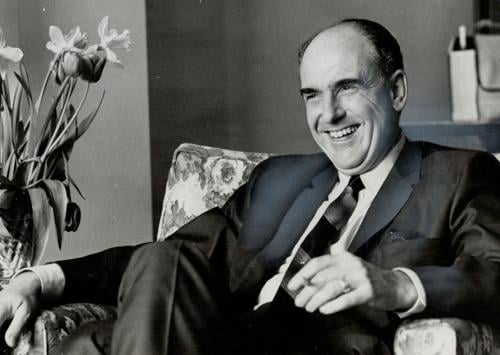
George Blanksten, Irma Edelman, Robert Eisner and Dr. Nicolas Pedritis discuss economist Andreas Papandreou's imprisonment
Apr. 1, 1967 Mr. Blanksten, Ms. Edelmen, Mr. Eisner and Dr. Pedritis, all educators, talk about economist and Prime Minister of Greece Andreas Papandreou's imprisonment.
-
Frances Moore Lappe in conversation with Studs Terkel
Oct. 13, 1986 Discussing the book "World Hunger: Twelve Myths" (published by Grove Press) with author and world hunger policy analyst Frances Moore Lappe.
-
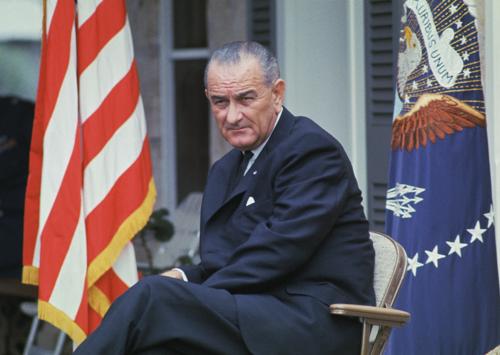
Eric Goldman discusses his experiences as special consultant to President Lyndon Johnson
1967 Historian Eric Goldman discusses his time as special consultant for President Lyndon B. Johnson and his book "The Tragedy of Lyndon Johnson."
-
Dr. Willard Gaylen discusses his book "Feelings" and how humanity and feelings are connected
Feb. 23, 1979 Dr. Williard Gaylen, a physician and professor of psychiatry at Columbia, discusses how feelings define humanity. He explains that there are no "bad" or "good" feelings, because even anxiety and guilt are strictly human emotions. Dr. Gaylen also talks about how envy is the only useless feeling. Two recordings of people talking about pride and guilt are also played.
-

Dr. Urie Bronfenbrenner discusses his book "Two Worlds of Childhood: U.S. and U.S.S.R."
Jul. 22, 1970 Dr. Urie Bronfenbrenner discusses the differences between how children and childhood are treated in the United States and the Soviet Union. Topics of discussion include the age segregation of American society, the value of intergenerational ties, peer group influences on children, and the influence of societal expectations on parenting and child raising.
-
Dr. Thomas Szasz discusses his book "The Manufacture of Madness: A Comparative Study of the Inquisition and the Mental Health Movement"
1970 Dr. Thomas Szasz discusses his book "The Manufacture of Madness: A Comparative Study of the Inquisition and the Mental Health Movement" and the ways that mental illness has been used to control and maintain the status quo, scapegoat certain kinds of people, and label people as "other." Szasz asserts his belief that mental illness and mental health cannot be defined, that depression and schizophrenia are not diseases, and the distinction between individuals seeking mental health treatment and those who are institutionalized against their will.
-
Dr. Herbert S. Terrace discusses his work in the field of primate cognition
Feb. 1980 Columbia University professor of psychology, Dr. Herbert Terrace, talks with Studs regarding his 1979 book "Nim: A Chimpanzee Who Learned Sign Language," animal cognition and the evolution of language.