Listen to New Voices on Studs Terkel our partnership with 826CHI-here! Read the Story


Showing 1 - 15 of 70 results
-

Young men talk with Fred Christy; Earl talks with Studs Terkel ; speech and singing at a meeting
1968 Studs Terkel interviews Fred Christy about how he hopes to change the young lives of African-American. He also travels with Fred to places of African-American community.
-
William Ury discusses his book "Getting to yes"
Oct. 13, 1981 Discussing the book "Getting to yes: negotiating agreement without giving in" with William Ury.
-
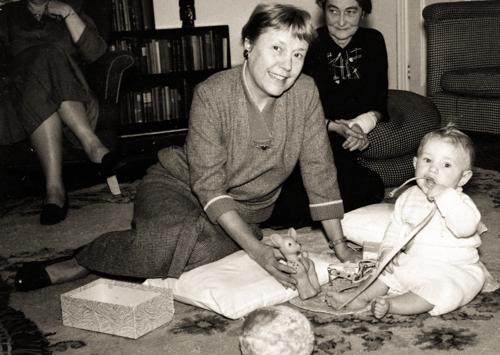
Tribute to Charlotte Towle
1967 Tribute to Charlotte Towle with Ner Littner, Pearl Rosenzweig, Alan Wade and Dame Eileen Younghusband.
-
Talking about Mao Zedong, with Ross Terrill
Aug. 4, 1980 The Australian-born American historian and China scholar discusses his book, Mao: A Biography.*Please note: some sections have been edited out from the original recording due to copyright considerations
-
Talking about China, with Ross Terrill
Jul. 15, 1992 The political scientist and China specialist joins Studs to discuss his book, China In Our Time: The Epic Saga of the People's Republic, from the Communist Victory to Tiananmen Square and Beyond.*Please note: some sections have been edited out from the original recording due to copyright considerations
-
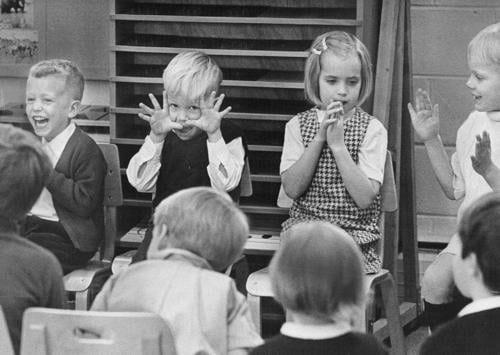
Studs Terkel moderates and comments on a round-table debate about the Montessori educational theory
Nov. 3, 1964 A round-table debate about the Montessori educational theory. Four early childhood development professionals speak of the pros and the cons of the program. Speakers include: Fay Bauling advisor at Wilson Jr. College, Dr. Urban Fleege of DePaul University, Dr. Ner Littner from the Institute of Psychoanalysis, and Hannah MacLaren, head teacher from Ancona School.
-
Robert Jay Lifton discusses his book "Home from the War"
Jun. 21, 1973 In his book, "Home From the War: Learning from Vietnam Veterans", Robert Jay Lifton reflects on what he's learned from talking with soldiers who came home from the Vietnam War. For some men, guilt and betrayal were common issues -- guilt in what they had done while in Vietnam and betrayal of what their superiors and the government had told them about the war itself.
-
R. D. Laing (Ronald David) discusses schizophrenia
Nov. 15, 1972 Psychiatrist R. D. Laing (Ronald David) talks about who is normal and who is hung up, or in a constant state of anxiety or worry. To those suffering with schizophrenia, the people around them are the crazy ones. Laing says schizophrenia is about healing a broken heart.
-
Professor Adolph Baker, Jurgen Hinze, Professor Richard Lewenton and Father William Wallace discuss science and politics; part 1
Jan. 12, 1971 Professors Adolph Baker, Jurgen Hinze, Richard Lewenton, and Father William Wallace discuss science and politics. The four professors explore question such as whether scientists be involved in political decisions. World War II and Vietnam War are used as examples by the scientists. An earlier interview with scientists Edward Teller and Albert Szent-Gyorgy is played.
-
Philip Hilts discusses his book "Behavior Mod"
Oct. 3, 1974 Philip Hilts, an author and journalist, discusses behavior modification and it advantages and dangers. He delves into B. F. Skinner and Ivan Pavlov's work and explains how behavior modification is used today. Hilts discusses cases used in prisons, schools, and workplaces. Hilts also talks about typical medications given to children who are said to experience hyperactivity.
-
Paul Linn in conversation with Studs Terkel
Sep. 28, 1976 Interviewing Paul Linn.
-
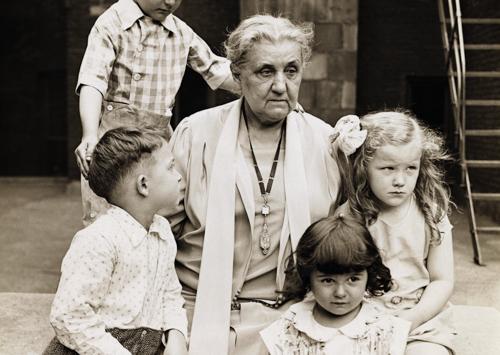
Ned Goldberg, Bertice MacDonald, Alan D. Wade discuss social work, Jane Addams and the War on Poverty
May. 1, 1966 Ned Goldberg, Bertice MacDonald, Alan D. Wade discuss social work, Jane Addams and the War on Poverty. Wade's article "What Would Jane Addams Do?" led the conversation. The three panelists are part of the National Association of Social Workers.
-
Maud Russell social worker, educator, and writer, discusses U.S./China relations
Jun. 1, 1976 Ms. Russell was a social worker with the YWCA in China from 1917-1943, and the executive director of the Committee for a Democratic Far Eastern Policy from 1946-1952. Ms Russell speaks of her time and work in China, about U.S./China relations and the cultural revolution taking place in China. Includes excerpt of Joshua Horn talking about a worker who got burned while working at a steel factory in China. He speaks of the outpouring help for the man from the community of Shanghi.(1934055-3-1)
-
Kenneth Donaldson discusses his book "Insanity Inside Out"
Jul. 19, 1976 Kenneth Donaldson discusses his book, "Insanity Inside Out" and his experience after being involuntarily committed to a psychiatric hospital. Topics of discussion include the conditions of the hospital, his experience being held there against his will, and the court case he won in front of the Supreme Court of the United States, O'Connor v. Donaldson.
-
Katherine Dunham discusses her studies in dance anthropology
Sep. 28, 1978 Interviewing Katherine Dunham, anthropologist, choreographer, and dancer. Dunham discusses various subjects including Haitian Vodou, an African diasporic religion, and the importance of cultural dance. Content Warning: This conversation has the presence of outdated, biased, offensive language. Rather than remove this content, we present it in the context of twentieth-century social history to acknowledge and learn from its impact and to inspire awareness and discussion.