Listen to New Voices on Studs Terkel our partnership with 826CHI-here! Read the Story


Showing 46 - 60 of 81 results
-
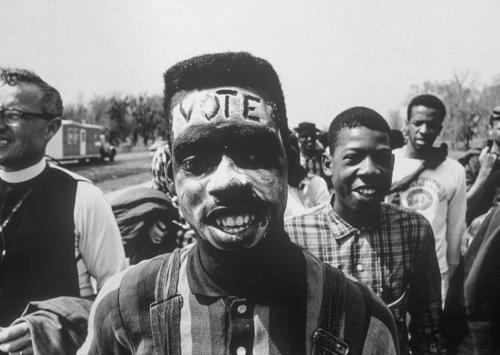
Interview in Montgomery, Alabama
Mar. 25, 1965 Interviewing in Montgomery, Alabama on March 25, 1965 (Montgomery #1). Speaks with Reverend William Franklin Pascal, cab driver, two barbers
-

Howard Schomer, Elsie Schomer and Rabbi Jacob Weinstein discuss their experiences in Vietnam
Jul. 26, 1965 Church leaders Howard Schomer, Elsie Schomer and Rabbi Jacob Weinstein talk about their experiences with the Vietnamese people they encountered. The group determined no matter who they came in contact with, two things were true, they were never told that they should leave Vietnam and that all the Vietnamese people longed for peace.
-
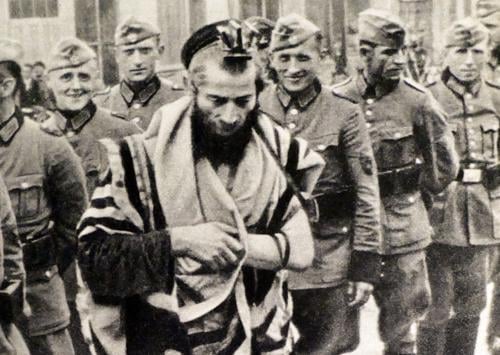
Heinrich Gruber and Howard Schomer discuss Nazi Germany and resistance
1968 German theologian Heinrich Gruber and pastor Howard Schomer discuss Nazi Germany and resistance
-
Hans W. Mattick and Father Robert Taylor discuss the scandal at Cook County Jail
1968 Content Warning: This conversation includes racially and/or culturally derogatory language and/or negative depictions of Black and Indigenous people of color, women, and LGBTQI+ individuals. Rather than remove this content, we present it in the context of twentieth-century social history to acknowledge and learn from its impact and to inspire awareness and discussion. Former Assistant Warden of the Cook County Jail, Hans W.
-
Gregory Dell Discusses his visit to the American hostages in Iran
Mar. 11, 1980 Reverend Greg Dell talks about the Iran Hostage Crisis and his visit to Iran to meet with the hostages and the student captures. He gives an overview of the students' thoughts about America's involvement in Iran and ideas on how to fix the relations between the two countries.
-
Fred Morris discusses his time working in the rural churches in Brazil
Nov. 14, 1974 Content Warning: This conversation includes graphic descriptions of physical abuse. A Methodist minister, Fred Morris, talks about the 11 years he lived in Brazil. Morris found it difficult to preach to the poor people whose children were dying of starvation. Morris also talks about the time he was abducted and tortured.*Please note: some sections have been edited out from the original recording due to copyright considerations
-
Father Roy Bourgeois discusses why the School of the Americas must be closed down
Mar. 24, 1994 Father Roy Bourgeois travels the country, talking to groups of people who aren't aware that their tax dollars go to fund the School of the Americas. Bourgeois discovered that money provided was for military weapons & for the training of soldiers to torture and to kill people of Latin American countries.
-
Father John McKenzie and Dr. Howard Schomer discuss personal responsibility, morality and hate, as it pertains to the Vietnam War ; part 2
1965 The interview continues with Father John McKenzie and Dr. Howard Schomer talking about fear and dissent. Schomer says Christians have the duty to dissent when they believe their beliefs are being contradicted by policy. He also talks about not understanding a dampening down of the human mind when it comes to human issues. Father McKenzie adds that society is made up of the best educated ignoramuses that ever existed.
-
Father John McKenzie and Dr. Howard Schomer discuss personal responsibility, morality and hate, as it pertains to the Vietnam War ; part 1
1965 Whether in the United States or Vietnam, Dr. Schomer asks what are our personal responsibilities for the atrocities? Father John McKenzie talks about a lowering of people's moral tone. People have put their morality in their pockets, so as to get cleared of something and not get involved, added Father McKenzie.
-
Father James Kavanaugh discusses his book "A Modern Priest Looks at His Outdated Church"
Jul. 5, 1967 Father James Kavanaugh discusses his book “A Modern Priest Looks at His Outdated Church," confession, how he’s treated as a priest, Vatican II, celibacy, Includes excerpts of interviews with Diane Romano, a Catholic woman who discusses her marriage, her family, birth control
-
Father George Zabelka discusses his thoughts on nuclear war and peace
Nov. 12, 1986 Father George Zabelka said he was both hopeful and discouraged about people taking a stand on nuclear weapons. Zabelka said the Army brain-washed them into believing it was better to bomb cities and kill people in order to achieve peace. A way to stop all wars, Zabelka believed all the religions in the world should declare that war and killing were sins.
-
Father Don Hedley, Sister Kay Kelly, Rene Golden and Secundine Ramirez discuss the tragic state of El Salvado
Feb. 19, 1981 Who's guilty for the death of 10,000 peasant farmers in El Salvador, the group of Father Don Hedley, Sister Kay Kelly, Rene Golden and Secundine Ramirez want to know. The fight and struggle for basic human rights has been going on in El Salvador for many, many years. The most recent tragic deaths of the four Catholic missionaries were because they sided with the poor.
-
Father Daniel Berrigan discusses his life
Jun. 1, 1972 Fr. Daniel Berrigan speaks about his early life, and relationship with his family, on his becoming a priest, and on being an anti-Vietnam War activist.
-
Father Bernard Serval discusses his background and his experiences in Nicaragua
Oct. 16, 1978 His belief of experiencing something for himself led Father Bernard Serval to live in the 3rd world country of Nicaragua. People there are so poor, they live on the side of the roads, explained Serval. People work long hours and only earn $2.00 a day. Contracting malaria is an issue because people can't afford the $5.00 it costs to buy a net for protection. Serval wants people to be aware all the poverty in Nicaragua but he knows it will never become of importance because the US will never benefit monetarily from that country.
-
Father Basil Von Rensburg and Peter Walshe discuss politics and their lives in South Africa
Apr. 30, 1986 South African Catholic priest Father Basil van Rensburg and Peter Walshe discuss their fights against apartheid. Rensburg pursued his fight through a hunger strike, and Walshe discusses the government's stance on apartheid and religion.