Listen to New Voices on Studs Terkel our partnership with 826CHI-here! Read the Story


Showing 76 - 90 of 177 results
-

John Frohnmayer in conversation with Studs Terkel
Apr. 30, 1993 Discussing the book "Leaving Town Alive: Confessions of an Arts Warrior" (published by Houghton Mifflin) with author John Frohnmayer.
-
John Bernard discusses his life, politics and his work with the Farmer Labor Party
Aug. 1, 1977 Interviewing labor organizer, civil rights activist, and former Congressman John Bernard. Bernard was elected as a Farmer-Labor candidate to the U.S. House of Representatives and served from 1937-1939.
-
Jim Balcer, Lawrence J. McKeon, Joey McDonald in conversation with Studs Terkel
Mar. 19, 1993 Discussing gays in the military with Director of Veterans Affairs for the City of Chicago Jim Balcer, Illinois State Representative Larry McKeon and Joey McDonald.
-
Jennifer Davis, Bill Sutherland and Zola Zembe discuss South Africa and apartheid
Feb. 27, 1979 Jennifer Davis, Bill Sutherland, and Zola Zembe discuss the South Africa and their experiences with apartheid. Jennifer Davis grew up in the white middle class society of Johannesburg, whereas Zola Zembe, a native black man who lives in Capetown. They, along with Bill Sutherland, an American who works as a Representative for the American Friends Service Committee, talk about the changes that need to made and how American people and companies can help. An earlier interview of Carl Douglas Fuchs is also played.
-
James Mills discusses his book "Report to the Commissioner," his newest publication
Oct. 3, 1972 James Mills, a novelist and journalist, talks to Studs about his book "Report to the Commissioner". Mr. Mills and Studs discuss the story and Mr. Mills goes in depth into the process of police detectives working a case. Studs plays an excerpt of a Chicago policeman talking about working on the tactical squad on the police force. The policeman tells of how they go into a neighborhood as civilians to stop crime.
-
James David Barber discusses his book, "The Pulse of Politics: Electing Presidents in the Media Age," with the author James David Barber
May. 30, 1980 James David Barber, author and political scientist, discusses his book, "The Pulse of Politics: Electing Presidents in the Media Age." He explains the premise of his beliefs that presidential elections run a cycle of "conflict, conscience, conciliation," and how media affects this. He uses examples of elections from Teddy Roosevelt to Jimmy Carter. Presidential campaign songs are played throughout the interview. A record is played to hear the voices of Teddy Roosevelt and Franklin D. Roosevelt.
-
James Cameron discusses journalist responsibility and expectations of political leaders with Studs in Ashburn Gardens, London ; part 2
1970 Studs Terkel interview with James Cameron, Brittish journalist. They discuss the objective truth and facts of journalism. Cameron shares his experience with a dying Winston Churchill and his views on science and human values. Politics, youth, and the atomic bomb are also topics in this interview. Studs quotes Albert Einstein and Sidney Burnstein, while Cameron quotes Oliver Cromwell. James Cameron's book, "Point of Departure" is also mentioned in the interview.
-
James Cameron discusses his experiences as a Brittish Journalist and his political and social beliefs ; part 4
Jun. 4, 1973 Studs Terkel interview with James Cameron, Brittish journalist. They discuss a variety of topics with politics and young people's attitudes the majority of the interview. This interview is done in Chicago, while the other three parts were done at Lewis and Clark College.
-
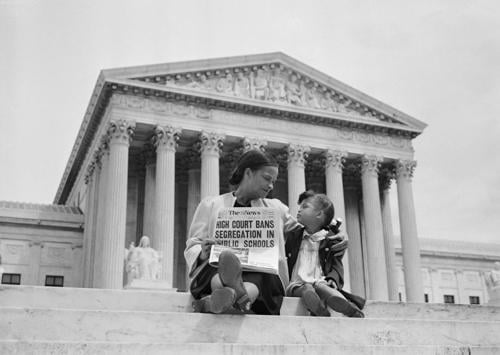
Ira B. Harkey discusses the south, civil rights, race relations, racism, his newspaper, and his career ; part 2
1966 Ira B. Harkey discusses the south, civil rights, race relations, racism, his newspaper, and his career. Includes Ira Harkey reading from his newspaper the Mississippi "Chronicle-Star".
-
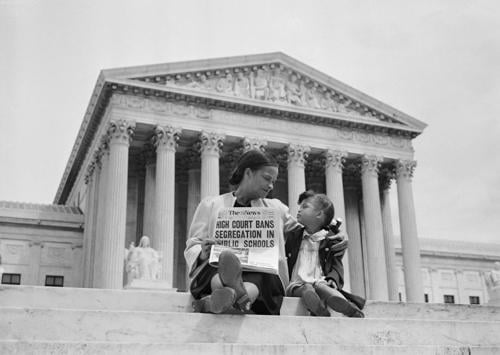
Ira B. Harkey discusses the south, civil rights, race relations, racism, his newspaper, and his career ; part 1
1966 Ira B. Harkey discusses the south, civil rights, race relations, racism, his newspaper, and his career. Includes Ira Harkey reading his writing from his newspaper the Mississippi "Chronicle-Star."
-
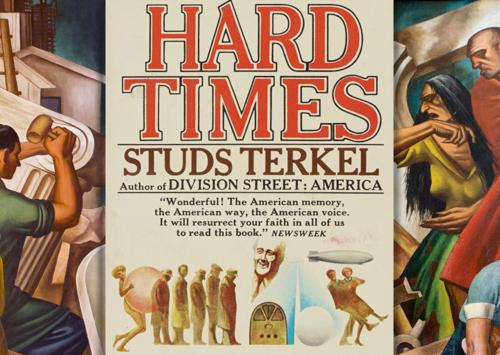
Inteviewees discuss a variety of topics from the Hard Times: an Oral History of the Great Depression program; excerpts part 3
Excerpts from different episodes of "Hard Times: an Oral History of the Great Depression". Concerning The New Deal: Ed Paulsen talks about conflicting feelings regarding the New Deal and how the government seemed more present in daily life. Gardner C. Means explains how the New Deal was created to help save the country. Joe Marcus remembers feeling like his ideas were valued and were making a difference in his government job. John Beecher talks about working in the transient camps.
-
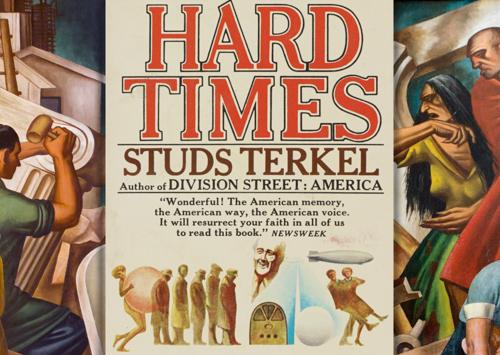
Inteviewees discuss a variety of topics from the Hard Times: an Oral History of the Great Depression program; excerpts part 2
Excerpts from different episodes of "Hard Times: an Oral History of the Great Depression". Bonnie Laboring Boy: Joe Morrison talks about generational differences in laborers. Evelyn Finn talks about trying to unionize at clothing factories. Two Strikes: Jose Yglesias talks about strikes in cigar factories and the lifelong stigmas of strikebreakers. Bob Stinson discusses working at General Motors and the sit-down strike. The Farmer is the Man: Oscar Heline explains farmer's actions in response to farm foreclosures.
-
-
-