Listen to New Voices on Studs Terkel our partnership with 826CHI-here! Read the Story


Showing 61 - 75 of 177 results
-

Maude DeVictor discusses Veterans Affairs and Agent Orange
Oct. 12, 1981 Maude DeVictor, a Veterans Affairs worker, talks about how she discovered Agent Orange after a Vietnam Veteran's widow called asking for help. DeVictor recalls her time spent calling Universities and Government Agencies trying to figure out what chemical caused the cancer and then trying to bring light to her discoveries. Studs reads two passages from Jacques Cousteau's "The Cousteau Almanac: An Inventory of Life on our Water Planet."
-
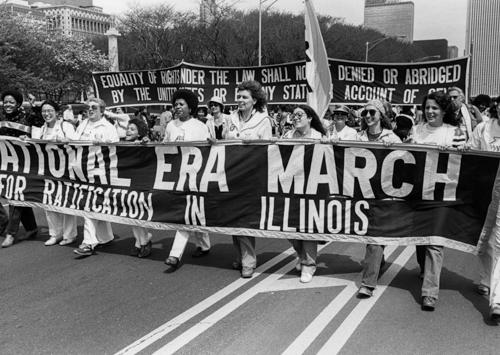
Marianne Bell, Shirley Wallace and Illinois Rep. Susan Catania discuss the Equal Rights Amendment
Jun. 2, 1982 Interviewing Equal Rights Amendment activists, Marianne Bell and Shirley Wallace, who were fasting as a political statement, and Illinois state representative and outspoken advocate of ERA, Susan Cantania.
-
Maria Cerda and Dick Simpson discuss Chicago: An Agenda for Change, with a focus on education ; part 3
Oct. 8, 1974 Chicago: An Agenda for Change. Part 3 of 5. Maria Cerda is a former Chicago Board of Education member.
-
Marcel Ophuls discusses his documentary films
Apr. 30, 1984 Discussing the showing of his films with film maker Marcel Ophuls.
-
-
-
Louis Untermeyer reads from and discusses "The Library of Great American Writing" ; part 3
1960 Lastly, with his book, "The Library of Great American Writing," Louis Untermeyer talks about Mark Twain, Emily Dickinson and personal friends of his, Robert Frost and Carl Sandburg. Twain, said Untermeyer, started out as a humorist but then became more pessimistic with "The Adventures of Huckleberry Finn". Emily Dickenson wrote in secret and she only gave permission for six of her poems to be published.
-
Louis Untermeyer reads from and discusses "The Library of Great American Writing" ; part 2
1960 Interviewing Louis Untermeyer [1 of 3 parts].
-
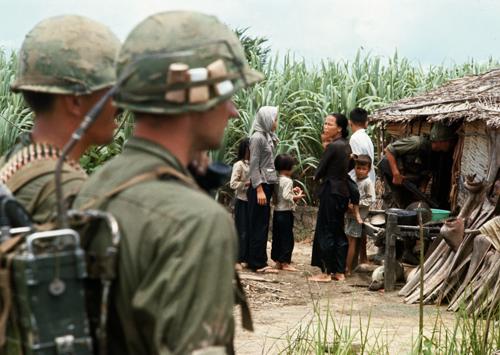
Louis Font and Ed Fox discuss their time in the military and the Vietnam War
Jun. 11, 1971 Louis Font and Ed Fox discuss their time in the military, the Vietnam War, military rituals, and West Point military academy. They express their anti-war sentiments and describe atrocities committed in Vietnam.
-
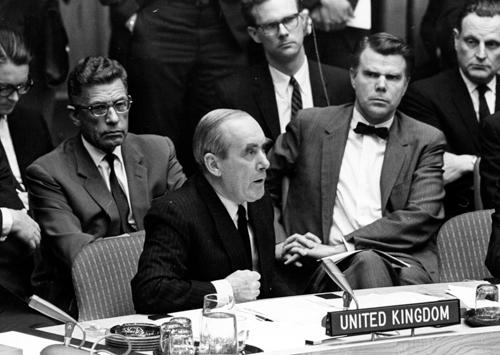
Lord Caradon discusses the United Nations
1967 Lord Caradon discusses the United Nations and its efforts.
-

Leonard Matlovich talks about his experience in the U.S. Air Force
Nov. 14, 1975 Interviewing Len Matlovich, formerly a Sergeant in the U.S. Air Force, about the status of gay men in the armed forces and his expulsion from the Air Force after he publicly stated that he was gay.
-
Laurence Shoup discusses his book, "The Carter Presidency and Beyond: Power and Politics in the 1980s"
1970 Author Laurence Shoup discusses his book, "The Carter Presidency and Beyond: Power and Politics in the 1980s," and explains how President Carter came to be elected. He describes the Trilateral Commission and other groups created by corporations and the richest American families to lobby. the government. He also discusses the Carter presidency and his double-dealing with major issues such as unions and regulating big businesses.
-
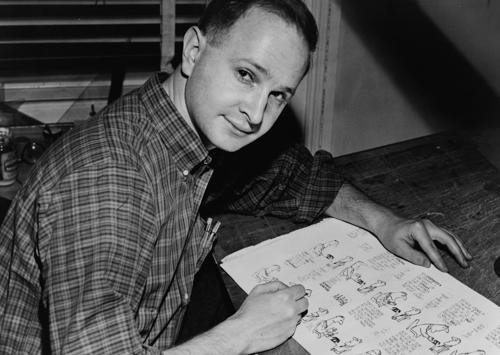
Jules Feiffer discusses his book "Feiffer on Nixon"
Nov. 10, 1974 Content Warning: This conversation has the presence of outdated, biased, offensive language. Rather than remove this content, we present it in the context of twentieth-century social history to acknowledge and learn from its impact and to inspire awareness and discussion. In his book, "Feiffer on Nixon: The Cartoon Presidency," Jules Feiffer tries to give his readers his take on politics and the government. In addition, through his descriptions of the cartoon panels, Feiffer offers his explanations of who President Nixon was.
-
Joseph Collins discusses the book "Food First"
Oct. 28, 1977 Dr. Joseph Collins co-authored the book, "Food First: Beyond the Myth of Scarcity". Among the topics in the book include world hunger, famine, food policies and politics. Collins asks the readers to think about being ok with eating food grown in another country when the workers of that country are so poor, they themselves are starving for food.
-
John Hope Franklin discusses racial inequality in America
Mar. 15, 1979 John Hope Franklin, historian, discusses his life and the racial inequality he witnessed. He also talks about John Hope and W. E. B. Du Bois. Dr. Franklin also talks about his Jefferson Lectures, Thomas Jefferson, and slavery.