Listen to New Voices on Studs Terkel our partnership with 826CHI-here! Read the Story


Showing 166 - 180 of 194 results
-
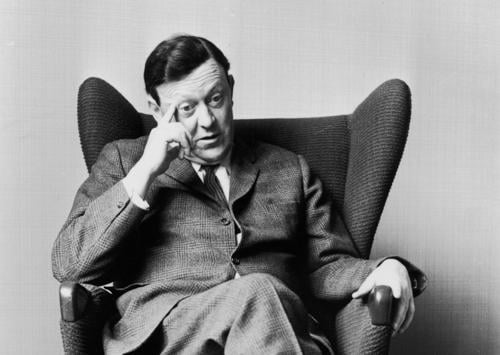
Conor Cruise O'Brien discusses Africa
Apr. 29, 1965 Conor Cruise O'Brien discusses the culture and political state of Africa and his experiences with journalism in African countries including Congo and Ghana.
-

Christopher Lasch in conversation with Studs Terkel
Sep. 20, 1984 Discussing excellence in education with author, historian and cultural critic Christopher Lasch.
-
Charles L. Mee discusses his book "Meeting at Potsdam"
Apr. 10, 1975 The Big Three leaders - Winston Churchill, Joseph Stalin and Harry Truman - are among the main topics of Charles L. Mee's book, "Meeting at Potsdam." It was the ending stages of World War II and as Mee explains, the meeting at Postdam was really a peace conference. The beginning of this recording includes an excerpt of a speech by Churchill.*Please note: some sections have been edited out from the original recording due to copyright considerations
-
Celia Morris Eckhardt reads from and discusses the book "Fanny Wright: Rebel in America"
May. 23, 1984 Discussing the book "Fanny Wright: rebel in America" with the author Celia Morris Eckhardt.
-
Carl Smith discusses his book "Urban Disorder and the Shape of Belief: the Great Chicago Fire, the Haymarket Bomb, and the Model Town of Pullman"
Feb. 27, 1995 Non-fiction author Carl Smith discusses his latest work which focuses on the history of Chicago. Topics covered include labor movements, specifically the Pullman strike and the 1970's case trial with the Chicago Seven.
-
-
-
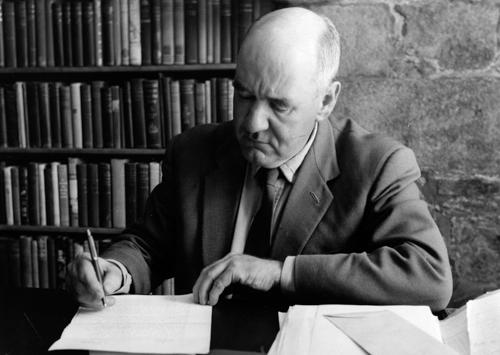
Blanche Wiesen Cook discusses her book, "The Declassified Eisenhower: A Divided Legacy of Peace and Political Warfare"
Aug. 6, 1981 Blanche Wiesen Cook, historian, professor, and author discusses her book, "The Declassified Eisenhower," and explains Eisenhower's peace and war beliefs. She describes his beliefs at the end of World War II and his relationships with fellow generals and leaders.
-
Bill Adelman, Paul Avrich, Carolyn Ashbaugh, and Bill Neebe discuss the Haymarket Square Riot
May. 2, 1986 Commemorating the centennial of the Haymarket Square Riot, or Haymarket Affair, are authors and historians Bill Adelman, Paul Avrich, Carolyn Ashbaugh, and the grandson of Haymarket defendant Oscar Neebe, Bill Neebe. The interveiwees create a timeline of the events leading up to the Haymarket Riot including the German immigrants living situations, unions and strikes, police brutality and corruption. The group also lays out the events from May 1st to May 5th and then the following corrupt trials.
-
Bertrand Russell discusses science and world peace. Phyllis Evans discusses the National Health Plan ; part 1
1962 Sir Bertrand Russell says scientists have a fundamental obligation to let the authorities know if and when what they're working on could lead to or cause a war. Russell claims, no matter the side, there are no winners as a result of war. The world could be a far better place, Russell explained, if it weren't for the fact of man's hatred toward other men. If one lives in the United States and has a grave illness or needs a major surgery, Phyllis Evans says one should not have to go into bankruptcy because of all the costs.
-
Basil Davidson discusses African history, culture and his book, "Lost Cities of Africa" with Studs Terkel ; part 1
1968 Studs interview with Basil Davidson, Africanologist, about his book, "Lost Cities of Africa." The interview takes place in Barnes, London. They touch on African culture, history, and civilization.
-
-
Ann Banks in conversation with Studs Terkel
Feb. 2, 1981 The journalist, writer, and editor discusses her book, First Person America, which documents over 80 oral histories from the time of the Federal Writers' Project, which was part of the Works Progress Administration.*Please note: some sections have been edited out from the original recording due to copyright considerations
-
Anita Miller and Jeanne Madeline Weimann discuss their book, "The Fair Women"
Jul. 17, 1981 Anita Miller and Jeanne Madeline Weimann discuss their book, The Fair Women, published in 1981, a book that talks about the women's role in the World's Columbian Exposition, especially in the creation of the Women's Building.
-
Ana Carrigan reads from and discusses the book "Salvador Witness"
Jan. 16, 1985 Through Jean Donovan's diary entries and her book, "Salvador Witness: The Life and Calling of Jean Donovan," Ana Carrigan offers a camera len's view of what Joan Donavan experienced while working as a missionary in El Salvador. Jean Donovan felt a strong need to work with the poor. Carrigan's book also covers Donovan's murder and cover up by the US State Department.