Main navigation

  • Home
  • Explore
  • Interact
      • Clips Explore themed playlists of audio clips from the Archive.
      • Reuse Listen to creative reuses of Studs’ interviews.
      • Remix Combine audio from the Archive to create entirely new works.
  • Podcast
  • Classroom
  • Donate

00 / 00

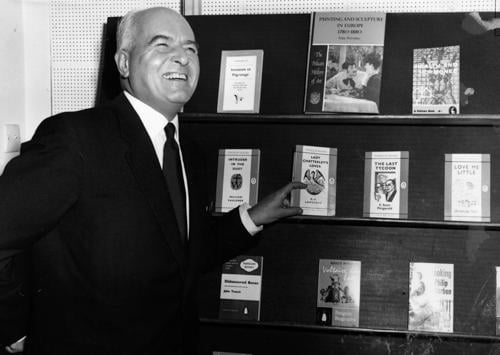
© Keystone/Getty Images

C. Northcote Parkinson talks with Studs Terkel

BROADCAST: Jan. 29, 1962 | DURATION: 00:31:20

Details

Broadcast Date
Jan. 29, 1962

Physical Format
2 sound tape reels (ca. 60 min.) : 7 in.

Duration
31 minutes, 20 seconds

Digital Format
WAV

Ownership
The Chicago History Museum

Language
English

Topics

Anthropology & Sociology Working, Labor, Economy

People

Authors, Writers Historians

Tags

Radio programs. Parkinson, C. Northcote, 1909---Interviews Audiotapes. Parkinson, C. Northcote, 1909- ,-- interviewee

Related Programs

Henry Ollendorff discusses refugees and migrants in Europe

Feb. 14, 1974

Pat Thompson discusses her background and her TV reporting career

Jan. 14, 1975

Discussing the book "China" with the author William Hinton

Mar. 28, 1980

Discussing the revolution in Nicaragua with poet Daisy Zamora and sociologist Oscar Vargas

Sep. 4, 1984

Interviewing Chicagoan Kid Pharaoh : part 1

Studs Terkel discusses interviews he conducted for his book "Working"

Aug. 22, 1978

Major Support Provided By
The Becca Kopf Memorial Circle of Friends
WFMT Radio Network & Chicago History Museum

This site is being managed by WFMT in partnership with the Chicago History Museum.

Library of Congress

In-kind digitization services of the Studs Terkel Radio Archive are provided by the Library of Congress.

National Endowment for the Humanities

The Studs Terkel Radio Archive has been made possible in part by a major grant from the National Endowment for the Humanities: Exploring the human endeavor.

Studs Terkel Radio Archive

All Programs About The Archive About Studs Supporters Contact

©2026 WFMT Radio Network | Site by Jell Creative

Any views, findings, conclusions, or recommendations expressed in this web resource do not necessarily represent those of the National Endowment for the Humanities.