Listen to New Voices on Studs Terkel our partnership with 826CHI-here! Read the Story


Showing 16 - 30 of 194 results
-

Talking about musicals, with Albert Johnson
Nov. 8, 1979 The African American film scholar discusses the history of American musical films, especially during the Depression and into the 1950's.*Please note: some sections have been edited out from the original recording due to copyright considerations
-
Talking about Ellen Terry, with Tom Prideaux
Dec. 12, 1975 The author and editor joins Studs to discuss Love or Nothing: The Life and Times of Ellen Terry, his biography of the famed English actress. The program also includes recordings of George Bernard Shaw and clips of dramatic readings by actors Denys Hawthorne and Flora Robson.*Please note: some sections have been edited out from the original recording due to copyright considerations
-
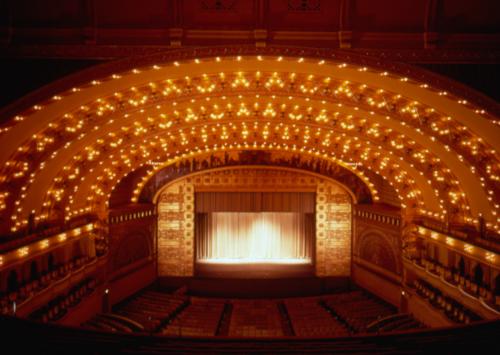
Studs Terkel discusses the history of Chicago architecture and its future with Carl Condit, Richard Nickel, and Ben Weese
1957 Studs Terkel rebroadcasts a discussion on the Chicago School of Architecture and its future in memory of Carl Condit. Carl Condit, Richard Nickel, and Ben Weese share their opinions on the Auditorium Theatre, University of Illinois-Circle Campus, Chicago Civic Center, Monadnock Building, and historical continuity.
-
Studs Terkel discusses George Bernard Shaw with Stanley Weintraub
1970 Studs discusses the life and work of Irish playwright, critic, and political activist George Bernard Shaw with historian and biographer Stanley Weintraub. The focus of the interview is Weintraub's book, Journey to Heartbreak: The Crucible Years of Bernard Shaw 1914-1918.*Please note: some sections have been edited out from the original recording due to copyright considerations
-
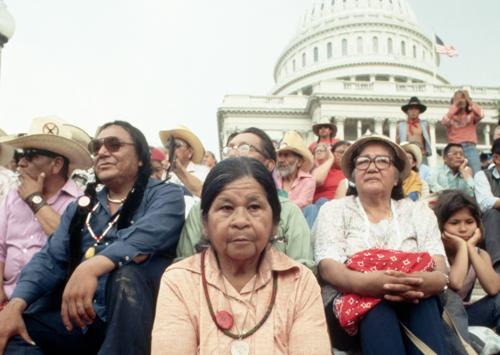
Stan Steiner talks with Studs Terkel ; part 2
1967 Discussing the book "The New Indians" and interviewing the author Stan Steiner.
-
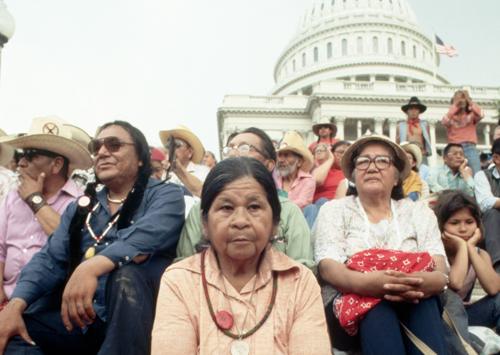
Stan Steiner talks with Studs Terkel ; part 1
1967 Discussing the book "The New Indians" and interviewing the author Stan Steiner.
-
Sidney Lens in conversation with Studs Terkel
Feb. 15, 1983 Discussing the book "The Maginot Line Syndrome: America's Hopeless Foreign Policy" (published by Ballinger) with the author, labor activists, and historian Sidney Lens.
-
Ross Miller discusses his book "American Apocalypse: The Great Fire and the Myth of Chicago"
Jun. 7, 1990 Author Ross Miller discusses his latest work, which centers around Chicago and the aftermath of the Great Chicago Fire and its effects on rebuilding the metropolis and the advantages of gaining a new take on architecture and society.
-
Roger G. Kennedy in conversation with Studs Terkel
May. 6, 1986 Discussing the book "Architecture, Men, Women and Money in America, 1600-1860" (published by Random House) with the author, historian Roger Kennedy.
-
Roger G. Kennedy discusses his book "American Churches"
Jan. 18, 1983 According to Roger G. Kennedy's book, "American Churches," places of worship can also be organic expressions of the community. In the church, whether it be a temple or a cathedral, the architecture of the building itself should be inviting so that people will want to participate inside.*Please note: some sections have been edited out from the original recording due to copyright considerations
-
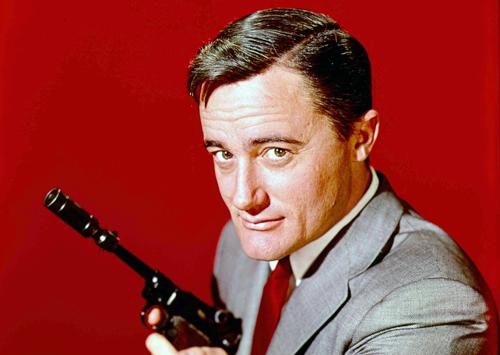
Robert Vaughn talks with Studs Terkel
1970 Robert Vaughn takes time out from his Drury Lane appearance in "Tender Trap" to discuss his new book "Only Victims" with Studs Terkel. The discussion spans the years 1938 when Martin Dies became the first House Committee on Unamerican Activities (HUAC) chairman to Vice President Spiro Agnew's condemnation of the "New York Times" and "Washington Post". Vaughn created the title of his book "Only Victims" from a Dalton Trumbo speech that reflected back on the era of HUAC as being one where there were no heroes, no villains, only victims.
-
Robert Twombly discusses the biography “Louis Sullivan: His Life and Work”
Mar. 24, 1986 Architectural historian Robert Twombly discusses the biography “Louis Sullivan: His Life and Work.” Referred to by Studs as the architect that most symbolizes Chicago architecture, Louis Sullivan, this program outlines Sullivan’s life as a prominent architect who was one of the first to incorporate nature, or "the organic", into architecture, and who ended his life in poverty. This program includes a clip from 1956 of Frank Lloyd Wright speaking to his contemporaries, indignant, asking what took them so long to recognize Louis Sullivan and his genius in the architectural field?
-
-
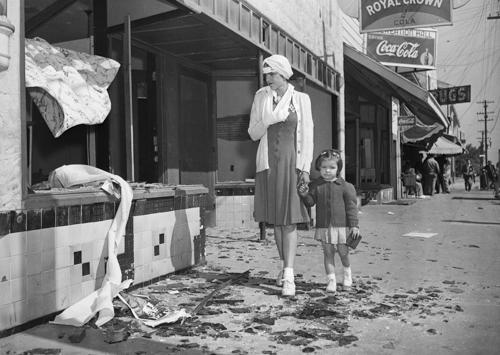
Robert Allen discusses his book "The Port Chicago Mutiny"
May. 12, 1989 On July 17, 1944, there was a huge explosion at Port Chicago in California. Of the 320 men on duty at the pier that died, 202 of them were Black. Robert Allen's book, "The Port Chicago Mutiny: The Story of the Largest Mass Mutiny Trial in U.S. Naval History," covers the story of poor working conditions, the explosion, work stoppage, the trial and the outcome. There is an excerpt of Joe Small, recalling what happened, when he was a sailor present there.
-
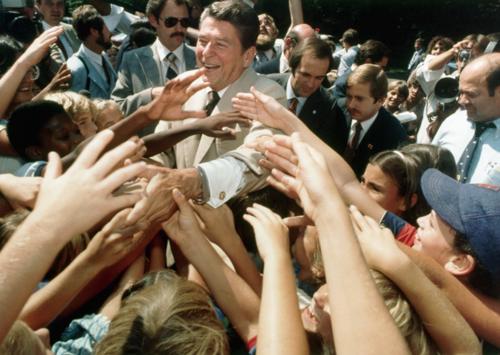
Richard Barnet discusses his book "The Rockets' Red Glare"
Feb. 20, 1990 According to Richard Barnet's book, "The Rockets' Red Glare: When America Goes to War: The Presidents and the People," most people kept to themselves and didn't talk to one another about anything. Barnet talks about how the government would use propaganda to get people interested and thus backing the government with going to war.