Listen to New Voices on Studs Terkel our partnership with 826CHI-here! Read the Story


Showing 61 - 75 of 212 results
-

Leon Forrest in conversation with Studs Terkel
Sep. 8, 1976 Tribute to William Faulkner with Leon Forrest
-
Leon Forrest in conversation with Studs Terkel
Sep. 15, 1992 Discussing the book "Divine Days" (published by Another Chicago Press) with author Leon Forrest.
-
Lenore Griesing, Carol Kleiman, and Joan Smutny discuss women suffrage and the event they organized, "Woman Power Through Education"
Mar. 1, 1969 Studs interview with Lenore Griesing, Carol Kleiman, and Joan Smutny, organizers of "Woman Power through Education" at the National College of Education. Studs played a part of a recorded interview he had with Sybil Thorndike, a pacifist. The recording was about women's right to vote and political involvement. He also played part of a song that was played at Susan B. Anthony's birthday party but no title was given. The interview covered motherhood, education for women, family life, choices, and liberation.
-
Kelly Swenson and kids discuss the Arts Lab Movement created by Jim Haynes ; part 1
The Arts Lab Movement was created by Jim Haynes in 182 Drury Lane, London. Studs Terkel interviews Kelly Swenson.
-
June Terpstra and two women, Ann and Donna, discuss battered women
Oct. 28, 1983 Discussing battered women with the director of the Evanston Shelter for Battered Women, June Terpstra. Two women, Ann and Donna, talk about their experiences of abuse with their husbands.
-
June Sochen discusses her book "Movers and Shakers"
Dec. 17, 1973 Northeastern Illinois University professor June Sochen discusses her book "Movers and shakers;: American women thinkers and activists, 1900-1970". Sochen and Studs cover a wide range of female activists and radicals who fundamentally reshaped American society via their efforts in the labor movement and union organizing, the arts and culture, and research.
-
Juliet Mitchell discusses women, family, and oppression
Apr. 25, 1971 An interview with teacher and lecturer, Juliet Mitchell, who is a Marxist. She shares her support for the women's movement and talks about issues that affect women especially gender inequality. Juliet also refers to some comparisons between British and American women's movement.
-

Judy Hough, Lily (Rose Rigsby) Lowell and Jimmy White talk with Studs Terkel Part 1
1968 Discussion of Division Street: America
-
Joseph Campbell discusses his book "Myths to Live By"
Jan. 31, 1973 According to Joseph Campbell's book, "Myths to Live By," myths put people in touch with dimensions of their own being and consciousness. Dreams, Campbell explained, are private myths and myths are a public dream. Campbell also talks about how the west and the orient view myths and symbols.
-
Jonathan Spence discusses his book "God's Chinese Son: The Taiping Heavenly Kingdom of Hong Xiuquan"
Feb. 1, 1996 Jonathan Spence, author and Yale University history professor, talks about his book "God's Chinese Son: The Taiping Heavenly Kingdom of Hong Xiuquan." He discusses Hong Xiuquan who believed himself to be the son of God. Spence begins his interview explores how Christianity came to China and how Hong came into contact with its teachings. He explains Hong's belief that the Qing dynasty was an enemy government that needed to be overthrown which led to the Taiping Rebellion.
-
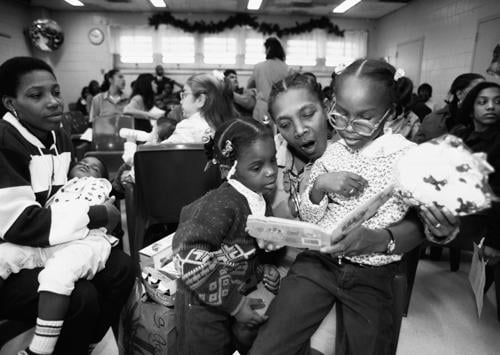
Jonathan Kozol discusses his book "Illiterate America"
Dec. 1, 1985 Jonathan Kozol discusses his book "Illiterate America." Includes an interview of a black teenager student named Jimmy.
-

Jonathan Kozol discusses his book "Children of the Revolution: A Yankee Teacher in the Cuban Schools"
Nov. 10, 1978 Studs has a spirited discussion with Jonathan Kozol who shares his adventures and learnings in Cuba that formed the basis of his book "Children of the Revolution: A Yankee Teacher in the Cuban Schools." Kozol explains the ambitious Cuban Literacy Campaign begun in the 1960s that aimed to educate the entire population, tells of children teaching adults in remote villages by lantern light, and the unity and national pride that resulted. He and Studs explore the idea of generative words in literacy education and contemplate Kozol's hope to adapt a similar approach to American education.
-
John T. Scopes discusses the "Scopes Monkey Trial" of 1925
Oct. 20, 1960 John T. Scopes was a young teacher who taught biology. He was arrested because in Tennessee, no theory of the origin of man could be taught in schools. Clarence Darrow, an attorney from Chicago, defended Scopes in the "Scopes Monkey Trial" of 1925. Scopes was found guilty and was fined $100.
-
-
Jim Grigsby discusses art classes with sound
Artist Jim Grigsby and other unnamed guests talk about introducing sound into art classes. Includes an unrehearsed production by a woodworking class.