Listen to New Voices on Studs Terkel our partnership with 826CHI-here! Read the Story


Showing 46 - 60 of 212 results
-

Norma Field reads from and discusses the book "In the Realm of a Dying Emperor"
Jan. 22, 1992 "In the Realm of a Dying Emperor: A Portrait of Japan at Century's End," is Norma Field's story of dissenters against Emperor Hirohito. There's the story of Mr. Chibana, a supermarket owner, who was arrested for burning the flag of the Rising Sun because he learned of the mass suicides by the people of Okinawa. There were also some that believed Emperor bore some responsibility for WWII when being told it was imperative to fight the sacred war.
-
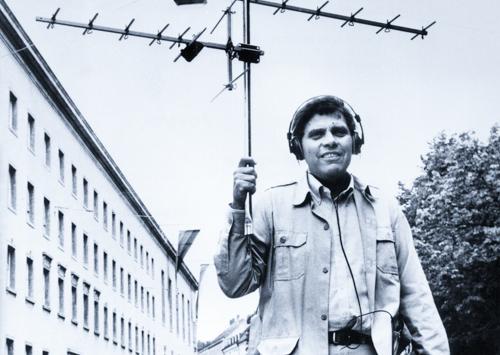
Neil Postman discusses the book, "The School Book: For People Who Want to Know What All the Hollering Is About,".
Feb. 8, 1974 Neil Postman, an author, educator, media theorist and cultural critic discusses his book; "The School Book: For People Who Want to Know What All the Hollering Is About,". Mr Postman and Studs talk about his definition of what school is for and it's worth, and they converse about several sections of the book. Mr. Postman reads an excerpt from his book to begin the interview.
-
Neil Postman discusses his book "Teaching as a Conserving Activity"
Nov. 6, 1979 In schools, reading, writing and speech are all on the decline because there are too many visual images from the TV, according to Neil Postman’s book, “Teaching as a Conserving Activity”. Postman criticized “Sesame Street” for its instantaneity. There are no short cuts in teaching, said Postman. He believed the worst thing a teacher could do was to make teaching entertaining for their students.
-
Mrs. Bailey Bishop and Edith Neisser talk about education of children, part 2
1965 Part 2 of a series sponsored by the national conference of Christians and Jews. Includes "Rearing the Child of Good Will" and "The Child and the Changing World." Mrs. Bailey Bishop and Ms. Neisser discuss the importance of an open mind and a accepting environment in education and at home, and how this helps the children to accept change as it happens.
-
Mrs. Bailey Bishop and Edith Neisser talk about education of children, part 1
1965 Part 1 of a series sponsored by the national conference of Christians and Jews Titles discussed include "Rearing the Child of Good Will" and "The Child and the Changing World." Includes interviews of Mrs. Bailey Bishop and Edith Neisser. They discuss the importance of an open mind and accepting environment in education and at home, and how this helps the children to accept change as it happens. Excerpt of "Jimmy" discussing his feelings about school (unsure of record number the quote comes from).
-
Morris Haimowitz discusses illiteracy and the "Read Now" project
1960 Although he doesn't know for sure, Morris Haimowitz believes there 300,000 people in the Chicago metropolitan area who cannot read or write. Hamimowitz's "Read Now" program is looking for anyone who can read and write to become a teacher to people that need assistance with literacy. *Please note: some sections have been edited out from the original recording due to copyright considerations
-
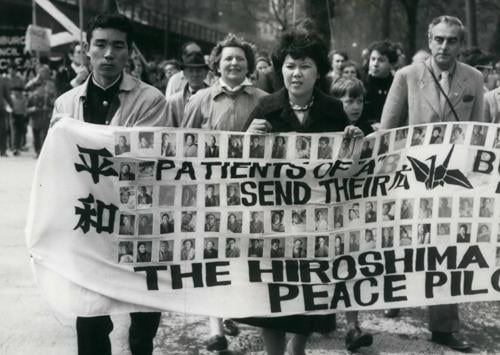
Miyoko Matsubara discusses her experiences as a survivor of the atomic bombing of Hiroshima
Mar. 29, 1962 Miyoko Matsubara, a Japanese survivor of the atomic bomb dropped on Hiroshima, discusses her experiences through translator Joan Takada. Later in life, she went on to work with disadvantaged children and as an advocate for world peace and the prevention of nuclear testing and warfare.
-
Milton Mayer reads and discusses his article, "Ill Met by Moonlight"
Dec. 31, 1968 Million Mayer, journalist, reads his article, "Ill Met by Moonlight" and discusses his thoughts on technology and automation replacing jobs and human interactions.he also talks about youth, non-violence protesting for change, and education.
-
Milton Mayer discusses the educational philosophy of Robert Hutchins
May. 27, 1977 Milton Mayer discusses the state of U.S. education and the educational ideas of Robert Hutchins.
-
Milton Mayer discusses Quakerism and the impact they have had on society
Dec. 27, 1974 Milton Mayer, journalist and educator, talks with Studs about Quakerism. They talk about how religion relates to society in the times of change. Mr Mayer describes an exchange with a gentleman who asked what is a Quaker. The man had been an SS officer who told Mr Mayer his story. The man had been touched by the anonymous generosity of the Quakers many years before. Mr Mayer speaks of A. J. Musty, clergyman and political activist as his mentor and friend, and the things he learned from him.
-

Miles Horton and Elliot Wigginton discuss the Foxfire Project
Jun. 1, 1977 Discussing the Foxfire books and interviewing Miles Horton and Elliot Wigginton. Wigginton is one of the editors/compilers of several of the books in the series about traditional handicrafts and practical methods used in rural life.
-
Metro High School students talk with Studs Terkel
Apr. 7, 1975 Interviewing Shelby Taylor, Paul Goren, Jean Tucker, Paul McCree from Metro High School in Chicago, Ill.
-
Maud Russell social worker, educator, and writer, discusses U.S./China relations
Jun. 1, 1976 Ms. Russell was a social worker with the YWCA in China from 1917-1943, and the executive director of the Committee for a Democratic Far Eastern Policy from 1946-1952. Ms Russell speaks of her time and work in China, about U.S./China relations and the cultural revolution taking place in China. Includes excerpt of Joshua Horn talking about a worker who got burned while working at a steel factory in China. He speaks of the outpouring help for the man from the community of Shanghi.(1934055-3-1)
-
Maria Cerda and Dick Simpson discuss Chicago: An Agenda for Change, with a focus on education ; part 3
Oct. 8, 1974 Chicago: An Agenda for Change. Part 3 of 5. Maria Cerda is a former Chicago Board of Education member.
-
Madame Lotte Lehmann discusses teaching
Nov. 6, 1964 Now retired from singing opera, when Madame Lotte Lehmann is not traveling around Europe, she teaches, what she says, are the best students she has encountered, at Northwestern University. Lehmann explains her hope is to not only teach but to inspire singers to be larger than life and to bring out their own personalities in a song.