Listen to New Voices on Studs Terkel our partnership with 826CHI-here! Read the Story


Showing 1471 - 1485 of 5186 results
-

Lorraine Hansberry discusses her play "A Raisin in the Sun"
May. 12, 1959 Playwright Lorraine Hansberry discusses her play "A Raisin in the Sun" and theater in general; last 10 minutes is a reading of "Chicago: South Side Summers" from "To Be Young, Gifted, and Black." Orginal air date is 05/12/1959
-

Loren Baritz talks about his theories on professional intellectuals and discusses his book "The Servants of Power: A History of The Use of Social Science in American Industry"
Jan. 25, 1963 Loren Baritz a professor of Intellectual History discusses professional intellectuals as schizophrenics. His main theory being that they have to split themselves; the intellectual in the ivory tower and the Woman/Man, the side that needs to participate in society.
-

Loren Baritz discusses the relationship between education and work
Jul. 31, 1974 Loren Baritz, Executive Vice President of Empire State College (part of the State University of New York), discusses the purpose of higher education and the relationship between higher education and work. Topics of discussion include the current state of student apathy driven by economic insecurity, vocationalism, the structure of higher education institutions, and how the generation gap affects learning. Baritz also discusses the redefining of work in American culture and ideas for making liberal arts education more relevant to work.
-

Lorell Wyatt, Glenda Starr-Kelly and Lynda Barry discuss "The Good Times are Killing Me"
Oct. 2, 1989 Best friends, white flight and racism are all apart of Lynda Barry's book, "The Good Times are Killing Me." Lorell Wyatt and Glenda Starr-Kelly reenact scenes from the play, which is playing at the Body Politic Theater. In the end, Barry's book showed power and privilege mattered more than friendship.
-
-
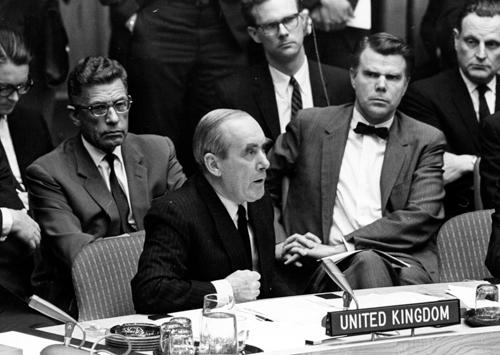
Lord Caradon discusses the United Nations
1967 Lord Caradon discusses the United Nations and its efforts.
-
London taxi driver discusses changes in London and speaks about present-day youth culture ; part 1
1968 During a visit to London, Studs interviews a 73 year old cab driver in London, who has 50 years on the job. They discuss traffic jams, the elderly and the young, poverty, welfare, and society. Studs also interviews a number of people attending the Tate Gallery's Lichtenstein Exhibition.
-
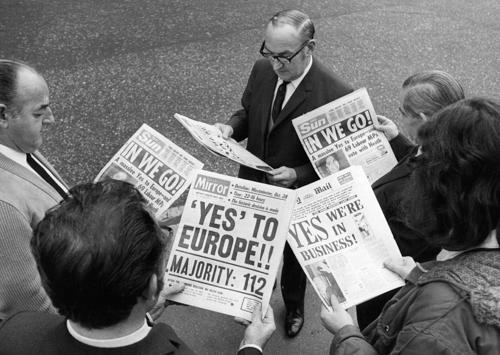
London newspaper vendor, George Curry, discusses politics and art, while Studs Terkel was in London, England
Sep. 1975 While in London, England, Studs Terkel interviews George Curry, a newspaper vendor with a storefront in a hotel. The two discussed Curry’s hometown of Dundee, Scotland and its politics, in addition to London’s current political atmosphere. They also talk about Curry’s political leanings; he is a socialist, and he criticizes England’s immigration policies. Curry comments on his interest in the arts and speaks on stereotypes surrounding the working class. The interview is interrupted intermittently by customers buying their morning paper.
-
Lois Wille discusses the many problems at Crane High School
Dec. 14, 1965 Lois Wille caused an uproar with the story she wrote for the Chicago Daily News, "Inside a Slum High School." According to Wille's investigation, a lack of money, over crowding of students, lights that don't work in the school and no books were among some of the problems that Wille found at Crane High School. Students also had a pessimistic view, explained Wille, as she found students didn't believe the teachers and counselors cared what theyd do after they got out of high school but they just wanted them to get out and leave Crane.
-
-
Lois Wheeler Snow discusses her book “China on Stage”
Actor and author Lois Wheeler Snow discusses her book “China on Stage,” and shares her experiences in China, primarily involving ballet, opera, and plays.
-
Lois Wheeler Snow discusses her book "China on Stage"
Dec. 19, 1972 The Peking Opera and "Taking Tiger Mountain by Strategy" are among topics discussed in Lois Wheeler Snow's book, "China on Stage: An American Actress in the People's Republic". While visiting China, Snow learned the Chinese plays were both of the traditionally old ways and of the new revolutionary ways. Snow also adds that performances of Chinese acrobatics is like nothing in the United States.
-

Live musical performance by Isaac Stern
Jan. 20, 1989 Studs Terkel sits down to interview American Violinist Isaac Stern. Stern performs for Terkel on the radio.
-
Listening to and discussing the "Living Music Collection '86," with saxophonist, bandleader, and composer Paul Winter
Oct. 20, 1986 Listening to the Living Music Collection
-