

-

-
-
-
Director Nick Rudall discusses the play "Candida"
Sep. 20, 1990 Nick Rudall talks about directing his 7th play by George Bernard Shaw. Three cast members, Daria Martel, Tom Amandes and David New are part of the interview, too. The actors reenact various scenes of the play. Rudall explains Shaw wrote "Candida" as a way to sort through his complicated feelings with a woman.
-
Director Michael Bogdanov discusses his production of Shakespeare’s “Timon of Athens”
Apr. 18, 1997 Interviewing television and theater director Michael Bogdanov. He discusses major themes from the play “Timon of Athens,” his life, and his work as a director. Includes a 10 second test tone. Content Warning: This conversation has the presence of outdated, biased, offensive language. Rather than remove this content, we present it in the context of twentieth-century social history to acknowledge and learn from its impact and to inspire awareness and discussion.
-
Director King Vidor and Bob Edmonds discuss Vidor’s films
Jan. 23, 1975 Film director King Vidor discusses his films, their themes, and where film was heading at the time of his interview with Studs Terkel. Columbia College’s Bob Edmonds joins them and further discusses Vidor’s work.
-
Director Frank Galati discusses "Postcard From Morocco"
May. 17, 1991 Frank Galati talks about the production of, "Postcard From Morocco." The stories are told through the seven people stranded at the train station. Galati notes that the luggage the people have with them also represent people's baggage through out their lives.
-
Dieter Lattman discusses his career as a German writer and freelance journalist and his life after WW II ; part 1
Mar. 1, 1967 Studs interview with German writer and freelance journalist, Dieter Lattman, who shares his military family background and the influence that WW II had on his desire to involve himself in politics. They discuss other German authors and the German family and culture. Studs quotes German journalist and political critic, Joachim Kaiser, who called the young people of Germany a "fatherless generation." Studs interviews Lattman in Germany.
-
Dieter Lattman discusses division between intellectuals and the general public and touches on the German general public and the Nazi situation prior to WWII ; part 2
Mar. 1, 1967 Studs interview with Dieter Lattman, German author and journalist. They discuss the powerful influence that German intellectuals have over the general public and how this led to the silent acceptance and ignorance of concentration camps and euphemism in Germany pre WWII. Littman praises William Shirer's book, "The Rise and Fall of the Third Reich" but warns that he did not know about the average German family. Littman shares some of his memories as a German youth living during the Nazi reign. Interview takes place in Germany.
-
-
Dick Simpson discussing federal aid to local governments
Jul. 6, 1981 Discussing Reaganomics and federal economic assistance to local government and interviewing Dick Simpson.
-
Dick Simpson discusses the book he edited "Chicago's Future: An Anthology of Reports, Speeches, and Scholarship Providing an Agenda for Change"
Jul. 8, 1980 Dick Simpson, a professor of political science and former Chicago alderman, speaks with Studs Terkel about the book he edited "Chicago's Future: An Anthology of Reports, Speeches, and Scholarship Providing an Agenda for Change," Jane Byrne’s administration, and the infrastructure of Chicago’s political leadership. Terkel plays a few audio clips of an interview he previously conducted with Byrne.
-
Dick Simpson discusses neighborhood government system
Mar. 1, 1979 Dick Simpson, alderman of Chicago, discusses neighborhood governments. He describes the history, explains the uses of wards, and shows how the system can work in light of a recent election in Chicago. Studs reads an article about the recent election by Mike Royko.
-
Dick Simpson discusses his book, Strategies for Change: How to Make the American Political Dream Work"
Sep. 27, 1976 Alderman Dick Simpson discusses his book, "Strategies for Change: How to Make the American Political Dream Work," and his work as the 44th Ward Alderman. He explains the assembly system that now runs the 44th Ward, where members are able to bind him to a vote if the majority decides. He also discusses how the assembly has already changed redlining, the school system, truck load limits, and high rise development within their neighborhood.
-
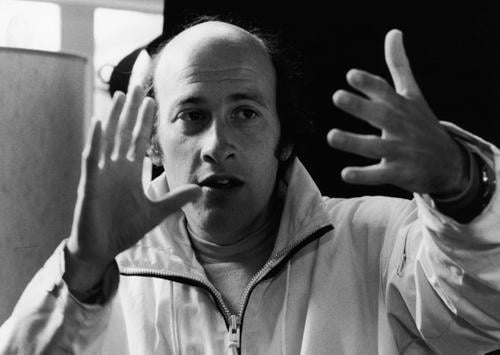
Dick Lester Impressions of London with Studs Terkel
Studs Terkel interviews film producer Dick Lester and receives Lester's impression of London.