

-

Howard Nemerov reads from and discusses his new book "New and Selected Poems"
Dec. 5, 1960 Discussing Howard Nemerov's newest book of poetry. He reads "Trees", "Storm Windows", Dandelions", "Boom", On Certain Wits", "I Only am Escaped Alone to Tell Thee", "Life Cycle of Common Man", "Debate with the Rabbi", "The Brief Journey West", "Redeployment", "Tragedy in Garden City", and "Moment".
-
Howard Nemerov in conversation with Studs Terkel
Nov. 29, 1988 Discussing the book "War Stories: Poems about Long Ago and Now" (published by University of Chicago Press) with the author, poet Howard Nemerov.
-
Howard Lyman discusses the beef industry and the environmental and health-related risks associated with consuming animal products
Mar. 1, 1995 Anti-beef lobbyist and family farmer Howard Lyman discusses the beef industry. Lyman discusses the environmental and health risks associated with animal products, specifically beef. Lyman states that it was precisely his experience growing up on a farm and seeing the production of animal products that inspired his stance on the beef industry. Studs plays "Foodophobia" - Susannah McCorkle (1981).
-
-
Howard Curnow, Susan Pellowe, Jim Wearne in conversation with Studs Terkel
Oct. 1, 1992 Interviewing Cornish-heritage activist Howard Curnow and Cornish folk musicians Sue Pellowe and Jim Wearne.
-
Howard Blum talks about his book "Wanted: The Search for Nazis in America"
Jan. 26, 1977 Discussing the book, "Wanted: The Search for Nazis in America," and interviewing its author Howard Blum.
-
Horton Foote discusses the play "The Young Man From Atlanta"
Jan. 14, 1997 Horton Foote, playwright and screenwriter, and Studs Terkel analyze storylines, conflicts, and characters in Horton’s play "The Young Man From Atlanta." Horton also discusses his earlier work and events that led him to where he is in his career.
-
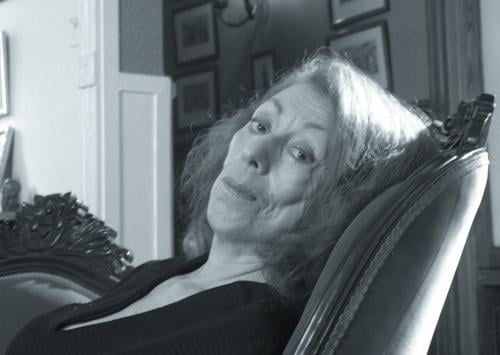
Hortense Calisher discusses her book "Queenie: A Novel"
May. 13, 1971 Hortense Calisher discusses and reads excerpts from “Queenie: A Novel,” a coming-of-age story about Queenie, a teenage girl raised an unorthodox household. Terkel and Calisher discuss reoccurring themes like the relationship between sex and property and the preservation of beauty as one ages. Calisher comments on her unique writing style, and Terkel praises her writing, calling it elegant and euphemistic. The two dance around certain topics and language deemed inappropriate for public broadcast, bringing up the issue of censorship.
-
Horst Voight discusses his background and his future ; part 2
Horst Voight reflects on the bad job he believes teachers are doing by solely glossing over current history and only saying, "Hitler was a bad man". Voight believed those over 18 know they lost the war and they must pay the price for their fathers' involvement and mistakes of the war. Voight concluded with his love of journalism and how he hopes to be a great reporter, by getting both sides of every story.
-
Horst Voight discusses his background ; part 1
Horst Voight was only eight months old when his father died. Voight looked into and studied letters that his father had written because he wanted to understand how his father could be a soldier and align himself with Adolf Hitler.
-
Horace Cayton discusses is book "Long Old Road" ; part 3
Sep. 7, 1966 Content Warning: This conversation includes racially and/or culturally derogatory language and/or negative depictions of Black and Indigenous people of color, women, and LGBTQI+ individuals. Rather than remove this content, we present it in the context of twentieth-century social history to acknowledge and learn from its impact and to inspire awareness and discussion.
-
Horace Cayton discusses his book "Long Old Road" ; part 2
Sep. 7, 1966 Content Warning: This conversation has the presence of outdated, biased, offensive language. Rather than remove this content, we present it in the context of twentieth-century social history to acknowledge and learn from its impact and to inspire awareness and discussion. Loneliness and hardships of both fitting in and finding a job are covered in the continuation of Horace Cayton's, "Long Old Road: An Autobiography." By living in a middle class home in Seattle with a full time Japanese servant, Cayton was seen as better off than most people.
-
Horace Cayton discusses his book "Long Old Road" ; part 1
Sep. 7, 1966 Content Warning: This conversation includes racially and/or culturally derogatory language and/or negative depictions of Black and Indigenous people of color, women, and LGBTQI+ individuals. Rather than remove this content, we present it in the context of twentieth-century social history to acknowledge and learn from its impact and to inspire awareness and discussion. In "Long Old Road: An Autobiography," Horace Cayton talks about growing up in Seattle in a well to do, mostly white neighborhood. Cayton's grandfather was the first Black man elected to the U.S.
-
Hope Cooke reads from and discusses her book, Time Change
Mar. 12, 1981 The American-born socialite experienced tragedy early in life after her mother was killed in a plane crash. She and her sister were then abandoned by their father and raised by aloof grandparents and a series of nannies. Later, she studied and traveled in Iran and India, married the last Chogyal (King) of Sikkim (northeast India), and wrote an autobiography.*Please note: some sections have been edited out from the original recording due to copyright considerations
-
Holly Near discusses her book "Fire in the Rain--Singer in the Storm: An Autobiography"
Aug. 20, 1990 Singer-songwriter and activist Holly Near discusses her work for fighting for social justice through outlets such as her music. Near a prominent proponent for the LGBTQ community has streamlined her work using folk and protest-inspired songs. Near has been awarded multiple honors from organizations such as the ACLU and the National Organization for Women for her work for social change.