Listen to New Voices on Studs Terkel our partnership with 826CHI-here! Read the Story


Showing 61 - 75 of 5186 results
-
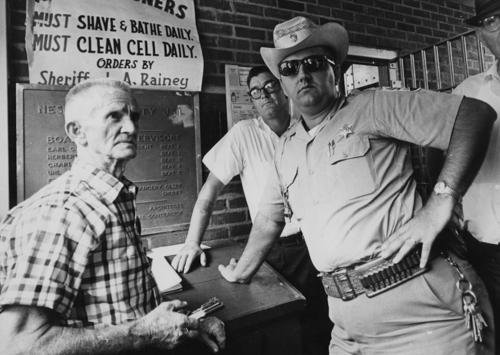
William Bradford Huie discusses his book "Three Lives for Mississippi"
May. 20, 1965 Author William Bradford Huie discusses his book "Three Lives for Mississippi;" reads passages from book.
-

William Ball discusses the American Conservatory Theater
Aug. 16, 1966 William Ball discusses the American Conservatory Theater in Pittsburg, PA. They discuss in great detail how different the company is. Specifically that they keep themselves learning and perfecting the classic style. Dick Christiansen theater and film critic joins the conversation.
-
William Appleman Williams talks with Studs Terkel
Feb. 12, 1965 Discussing "Great Evasion" and interviewing historian William Appleman Williams.
-
Willard Van Dyke discusses American history and its effects on the film, photography, and the arts
Apr. 3, 1985 Willard Van Dyke, cinematographer and co-director of documentaries like "The City" and "The River," talks about 20th century American history and how it effected the arts. Using his documentaries and other artists' work, he explores how the Great Depression, World War II, and the Cold War changed American art and culture. He discusses Public Works of Art, war propaganda, and McCarthyism and their challenges for artists. Near the end of this interview, Van Dyke discusses the changes in modern still photography and documentaries as Americans forget history.
-
Willard R. Espy in conversation with Studs Terkel
Nov. 1, 1977 The clever writer and editor, fond of wordplay and literary forms, shares with Studs some insight into his satirical biography, The Life and Works of Mr. Anonymous.*Please note: some sections have been edited out from the original recording due to copyright considerations
-
-
Willard Maas and John Dubay discuss experimental films and filmmaking, part 2
1966 Experimental filmmaker and poet Willard Maas and his friend John Dubay discuss experimental films and filmmaking, part 2 of 2. John Dubay is featured predominantly in this part of the interview. The second part of the interview focuses less on filmmaking and more on societal ills, wealth inequality, and race relations.
-
Willard Maas and John Dubay discuss experimental films and filmmaking, part 1
1966 Experimental filmmaker and poet Willard Maas and his friend John Dubay discuss experimental films and filmmaking, part 1 of 2. His friend John Dubay speaks briefly in part 1 of the interview, but is more prominently featured in part 2.
-
Will Holt discusses his career and music
Oct. 4, 1962 *Please note: some sections have been edited out from the original recording due to copyright considerations
-
Will D. Campbell discusses his book "Providence"
Aug. 26, 1992 Content Warning: This conversation includes racially and/or culturally derogatory language and/or negative depictions of Black and Indigenous people of color, women, and LGBTQI+ individuals. Rather than remove this content, we present it in the context of twentieth-century social history to acknowledge and learn from its impact and to inspire awareness and discussion. Will D. Campbell, minister, activist, and author of “Providence," discusses religion, civil rights, and American history.
-
Will Campbell discusses his book “Forty Acres and a Goat: A Memoir”
Feb. 13, 1987 Preacher Will Campbell discusses and reads from his book “Forty Acres and a Goat: A Memoir” and recounts his experience during the Civil Rights movement in the South. Studs plays “His Eye Is On The Sparrow” - Mahalia Jackson (1958).
-
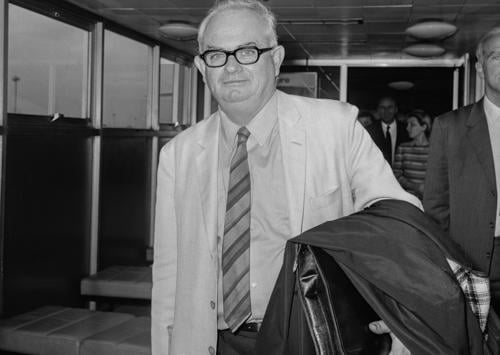
Wilfred Burchett discusses about his career on journalism
Oct. 24, 1977 Wilfred Burchett (an Australian journalist) discusses his journalism career. He was reporting conflicts in Asia (North Korea, Vietnam, China and Japan) and their Communist supporters. He speaks briefly about his experiences in Nazi Germany and concentration camps. Towards the end of the interview he talks about his interest in learning and reporting more about the new euro-communism (prominent in Italy, Spain and France).
-
Wild Bill Davison discusses his upcoming show at the Jazz Showcase
Apr. 24, 1984 American jazz cornet player Wild Bill Davison known for his wild ways, discusses his career in jazz music and life in Chicago. Davison rubbed elbows with all the Chicago bigwigs from Al Capone to jazz legends such as Fats Waller.
-
While in a pub in Hamburg, Studs Terkel talks to six young people ; part 1
1967 Music, long hair and the war are among the topics discussed at the pub. Ingo plays the guitar and he's looking for fun with music. Ingo hopes to get married and have children one day. When asked about the war, Brigitte says she doesn't like to think about it and that people should forget about what happened. It's apparent that the group wants to live in peace but none of the individuals have any plans for making a better world.
-
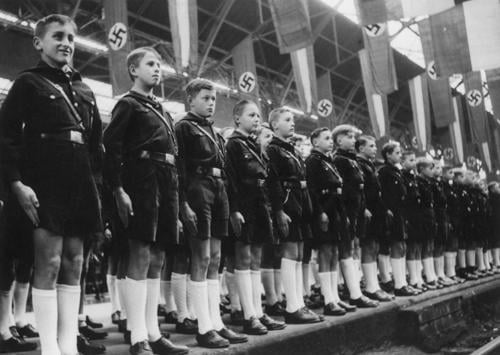
Werner Burkhardt German jazz critic and translator speaks with Studs in Hamburg, Germany.
Mar. 1, 1967 Werner Burkhardt, German music journalist, critic, and translator, discusses his life and work with Studs. Mr Burkhardt speaks about his life during the time of Adolph Hitler, the Hitler Youth, and World War II. They end the interview talking about Jazz in Munich, a recording of "My Man" by Billie Holiday closes the interview.