

-
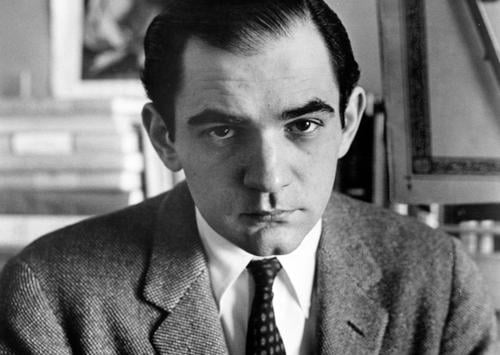
Bill Russo discusses his commedia dell'arte production
Jul. 26, 1974 Bill Russo talks about the commedia dell'arte production being staged at the Center for New Music at Columbia College Chicago. The production includes two pieces, "Pedrolino's Revenge" and "Isabella's Fortune".
-

Valentin Pluchek and Stanislaw Pchenikov discuss Russian theater, specifically Moscow ; part 1
Jan. 19, 1962 Studs Terkel interviews Valentin Pluchek and Stanislaw Pchenikov on Russia theater, focusing mainly on the city of Moscow.
-
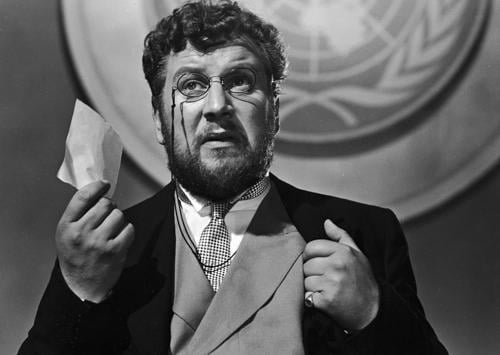
Peter Ustinov discusses his career in the arts
Jan. 7, 1959 Peter Ustinov discusses his wide-ranging career in the arts as an actor, author, director, and dramatist.
-
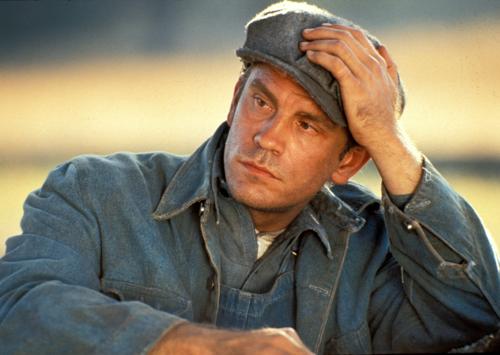
John Malkovich and Gary Sinise discuss the play "Of Mice and Men"
Sep. 29, 1981 Studs Terkel discusses the upcoming new play "Of Mice and Men", based on the novel written by John Steinbeck with the starring actors, John Malkovich (Lennie) and Gary Sinise (George). The program begins with the opening excerpt from the play "Of Mice and Men" featuring Terkel (George) and Win Stracke (Lennie) from 1952, which then leads into Malkovich and Sinise's interpretation of the rest of the scene. Folk singer Utah Phillips song "On the Goodnight Loving Trail" is presented as a comparison to themes expressed in "Of Mice and Men".
-
Jan Peerce discusses his career
May. 15, 1961 Jan Peerce discusses his career as a tenor, both in opera and on Broadway. He discusses his vocal technique and trends in sacred music.
-
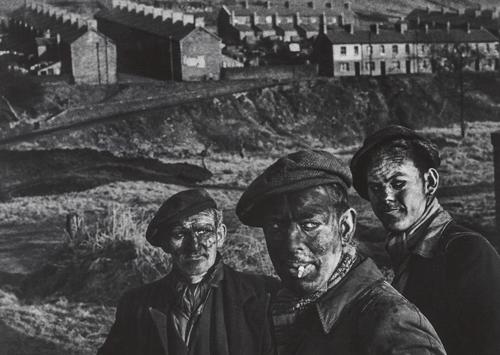
Interviewing Aileen and W. Eugene Smith
May. 22, 1975 Aileen and Eugene Smith discuss their photographic essay book, "'Minamata', Words and Photographs," documenting the mercury poisoning of residents and their legal battles with the polluting company Chisso.
-
Interviewing violinist Nadja Salerno-Sonnenberg
Dec. 5, 1990 Virtuoso violinist Nadja Salerno-Sonnenberg discusses her training, performance style and reactions to it, attracting a younger classical audience, and comments on several of her recordings.
-
Birgit Nilsson during her time playing Leonore in Fidelio at the Lyric Opera of Chicago ; part 1
Nov. 15, 1961 Studs Terkel interviews Birgit Nilsson during her time playing Leonore in Fidelio.
-
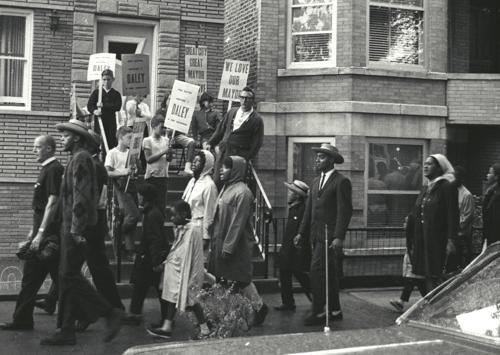
Studs Terkel discusses race relations and economic disparity with four Chicago area women ; part 2
Jan. 27, 1965 Studs discusses race relations and economic disparity with four Chicago area women in a program entitled "Each of us can act". This recording was the last of a 6-part series, "Rearing the Child of Good Will", broadcast under the auspices of the National Conference of Christians and Jews.
-
Director Nick Rudall discusses the play "Candida"
Sep. 20, 1990 Nick Rudall talks about directing his 7th play by George Bernard Shaw. Three cast members, Daria Martel, Tom Amandes and David New are part of the interview, too. The actors reenact various scenes of the play. Rudall explains Shaw wrote "Candida" as a way to sort through his complicated feelings with a woman.