

-

Mary Collins discusses her husband, Lee Collins, autobiography “Oh, Didn’t He Ramble” and his career as a Jazz musician
Sep. 3, 1974 Studs interviews Mary Collins about her husband, Lee Collins. They discuss the book that she and Lee wrote together until his death in 1960. Mary shares interesting stories of Lee’s experiences when he toured. She and Studs reflect on the other artists that Lee Collins worked with and those that influenced his music. Mary shares the story of how she and Lee reconnected in Chicago. She explains how Lee’s depression because of his health led to his attempted suicide and the horrible way he was treated at the psychiatric hospital.
-
Barbara Cook discusses her musical Broadway career and shift into opera with her soprano voice
Feb. 13, 1981 Studs interviews Barbara Cook about her work in musical theater from Broadway to opera. Cook speaks about the composers and writers she has worked with. She explains some of her songs such as “Ice Cream” and “Grass Harp” and describes her first Carnegie concert. Studs quotes Leonard Bernstein, who speaks to Cook’s talent. Cook describes how she went from Broadway to opera and shares how she chooses the songs that she performs. She discusses the art of her talent. The musical pieces are removed from this edited version of the original recording.
-
Terkel comments and presents musical performance of Pat Ferreri, Ron Steele and Jim Crockett
Jun. 30, 1980 Presenting music and interviewing studio musicians Pat Ferreri, Ron Steele and Jim Crockett editor of Guitar Play Magazine.
-
Bill Crofut discusses his career as a folk singer and his work with other musicians
Dec. 8, 1981 Studs interviews Bill Crofut about his career. They discuss Crofut’s recording label, “Cousin Jacks” and his album with Benjamin Luxon, “Simple Gifts.” Crofut shares his experiences working with various musicians and describes some of his songs. He reflects on his work with the Natalie Wood film, “Brainstorm.” Crofut sings part of the “Grandfather’s Clock” and an unnamed children’s song. The music is removed from this edited version of the original recording.
-
Carlo Curly discusses the history and future of the organ as an instrument and his career as a classical organist
Dec. 15, 1983 Studs interviews Carlo Curly, a RCA recording classical organist. Includes an interview from two years earlier with Curly giving a commentary about Virgil Fox, his greatest influence. Curly describes his family background in music. He explains in great detail the history of the organ, how it is made, and the music written for it. He explains the difference in music between pipe organs and electronic organs. Curly talks about his experience playing in Japan. He speaks of Bach and Mendelson and their influence on the organ as a classical instrument.
-
-
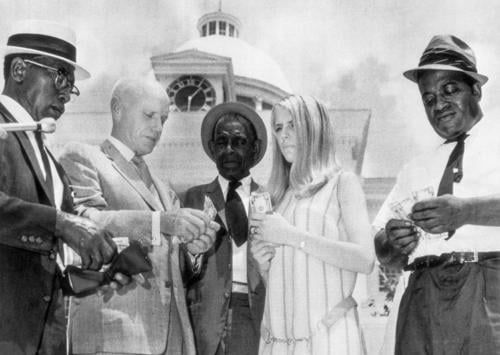
William Bradford Huie talks with Studs Terkel
Mar. 29, 1967 William Bradford Huie discusses his novel The Klansman. Includes recordings of interviews from Rev. Paschal Carlton, an unknown Alabama cab driver, and an unknown woman of Birmingham, Alabama.
-
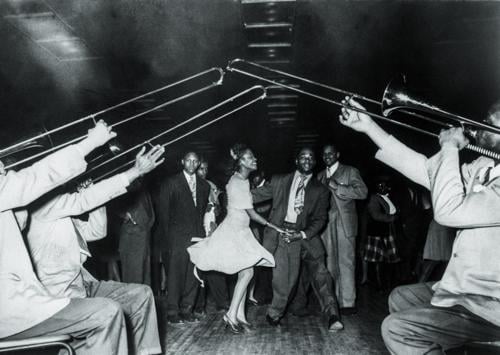
Stanley Dance discusses jazz and his book "The World of Swing"
Dec. 3, 1974 Stanley Dance discusses jazz and his the book "The World of Swing". He tells anecdotes of jazz musicians and talks about the history of different songs. The interview is interspersed with songs of the jazz/swing genre: "Stompin' at the Savoy," "Three Little Words," "Here Comes the Man with the Jive," "Where are You," "Passing it Around," "Effervescent Blues," "Who's Sorry Now," "Sleep" and "One More Once." Music has been removed from this recording for copyright reasons.
-
Ryland Davies and Margaret Price discuss opera and their performance in Mozart's "Don Giovanni"
1972 Ryland Davies and Margaret Price discuss opera, Welsh art and culture, and their musical upbringings. They discuss various characters and operas they have performed in, including "Don Giovanni" and "Lulu". Music is played throughout the original airing, but has been removed from this recording for copyright reasons.
-
Blind John Davis discusses Chicago blues
Sep. 20, 1977 Blind John Davis, Chicago blues pianist, discusses his time playing in Germany and at the Blue Note jazz club, chitlin' parties, growing up on the West side of Chicago. He also recalls meeting and working with musicians like Tampa Red and Big Bill Broonzy. Music has been removed from this recording for copyright reasons.