

-

Discussing Carl Sandburg and his wife Lilian Steichen with their daughter, poet Helga Sandburg.
Jan. 5, 1977 The author of A Great and Glorious Romance joins Studs to discuss her search into her parents' past, including their families' roots in Sweden and Luxembourg.*Please note: some sections have been edited out from the original recording due to copyright considerations
-
Herbert Kohl, Stan Jones, and Arthur Tobier discuss alternative education
Jun. 3, 1977 Educators and authors Herbert Kohl and Stan Jones, and oral historian Arthur Tobier Discuss alternative education.
-
A discussion with William Shirer
Oct. 22, 1976 The journalist and historian joins Studs for a discussion about the first installment of his memoir, Twentieth Century Journey, which weaves his personal history into the great historical events of the world around him. Includes a clip of the lawyer and politician William Jennings Bryan.*Please note: some sections have been edited out from the original recording due to copyright considerations
-
Misch Kohn talks about his artistic career as a printmaker and painter
Jan. 3, 1961 Misch Kohn (from the state of Indiana, son of Russian immigrants) talks about his upcoming exhibition that traveled all around the country in which artwork such as "Season in hell", "My Grandfather's Mustache", "General", "Three Generals" among others. Talks about his creative process and what is the outlook of the state of visual arts.
-

Connie Kolb and Ursula Bender discuss life in Germany
Sep. 1, 1986 Connie Kolb and Ursula Bender discuss life in Germany, specifically Berlin. Connie Kolb discusses her life struggles, lack of confidence, and her work in journalism.
-
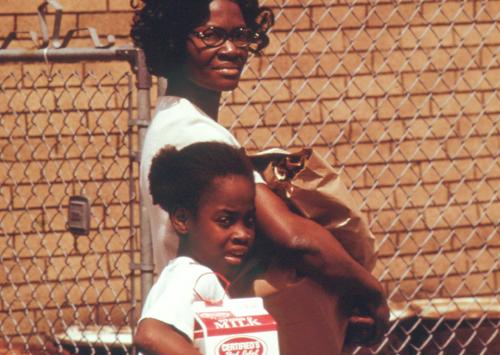
Jean Komaiko and Dr. Quentin Young discuss hunger in Chicago
Feb. 6, 1969 Joan Komaiko saw there were kids who could buy cartons of milk for four cents and the other kids who couldn't afford the milk, sat and watched the ones who drank the milk. Komaiko wrote a letter to the school board pointing out how kids couldn't do well at school because they were sent to school hungry. Dr. Quentin Young explained that the government needs to provide the children with breakfast and lunch at the schools because those two meals were probably the only meals children would receive that day.
-
Hans Koning discusses his book "Pursuit of a Woman on the Hinge of History: A Novel"
Dec. 10, 1997 Hans Koning discusses his book "Pursuit of a Woman on the Hinge of History: A Novel," published by Brookline Books; reads passages from book.
-

Barbara Kopple discusses her documentary "American Dream"
Mar. 20, 1992 Academy Award winning documentarian Barbara Kopple talks with Studs about her documentary "American Dream" and the battle fought and lost by union workers in Austin, Minnesota during the mid-80s. They set the backdrop in the small, tight-knit community that Hormel Foods had such a profound impact on, how the UFCW international union declined to support the local union, the gripping dynamics between family members who crossed picket lines, and the healing that occurred when the film was screened in the town several years later.
-

Studs Terkel discusses the novel "Blind Date" with its author Jerzy N. Kosinski
Nov. 11, 1977 Studs Terkel and Jerzy Kosinski express their own views on the morality of protagonist George Levanter from Blind Date. Terkel sees him as a vigilante whereas Kosinski sees him as a responsible social reformer. Kosinski states that ethics are viewed differently by Europeans based upon their history of invasions and betrayal which lends itself to an individual code of ethics as exemplified by George Levanter.
-

Loren Baritz discusses the relationship between education and work
Jul. 31, 1974 Loren Baritz, Executive Vice President of Empire State College (part of the State University of New York), discusses the purpose of higher education and the relationship between higher education and work. Topics of discussion include the current state of student apathy driven by economic insecurity, vocationalism, the structure of higher education institutions, and how the generation gap affects learning. Baritz also discusses the redefining of work in American culture and ideas for making liberal arts education more relevant to work.