

-

Physicist Leo Stodolsky and film director Gerald Temaner talk with Studs Terkel ; part 2
Nov. 1, 1961 Leo Stodolsky and Gerald Temaner discuss college students' activity — or lack thereof — and their magazine, New University Thought.
-
Win Stracke and Ray Tate sing, play, and discuss the book "Songs of Man" ; part 1
Dec. 6, 1965 Interviewing folk singer Win Stracke about "Songs of man."
-
Win Stracke and Ray Tate sing, play, and discuss the book "Songs of Man" ; part 3
Dec. 6, 1965 Interviewing folk singer Win Stracke about "Songs of man."
-
William Stringfellow discusses his book "My People is the Enemy"
1970 White, Anglo-Saxon, Episcopalian lawyer William Stringfellow moved to a slum tenement of Harlem after his graduation from Harvard Law. Through the lens of personal experience, Stringfellow outlines the failures of the legal system and the Church to alleviate poverty and racism in his 1964 book, "My People is the Enemy."
-
-
William Stringfellow discusses the book "The Christian Ethic"
Nov. 8, 1973 William Stringfellow discusses the book "The Christian Ethic." Includes passages from the book.
-
Charlotte Strongaard talks with Studs Terkel
1968 Interviewing Charlotte Strongaard while Studs was in Denmark.
-
Elma Stuckey reads from and discusses her poetry
Mar. 10, 1961 Stuckey talks about her childhood in Memphis, writing "in the dialect", and reads "Rigamarole", "Daylight Savings Time", "Defense", "Old Man" and "Old King Cotton".
-
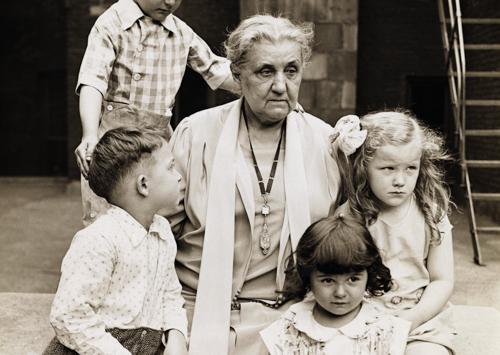
Jessie Binford discusses Hull House and Chicago ; part 4
1968 Jessie Binford discusses Chicago and Hull House
-
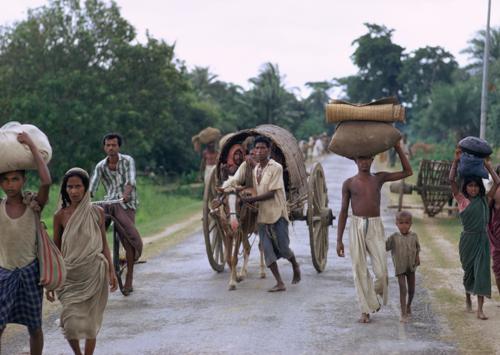
Eqbal Ahmad and Muhammad Yunus discuss Pakistan
1970 Eqbal Ahmad and Muhammad Yunus discuss the current state of East and West Pakistan with Studs Terkel. Topics of discussion include current food shortages, United States intervention in South and Southeast Asia, military rule in Pakistan, cultural differences between East and West Pakistan, and the human toll resulting from the military government, disease, and natural disasters. Includes an excerpt of a recording of Shanta Gandhi telling a story about an audience member’s response at the end of a play she performed during the Bengal Famine.(Wav ID: 1863201-3-1, 3-2, 3-3)