

-

Cesare Zavattini discusses his career
1962 Interviewing Cesare Zavattini while Studs was in Italy. Carlo Baldi translates. This is the second half of the interview that starts with Nervi and Nicoletti.
-

Leonard Matlovich talks about his experience in the U.S. Air Force
Nov. 14, 1975 Interviewing Len Matlovich, formerly a Sergeant in the U.S. Air Force, about the status of gay men in the armed forces and his expulsion from the Air Force after he publicly stated that he was gay.
-
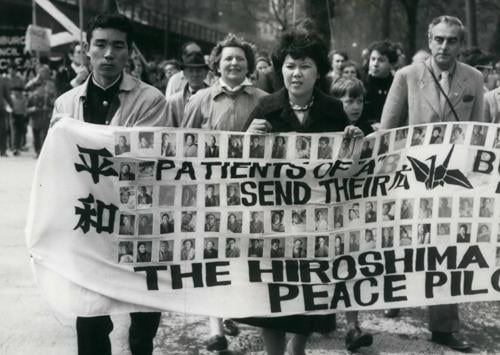
Miyoko Matsubara discusses her experiences as a survivor of the atomic bombing of Hiroshima
Mar. 29, 1962 Miyoko Matsubara, a Japanese survivor of the atomic bomb dropped on Hiroshima, discusses her experiences through translator Joan Takada. Later in life, she went on to work with disadvantaged children and as an advocate for world peace and the prevention of nuclear testing and warfare.
-
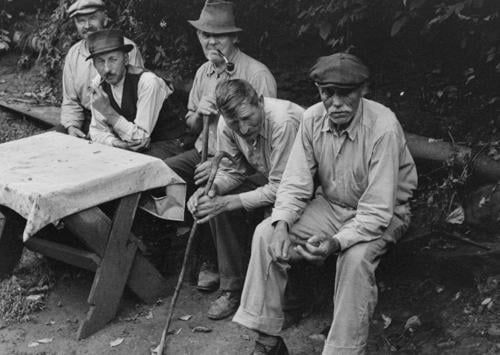
Hans W. Mattick and Father Robert Taylor discuss the scandal at Cook County Jail
1968 Content Warning: This conversation includes racially and/or culturally derogatory language and/or negative depictions of Black and Indigenous people of color, women, and LGBTQI+ individuals. Rather than remove this content, we present it in the context of twentieth-century social history to acknowledge and learn from its impact and to inspire awareness and discussion. Former Assistant Warden of the Cook County Jail, Hans W.
-
-
Milton Mayer discusses the educational philosophy of Robert Hutchins
May. 27, 1977 Milton Mayer discusses the state of U.S. education and the educational ideas of Robert Hutchins.
-
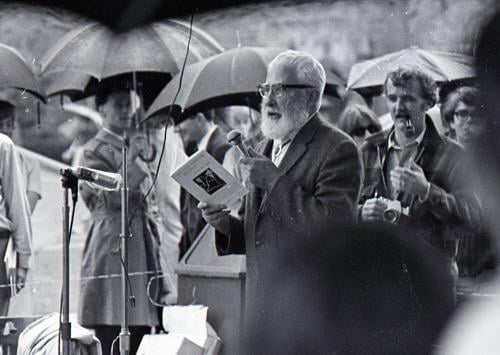
John Beecher talks about his poetry collection "To Live & Die in Dixie"
1969 Discussing "To Live & Die in Dixie & Other Poems". Includes excerpt from Studs' 1965 Montgomery program that features Beecher (1905917-3-1). Beecher reads "To Live and Die in Dixie", "Chainey", "The Better Sort of People", "After Christus", "Bestride the Narrow World", "Wisdom of the Abbott Macarius", "Josiah Turnbull took no part in politics", "A Commemorative Ode".
-
Ellen Afterman, Clinton Sanders, and Spellman Young discuss the drug epidemic
1980 Ellen Afterman and Clinton Sanders (authors of "Drugs and Your Life") and Spellman Young discuss drug use through the lenses of race, sex, and socioeconomic status.
-
Milton Mayer discusses Quakerism and the impact they have had on society
Dec. 27, 1974 Milton Mayer, journalist and educator, talks with Studs about Quakerism. They talk about how religion relates to society in the times of change. Mr Mayer describes an exchange with a gentleman who asked what is a Quaker. The man had been an SS officer who told Mr Mayer his story. The man had been touched by the anonymous generosity of the Quakers many years before. Mr Mayer speaks of A. J. Musty, clergyman and political activist as his mentor and friend, and the things he learned from him.
-
Lincoln Mayorga discusses American popular piano music
May. 30, 1984 Studs Terkel and Lincoln Mayorga discuss the evolution of American popular piano music with Mayorga playing examples.