

-
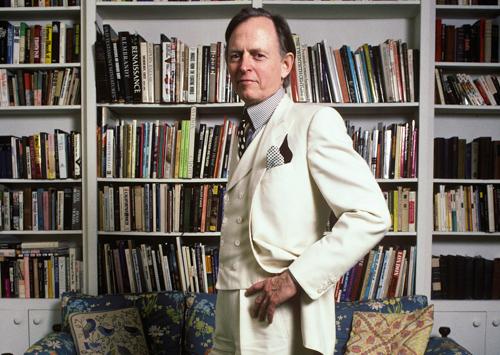
Tom Wolfe discusses his book "From Bauhaus to Our House"
Nov. 16, 1981 Discussing the book "From Bauhaus to our house" with the author and journalist Tom Wolfe.
-
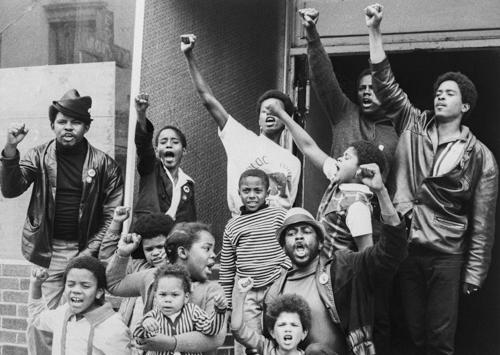
Nathan Wright discusses Black power ; part 1
1967 Author and scholar Nathan Wright discusses black power and identity and his book, “Black Power and Urban Unrest.” Wright talks about the importance of identity in the Black community; leadership; violence and poverty in urban Black communities; the importance of higher education for Blacks; and the nature of power and how its creative use can bring about social change.
-
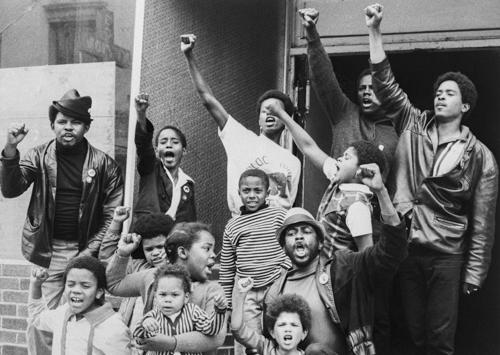
Nathan Wright discusses Black power ; part 2
1967 Discussing the book "Black Power and Urban Unrest" and interviewing the author Nathan Wright.
-

Xochimoki discuss their music and musical influences
Apr. 18, 1986 Musical duo Xochimoki discuss music and musical influences drawn from Mesoamerican civilizations; clips of their music are also played throughout the interview.
-

Peter, Paul and Mary discuss Folk music and the forming of their singing group ; part 1
Apr. 12, 1961 Peter Yarrow, Paul Stookey and Mary Travers talk with Studs about the forming of the Folk singing group Peter, Paul and Mary. They perform their music throughout the interview.
-

Peter, Paul and Mary discuss Folk music and the forming of their singing group ; part 2
Apr. 12, 1961 Peter Yarrow, Paul Stookey and Mary Travers talk with Studs about the forming of the Folk singing group Peter, Paul and Mary and their first year together. They perform their music throughout the interview. Song: "The Shape of Things to Come," Winn, John--ends: 00:08:42 Begins 00:08:50 (recording change).
-
Jose Yglesias reads from and discusses his book "Goodbye Land"
1967 In "Goodbye Land," Jose Yglesias travels to Galicia, Spain, his father's native province. Yglesias found a number of cousins who remembered his father. Time was spent in a tavern owned by one of his cousins, talking about what they recalled about Yglesias' father. His cousins viewed Yglesias' travels to Spain as an event; a millionaire traveling to Spain and they showered him with an abundance of gifts.
-
Dr. Meir Yoeli discusses medicine
1969 It is not enough to just treat a disease, explained Dr. Meir Yoeli. Dr. Yoeli said there needs to be a bridge for both science and for the truth of the heart. Also a poet, Dr. Yoeli reads a poem in English and then in Hebrew.
-
Drs. Quentin Young, Ron Shansky and Mike Gray talks with Studs Terkel
Dec. 3, 1975 Interviewing Dr. Quentin Young and others about Cook County Hospital and public health services in Chicago and throughout the country.
-
Igor Youskevitch talks with Studs Terkel
Dec. 1, 1959 Terkel interviews ballet dancer and choreographer Igor Youskevitch who would be staying in town until January 3.