

-

Dick Gregory discusses American politics
Dec. 17, 1964 This interview begins with a clip of one of Dick Gregory’s performances, where he talks about nonviolence and Native Americans. Studs Terkel introduces his guest as an observer, explaining that comedians are the best observers in society. Gregory offers extended analogies to communicate his views on a variety of topics, including the Vietnam War, race relations, segregation, human rights, and urban renewal. [The date is unclear, but it has to be after 1970, since the Kent State Shootings were mentioned]
-
Jill Godmilow discusses her documentary “Antonia”
1970 Discussing Antonia and interviewing Jill Godmilow.
-
Gwendolyn Brooks discusses her poetry
Jan. 3, 1961 Gwendolyn Brooks, Poet Laureate of Illinois, talks about her poetry, her books, and some of her influences.
-
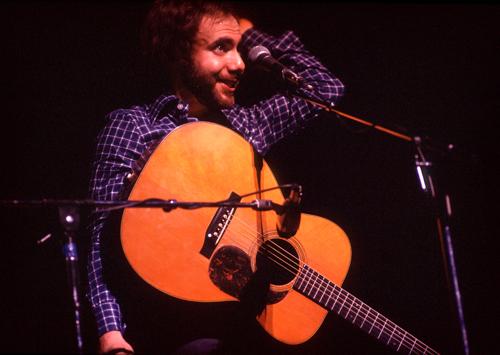
Steve Goodman discusses his album "Words We Can Dance To"
Apr. 30, 1976 Studs Terkel presents a “musical portrait” of Steve Goodman with the musician joining him in the studio to discuss, listen to, and play songs from his album “Words We Can Dance To.” Goodman begins by performing the blues song “Glory of Love,” and Terkel plays a clip from Big Bill Broonzy’s rendition of the song; Goodman cites Big Bill as one of his many influences. Goodman also plays an old jazz song called “When the Red, Red Robin,” with Terkel connecting that song to his first memories of jazz.
-
Anais Nin discusses her book “Under a Glass Bell”
1972 French writer Anais Nin discusses her book “Under a Glass Bell” and its influences with Studs Terkel. Nin reads a few excerpts from her recently published work “Under a Glass Bell.”
-
Fred Wiseman discusses his film “Juvenile Court”
Nov. 9, 1973 Discussing the making of film documentaries with Fred Wiseman, especially his film, "Juvenile Court." Includes excerpts of the sound track from a juvenile detention center in Memphis, Tennessee.
-
-
Anthony Braxton discusses his music and jazz
Aug. 24, 1989 Musician Anthony Braxton speaks with Studs Terkel about his music and the various musicians who have influenced him.
-
Discussing steelworkers and labor unions with Edward Sadlowski and Theodore Smolarek
Jul. 1, 1974 Discussing steelworkers and interviewing Ed Sadlowski of the United Steelworkers of America and Ted Smolarek.
-
Thich Nhat Hanh discusses poetry and Vietnam
Apr. 21, 1971 In an interview with Studs Terkel, Buddhist monk, peace activist, and poet Thich Nhat Hanh. The conversation focuses on the devastating effects of the Vietnam War; they discuss the loss of culture and poetry in Vietnam, the anti-war protestors in America and Vietnam, and the sadness and resignation of the Vietnamese. Thich Nhat Hanh talks about America’s role in the war, and his experiences campaigning for peace in the United States and speaking with U.S. anti-war veterans.