Listen to New Voices on Studs Terkel our partnership with 826CHI-here! Read the Story


-

Lillian Smith discusses her books; part 3
Nov. 11, 1961 Content Warning: This conversation includes racially and/or culturally derogatory language and/or negative depictions of Black and Indigenous people of color, women, and LGBTQI+ individuals. Rather than remove this content, we present it in the context of twentieth-century social history to acknowledge and learn from its impact and to inspire awareness and discussion. Lillian's Smith first book was "Strange Fruit." Smith said people that were reading that book covered up the book jacket so no one could see the title of the book.
-
Molapantene Collins Ramusi discusses his book "Soweto, My Love"
Apr. 10, 1989 In his book, "Soweto, My Love: A Testimony to Black Life in South Africa" Molapantene Collins Ramusi talks about the love for his homeland and one day hoping to see it free. Ramusi also talks about going to the 1st grade when he was 17. Ramusi became a lawyer to defend the defenseless. He was a warrior in the courts, defending widows who were told they were breaking the law by living in an apartment that belonged to their dead husbands.
-
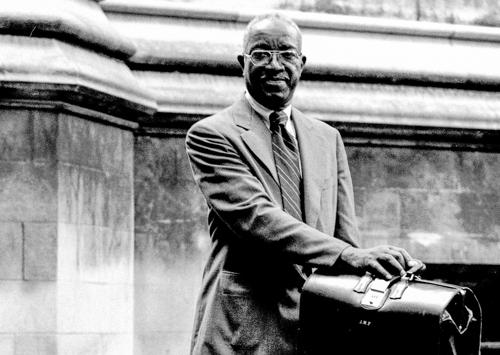
Dr. John Hope Franklin discusses the history of Civil War Reconstruction; part 1
1966 Dr. John Hope Franklin, professor of history at University of Chicago, outlines the history of reconstruction during the American Civil War and briefly his experience at the March to Montgomery; part 1.
-
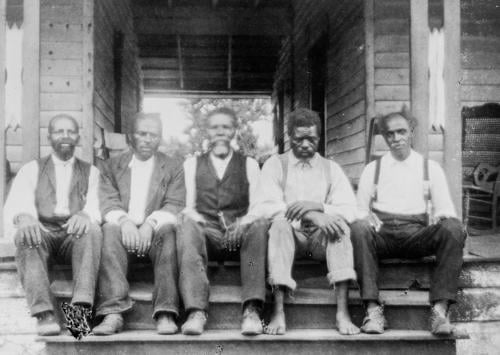
Dr. John Hope Franklin discusses reconstruction after the American Civil War; part 2
1966 Dr. John Hope Franklin, professor of history at University of Chicago, discusses the political history of reconstruction after the Civil War, along with which political decisions led to a power imbalance and the rise of the Ku Klux Klan in the southern states; part 2.
-
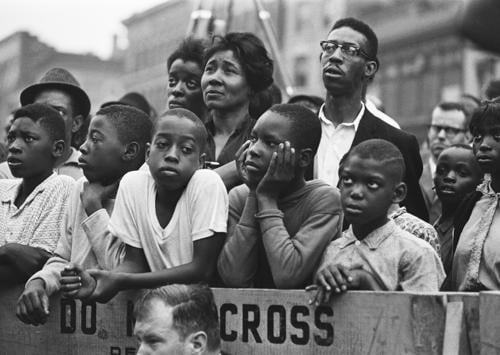
Studs Terkel interviews Professor Charles V. Hamilton on his book written with Stokely Carmichael entitled "Black Power: Politics of Liberation in America" ; part 1
Nov. 21, 1967 Using the backdrop of James Baldwin's "Nobody Knows My Name" and Baldwin's feelings that Blacks were ashamed of where they came from, Terkel interviews Professor and Chairman of the Political Science Department of Roosevelt University on his book coauthored with Stokely Carmichael entitled" Black Power: Politics of Liberation in America". Hamilton states that Blacks were taught to hate themselves and leave school believing that. Institutional racism and the deliberate oppression it creates, holds blacks back. Blacks are left out of crucial decision making processes that concern them.
-
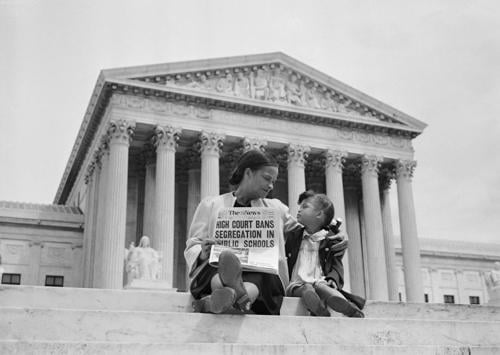
Ira B. Harkey discusses the south, civil rights, race relations, racism, his newspaper, and his career ; part 1
1966 Ira B. Harkey discusses the south, civil rights, race relations, racism, his newspaper, and his career. Includes Ira Harkey reading his writing from his newspaper the Mississippi "Chronicle-Star."
-
Ira B. Harkey discusses the south, civil rights, race relations, racism, his newspaper, and his career ; part 2
1966 Ira B. Harkey discusses the south, civil rights, race relations, racism, his newspaper, and his career. Includes Ira Harkey reading from his newspaper the Mississippi "Chronicle-Star".
-
David Halberstam discusses his book, "The Fifties"
Jun. 11, 1993 David Halberstam, writer and historian, talks about his book, "The Fifties." The conversation includes Brown v. Board of Education, atomic weapons, the Cold War, the Korean and Vietnam Wars, consumerism, birth control, suburbs, television and the start of the counterculture. Halberstam reads several passages from his book.
-
Mike Royko discusses some of his journalist stories ; part 1
Jul. 29, 1966 Mike Royko, a long-time journalist in Chicago, discusses some of his most popular columns. Topics include Cook County Hospital's lack of air conditioning in surgery rooms, the future of workers, and the Civil Right's Movement. The responsiblities of journalists and the effect of newspapers are also discussed.
-