Listen to New Voices on Studs Terkel our partnership with 826CHI-here! Read the Story


Showing 271 - 280 of 365 results
-

Juliet Mitchell discusses women, family, and oppression
Apr. 25, 1971 An interview with teacher and lecturer, Juliet Mitchell, who is a Marxist. She shares her support for the women's movement and talks about issues that affect women especially gender inequality. Juliet also refers to some comparisons between British and American women's movement.
-
William Stringfellow discusses politics, race, and theology
Interviewing William Stringfellow, American lawyer and activist. He discusses various topics including religion, social issues, and activism. Includes an interview with Cora Weiss. Content Warning: This conversation has the presence of outdated, biased, offensive language. Rather than remove this content, we present it in the context of twentieth-century social history to acknowledge and learn from its impact and to inspire awareness and discussion.
-
Dennis Smith discusses his experiences as a firefighter in New York City
Firefighter and writer, Dennis Smith, shares some of the encounters he's had as a firefighter and discusses his book and magazine based on these experiences.
-
Studs Terkel discusses interviews he conducted for his book "Working"
Aug. 22, 1978 Studs Terkel plays reenacted excerpts of interviews of various people from his book "Working." These interviews include people in a number of occupations including a car hiker, newspaper delivery boy, farm worker, homemaker, and waitress.
-
Horace Cayton discusses his book "Long Old Road" ; part 2
Sep. 7, 1966 Content Warning: This conversation has the presence of outdated, biased, offensive language. Rather than remove this content, we present it in the context of twentieth-century social history to acknowledge and learn from its impact and to inspire awareness and discussion. Loneliness and hardships of both fitting in and finding a job are covered in the continuation of Horace Cayton's, "Long Old Road: An Autobiography." By living in a middle class home in Seattle with a full time Japanese servant, Cayton was seen as better off than most people.
-
Vivian Adams discusses the beliefs of the Mormon Church regarding the Equal Rights Amendment (ERA)
Jun. 15, 1982 Vivian Adams discusses the reasons behind the Mormon Church's stance against the Equal Rights Amendment (ERA). The discussion includes the beliefs of the Church regarding the roles of men and women, as well as the history and music of the Mormon Church.
-
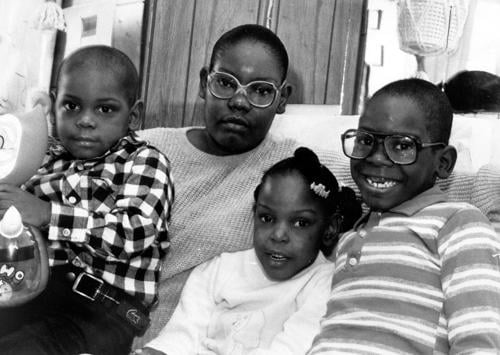
Jonathan Kozol reads from and discusses his book "Rachel and Her Children: Homeless Families in America"
Jan. 16, 1989 The people living at the Martinique feel as though they are a toxic waste substance being compressed in the density living quarters, explains Jonathan Kozol. Rachel of Kozol's book, "Rachel and Her Children: Homeless Families in America" said people don't want to see them. Refering to the song, "We are the World, " Rachel also asks how come people care so much for people they can't see? "We are the world, " says Rachel. "We live here, too".
-
A conversation with Annick Smith
Nov. 2, 1981 The American writer and movie producer discusses the inspiration and story behind the film Heartland, and how pioneering and homesteading changed the American family.*Please note: some sections have been edited out from the original recording due to copyright considerations
-
Mel Lambert and five Puerto Rican boys discuss the Jobs Project and life in Chicago ; part 1
1968 Studs interview with Mel Lambert and five Puerto Rican boys (Harry, Carlos, Vic, Jose, and Hector) about their life in Puerto Rico and Chicago. They discuss learning English and other subjects in the jobs project. The five boys talk about gang involvement and interactions with other race and ethnic groups. They also discuss their goals, economic opportunity in Chicago, and their difficult experiences of learning English and getting an education.
-
Talking to James Steele and Donald Barlett
Jun. 24, 1992 The investigative journalists discuss and read from America: What Went Wrong? The book is based on a series of articles in the Philadelphia Inquirer about corporate greed and its effects on the middle class.*Please note: some sections have been edited out from the original recording due to copyright considerations