Listen to New Voices on Studs Terkel our partnership with 826CHI-here! Read the Story


Showing 51 - 57 of 57 results
-

Edward de Bono discusses his book “The Five-Day Course in Thinking” ; part 1
Author, physician, and inventor Edward de Bono discusses his book “The Five-Day Course in Thinking,” and touches on ideas like lateral thinking and vertical thinking.
-
Edward de Bono discusses his book “The Five-Day Course in Thinking” ; part 2
Author, physician, and inventor Edward de Bono discusses his book “The Five-Day Course in Thinking,” and touches on ideas like lateral thinking and vertical thinking. Includes an interview with Peter Lyon.
-
Lawrence Weschler discusses his book “Mr. Wilson’s Cabinet of Wonder”
Jan. 22, 1997 Lawrence Weschler discusses his book “Mr. Wilson’s Cabinet of Wonder” and the Museum of Jurassic Technology. Weschler discusses the director of this museum, David Hildebrand Wilson, and the surreal and often humorous exhibits on display in the museum. Studs plays "Suite Anglaise No. 2 in A Minor: II. Bourrée 1 et 2" - Jean-Frédéric Neuburger.
-
Milton Mayer reads and discusses his article, "Ill Met by Moonlight"
Dec. 31, 1968 Million Mayer, journalist, reads his article, "Ill Met by Moonlight" and discusses his thoughts on technology and automation replacing jobs and human interactions.he also talks about youth, non-violence protesting for change, and education.
-
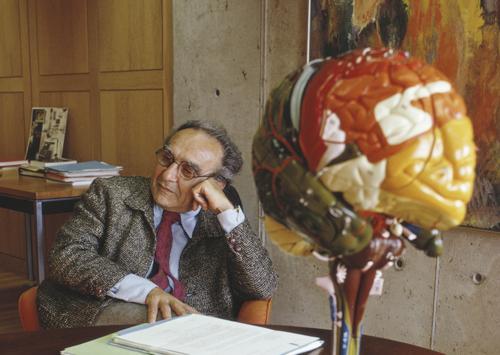
Dr. Jacob Bronowski discusses the philosophy of science in the post World War II world
Jan. 1, 1971 Dr. Jacob Bronowski, a mathematician and philosopher, discusses how the study of science has changed since the onset of government regulation or the military industrial complex. He also talks about humanity and explains how humans are the best species and therefore should come together to continue progress instead of killing each other. Content Warning: This conversation has the presence of outdated, biased, offensive language.
-
Dr. Richard Selzer discusses his book "Mortal Lessons: Notes on the Art of Surgery"
Feb. 17, 1977 Dr. Richard Selzer, a surgeon, reads essays from his book, "Mortal Lesson: Notes on the Art of Surgery." Dr. Selzer recalls moments of his profession that stuck with him including the removal of a diabetic women's leg and the removal of a botfly larvae. He also takes a poetic look at the liver and the skin, including a story about Henry Moss. Dr. Selzer finishes his interview with a story about his first time witnessing an abortion. A comedy skit by Mike Nichols and Elaine May is also played.
-
Dr. Erich Fromm discusses humanistic philosophy during the Cold War
1963 Dr. Erich Fromm explains how he believes the Cold War was a moment of change for humanity where it would either bring about a "renaissance of humanism or immense bloodshed and barbarism for decades to come." Using his study into humanism, Dr. Fromm warns about how the love of death can overtake the love of life as nationalism and group narcissism takes hold in different countries. He goes on to explain that humanity has to decide that they have a right to demand independence and freedom.