Listen to New Voices on Studs Terkel our partnership with 826CHI-here! Read the Story


Showing 191 - 200 of 1183 results
-
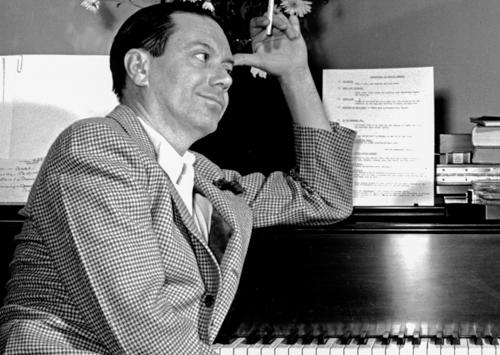
Discussing Cole Porter's work and the book "Cole" and interviewing its author Robert Kimball
1970 Cole Porter biographer Robert Kimball talks with Studs about his book "Cole" and his subject's life and work as they listen to classic performances of some of his most beloved songs. They marvel at how Porter perfectly captured the zeitgeist of the times in his lyrics, his lyrical influences, his unique method of outside-in composing lyrics and music simultaneously, Bobby Short's masterful interpretations, controversies over some of his works, and how well his material holds up.
-

Six members of The Klezmorim discuss klezmer music
Apr. 2, 1981 Six members of The Klezmorim discuss their musical upbringings, the history of klezmer music, and explain how song structures work and overlap. Songs played throughout are: "Moldovanke" by The Klezmorim, 2 songs by an unknown klemer band from the mid 1920s,"Papirosn" by The Klezmorim, "A Glezele Vayn (A Little Glass of Wine)" by The Klezmorim, and a live performance of "Papirosn" by The Klezmorim. All music performed by The Klezmorim were prerecorded off site. Music has been removed from this recording for copyright reasons.
-
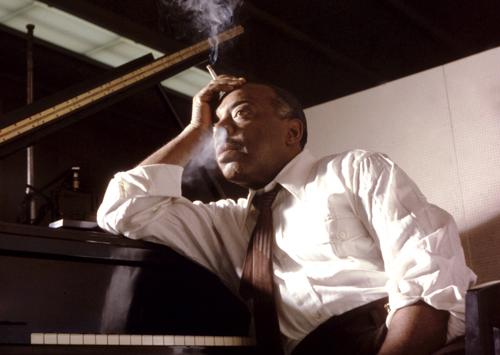
Studs Terkel and William (Bill) Leonard discuss their favorite memories of Frank Holzfeind and the Blue Note Jazz Club in Chicago
Jan. 9, 1975 Studs Terkel and William (Bill) Leonard share memories of the Blue Note Jazz Club as a tribute to Frank Holzfeind. Music is played throughout the episode: "After You've Gone" by the Benny Goodman Sextet, "The Flat Feet Floogie" by Slim and Slam, "How High the Moon" by Sarah Vaughan, "Destination K.C." by Count Basie, "West End Blues" by Louis Armstrong, "Lil' Augie Is A Natural One Man" by Chet Roble, and "Rock Skippin' at the Blue Note", Duke Ellington. Songs have been removed for copyright reasons.
-
Abram Loft discusses his career and his book "Violin and Keyboard"
Jul. 25, 1974 Abram Loft discusses his career, his book "Violin and Keyboard", art, and music education. Includes Abram Loft reading a passage from his book "Violin and Keyboard". Includes Abram Loft reading excerpts from newspapers.
-
Edith Mason discusses her career in opera ; part 2
1966 They talk about other performers Madam Mason worked with. Edith shares her view on the difference between opera in her day and the current opera. Parts of this version appears to be a duplicate of another, but there are a few parts that are not duplicates. The musical pieces are removed from this edited version of the original recording.
-
Edith Mason discusses her childhood and career in the opera
1966 Studs replays his interview with Edith Mason 21 years ago. Madam Mason discusses her childhood as it pertains to her career. She shares her training and study in Paris. Mason recalls the many composers and conductors she has worked with and the various opera companies she worked for. The musical numbers are removed from this edited version of the original recording.
-
Joe Venuti discusses his family and career in Jazz
Sep. 24, 1976 Studs interviews Joe Venuti, who reflects on his career with various bands and shows. John McDonough cohosts the interview with Studs. Venuti speaks about various instruments he and others use in Jazz. He shares a story of how the depression affected him. Venuti discusses the pranks he pulled on people and other musicians he has worked with. The musical numbers are removed from this edited version of the original recording.
-
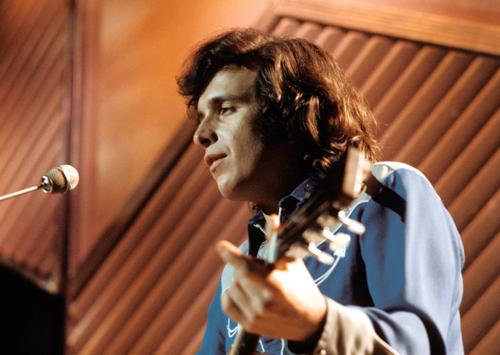
Don McLean discusses his career and his music
1980 Don McLean discusses his career and his music. Don McLean discusses his influences, life experiences, and his songwriting.
-
Marian McPartland and Jimmy McPartland discuss their Jazz careers
Sep. 27, 1973 Studs interviews Jimmy and Marian McPartland. The McPartlands reflect on the people who influenced their music in Jazz. Studs quotes Jimmy McPartland and reads part of a critic's column about Marian in the Chicago Sun Times. Marian shares a little about what it is like to be a female musician in Jazz. Both discuss their past career and their futures. Jimmy reflects on his hard times in the 1920s-1930s. The musical numbers are removed from this edited version of the original recording.
-
Marian McPartland discusses her career as a Jazz pianist
Feb. 22, 1978 Studs interviews Marian McPartland, who is in Chicago to perform at Rick's Cafe and the Chicago Public Library. They discuss her various performances and recorded albums. McPartland shares techniques of playing Jazz with a piano. She discusses people and events that influenced her music. The musical numbers are removed from this edited version of the original recording.