Listen to New Voices on Studs Terkel our partnership with 826CHI-here! Read the Story


Showing 31 - 40 of 116 results
-

Father John McKenzie and Dr. Howard Schomer discuss personal responsibility, morality and hate, as it pertains to the Vietnam War ; part 2
1965 The interview continues with Father John McKenzie and Dr. Howard Schomer talking about fear and dissent. Schomer says Christians have the duty to dissent when they believe their beliefs are being contradicted by policy. He also talks about not understanding a dampening down of the human mind when it comes to human issues. Father McKenzie adds that society is made up of the best educated ignoramuses that ever existed.
-
Father John McKenzie and Dr. Howard Schomer discuss personal responsibility, morality and hate, as it pertains to the Vietnam War ; part 1
1965 Whether in the United States or Vietnam, Dr. Schomer asks what are our personal responsibilities for the atrocities? Father John McKenzie talks about a lowering of people's moral tone. People have put their morality in their pockets, so as to get cleared of something and not get involved, added Father McKenzie.
-
Lady Borton discusses her book "After Sorrow"
May. 10, 1995 In her book, "After Sorrow: An American Among the Vietnamese," Lady Burton tells stories and reflects on what it was like to live among the village people in South Vietnam. Borton found the people to be smart. Among some of her stories, she learned how women carried messages and weapons through enemy territories.
-
Daniel Ellsberg discusses nuclear warfare and its worldwide impact
Feb. 14, 1994 Interviewing former government official, Vietnam War opponent, and political activist Daniel Ellsberg. Program includes an excerpt of a 1980 interview with Ellsberg. Includes a test tone lasting about 20 seconds. Content Warning: This conversation has the presence of outdated, biased, offensive language. Rather than remove this content, we present it in the context of twentieth-century social history to acknowledge and learn from its impact and to inspire awareness and discussion.
-
Daniel Ellsberg discusses his family and his beliefs about the hydrogen bomb ; part 2
Dec. 31, 1979 Daniel Ellsberg, political activist, discusses the creation and use of the atomic and hydrogen bombs. He discusses his family including how his son helped him leak the Pentagon Papers and has since protested with him, including being jailed. He also talks about his father who quit his job over the creation of the hydrogen bomb and how his father's choice helped him to decide to release the Pentagon Papers.
-
Maude DeVictor discusses Veterans Affairs and Agent Orange
Oct. 12, 1981 Maude DeVictor, a Veterans Affairs worker, talks about how she discovered Agent Orange after a Vietnam Veteran's widow called asking for help. DeVictor recalls her time spent calling Universities and Government Agencies trying to figure out what chemical caused the cancer and then trying to bring light to her discoveries. Studs reads two passages from Jacques Cousteau's "The Cousteau Almanac: An Inventory of Life on our Water Planet."
-
Professor Adolph Baker, Jurgen Hinze, Professor Richard Lewenton and Father William Wallace discuss science and politics; part 1
Jan. 12, 1971 Professors Adolph Baker, Jurgen Hinze, Richard Lewenton, and Father William Wallace discuss science and politics. The four professors explore question such as whether scientists be involved in political decisions. World War II and Vietnam War are used as examples by the scientists. An earlier interview with scientists Edward Teller and Albert Szent-Gyorgy is played.
-
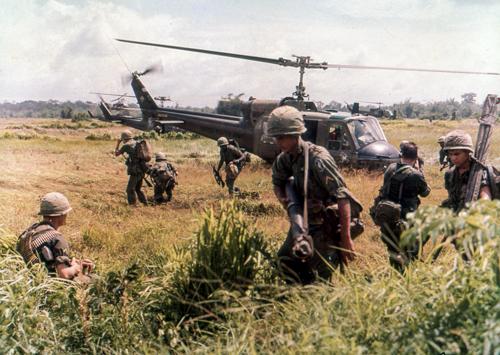
Interview with Loren Baritz
Apr. 25, 1985 Discussing the book "Backfire: A History of How American Culture Lead Us Into Vietnam and Made Us Fight The Way We Did," (published by W. Morrow) with the author Loren Baritz.
-
-
Larry Heinemann discusses his book "Paco's Story"
Nov. 14, 1986 Discussing the novel "Paco's Story" (published by Farrar, Strauss & Giroux) with the author Larry Heinemann.