Listen to New Voices on Studs Terkel our partnership with 826CHI-here! Read the Story


Showing 11 - 16 of 16 results
-

Bruno Bettleheim discusses his book "The Informed Heart: Autonomy in a Mass Age"; part 2
1961 Psychologist, Holocaust survivor and author Bruno Bettelheim discusses his imprisonment in Dachua and how it influenced his view on life with the effect of Freud and Kant’s philosophy. Bettelheim was known as an early adopter on the topic of autism.
-
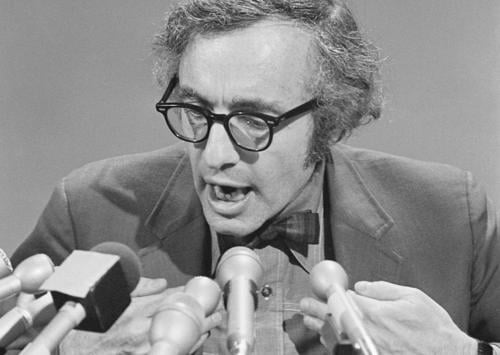
Robert Jay Lifton discusses his book "Living and Dying"
Jan. 6, 1975 With his book, "Living and Dying," Robert Jay Lifton, said the point he wanted to make clear is that individuals have to confront death in order to live well. Lifton also talks about deniers of death and their numbing feelings. Social change with regards to death, explained Lifton, will need to occur.
-

Studs Terkel moderates and comments on a round-table debate about the Montessori educational theory
Nov. 3, 1964 A round-table debate about the Montessori educational theory. Four early childhood development professionals speak of the pros and the cons of the program. Speakers include: Fay Bauling advisor at Wilson Jr. College, Dr. Urban Fleege of DePaul University, Dr. Ner Littner from the Institute of Psychoanalysis, and Hannah MacLaren, head teacher from Ancona School.
-
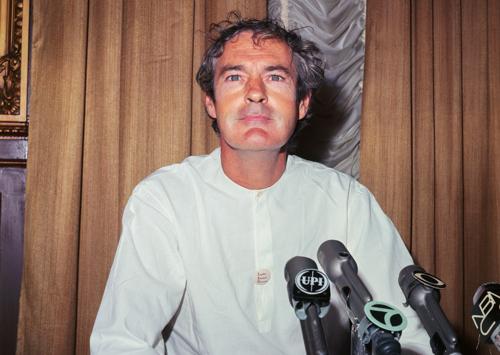
Dr. Timothy Leary discusses the stages of the psychadelic experience of turning on and his role as a Shaman ; part 2
Dec. 1, 1966 Studs interviews Dr. Timothy Leary about the three stages of the psychadelic experience: turning on, tuning in, and dropout. Leary discusses how his life changed from being a successful psychologist and professor at Harvard to renewing his life as a religious teacher. He shares how the drug LSD is used in the tribal communities who turn on and also explains the values of those who practice turning on. Leary also describes other methods used to turn on, which he considers a religious experience. Studs reads what Richard Goldstein said about Dr. Leary.
-
Oliver W. Sacks discusses the book "Seeing Voices: A Journey Into the World of the Deaf"
Feb. 5, 1990 Discussing the book "Seeing Voices: A Journey Into the World of the Deaf" (published by University of California Press) with the author, neurologist Dr. Oliver Sacks. Includes passage from the book.
-
Katherine Dunham discusses her studies in dance anthropology
Sep. 28, 1978 Interviewing Katherine Dunham, anthropologist, choreographer, and dancer. Dunham discusses various subjects including Haitian Vodou, an African diasporic religion, and the importance of cultural dance. Content Warning: This conversation has the presence of outdated, biased, offensive language. Rather than remove this content, we present it in the context of twentieth-century social history to acknowledge and learn from its impact and to inspire awareness and discussion.