Listen to New Voices on Studs Terkel our partnership with 826CHI-here! Read the Story


Showing 231 - 240 of 676 results
-

Ronald Blythe discusses the village of Akenfield ; part 1
1968 Ninety five miles outside of London, Ronald Blythe has interviewed residents of the village of Akenfield for his next book, "Akenfield: A Portrait of an English Village." Blythe said what surprised him most of all was that newspapers and TV didn't have much effect on this little village. Blythe also learned that the village people would take part in political conversations with one another but they'd never let on as to which political party they were apart of.
-
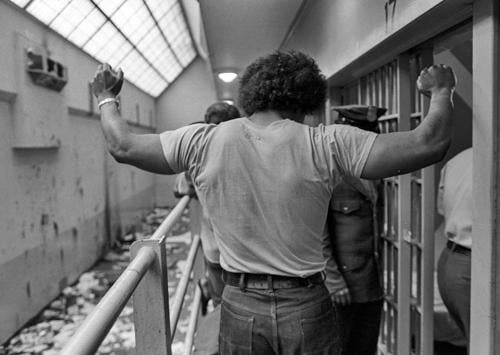
Frank Elli discusses his time as a prisoner and his novel "The Riot"
1968 Begins with a reading by Frank Eli from the opening of the book "The Riot." Mr. Elli discusses his early life, his time in three different prisons, and the writing of his book "The Riot," a personal account of a riot in Walla Walla Prison. (Note: last 5 minutes missing)
-
Studs Terkel discusses literature, Judaism, and the Holocaust with Richard Elman ; part 1
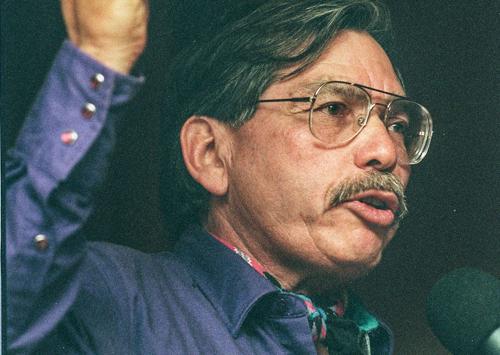
1967 Studs Terkel discusses literature, Judaism, and the Holocaust with the novelist, poet, journalist, and teacher Richard M. Elman (1934-1997). Their discussion revolves around Elman's recently published work of historical fiction, "The 28th Day of Elul", much of which takes place in the village of Clig, Hungary, during the time of the Nazi occupation of Hungary during World War II. Topics include Jewish identity, The Holocaust, persecution of The Jews, feelings of guilt and social prejudice among Holocaust survivors.
-
-
Studs Terkel discusses literature, Judaism, and the Holocaust with Richard Elman ; part 2
1967 Studs Terkel discusses literature, Judaism, and the Holocaust with the novelist, poet, journalist, and teacher Richard M. Elman (1934-1997). Their discussion revolves around Elman's recently published work of historical fiction, "The 28th Day of Elul", much of which takes place in the village of Clig, Hungary, during the time of the Nazi occupation of Hungary during World War II. Topics include Jewish identity, The Holocaust, persecution of The Jews, feelings of guilt and social prejudice among Holocaust survivors.
-
-
Sylvia Kronstadt in conversation with Studs Terkel
Dec. 9, 1975 Interviewing writer and editor Sylvia Kronstadt.
-
Jonathan Kwitny in conversation with Studs Terkel
Sep. 1, 1987 Discussing the book "The Crimes of Patriots: A True Tale of Dope, Dirty Money, and the CIA" (published by Norton) with the author, investigative journalist Jonathan Kwitny.
-
Madeleine L'Engle discusses her book "A Wrinkle in Time"
Jun. 8, 1990 Author Madeleine L’Engle discusses her book “A Wrinkle in Time”, a young adult novel that wrestles with spirituality, science fiction, and fantasy. L’Engle discusses how difficult it was for publishers to see her writing as young-adult, as she was often told adolescence would not be able to handle these challenging topics. This program includes an excerpt of a 1961 interview with Madeleine L’Engle in which she discusses the difference between fact and fiction, or lack thereof, in children’s literature.
-
Madeleine L'Engle and Elizabeth M. Riley discuss children's books
Jul. 17, 1963 Newberry Award winner Madeleine L'Engle did not set out to write good literature when she wrote "A Wrinkle in Time". Children's book publisher Elizabeth M. Riley also said of L'Engle's book, it's a good story for both children and adults. L'Engle shared her experience that when she writes, often times, she'll read what she's written to her children & if they say, "get back to the typewriter and write more," she knows she's onto something good.