Listen to New Voices on Studs Terkel our partnership with 826CHI-here! Read the Story


Showing 1 - 10 of 31 results
-

Young men talk with Fred Christy; Earl talks with Studs Terkel ; speech and singing at a meeting
1968 Studs Terkel interviews Fred Christy about how he hopes to change the young lives of African-American. He also travels with Fred to places of African-American community.
-
Psychiatrists discuss families and mental health
May. 20, 1968 Three psychiatrists discuss mental health in urban and rural areas and a documentary that points out emerging issues.
-
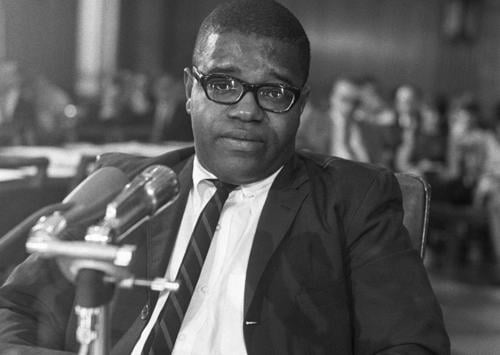
Claude Brown talks with Studs Terkel
Sep. 13, 1965 Discussing the book "Manchild in the Promised Land" with Claude Brown. Brown also discusses growing up in Harlem, New York as an African American man. Includes a clip of a man speaking from the county jail. Includes a song sung by Mahalia Jackson. Includes a clip of children singing.
-
Studs Presents Joy Street II: Portrait of an Outsider as a Young Man ; part 1
1965 In part two of the six part series Joy Street, Studs focuses on the life of one particular young man. Eighteen year old Jimmy shares with Studs his daily routine, his triumphs and tragedies, and what he would hope to accomplish during his life, if he ever gets that chance.
-
Interviewing students at Metro High School on the Near North Side of Chicago
1970 Metro High School on the Near North Side of Chicago is only one of three high schools in the country that operates without walls and uses the resources of the city for learning. Four students convey how marine biology is taught at the Shed Aquarium, radio production at WIMD, TV production at Dick Barnett studio WMAQ, drafting at architectural firms and blue collar jobs at factories.
-
Fred Christy and Frank Carney discuss life in Chicago ; part 1
1968 Fred Christy and Frank Carney discuss life, family, youth, and demographics in Chicago. Includes Studs Terkel interviewing a group of teenagers who call themselves the D.J.'s. about their life and ambitions.
-
Gladys Joyce Adams and Yvonne Hammond discuss female youth in Chicago ; part 2
1968 The D. J.'s, a group of teenagers, discuss their lives, interests, and ambitions. Gladys Joyce Adams and Yvonne Hammond discuss the female youth and youth groups in Chicago. Joyce and Hammond discuss the girl's club the Divine Ladies and other girl's clubs. Christy and Frank Carney in "West Side" (part 3).
-
Sergeant Garland Davis discusses his profession ; part 2
Even though his life was threatened, when a young man told him his goal in life was to see Davis dead, Sergeant Garland Davis, continues to work in the youth crime division, in the hopes by be-friending the young people, they will do something positive with their lives. Davis also adds that the parents of these young people, along with the communities in which they live, play parts in the youths' behavior.
-
Sergeant Garland Davis discusses his profession ; part 1
An officer with the Chicago department, Sergeant Garland Davis, talks about his presence in the community, in hoping that some of the young people he works with see him as a friend and not solely as a cop. Davis also talks about the priority being helping the youth before their lives take a wrong turn into a life of crime.
-
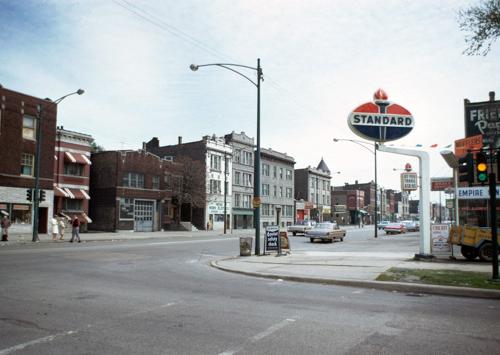
Judy Hough, Lily (Rose Rigsby) Lowell and Jimmy White talk with Studs Terkel Part 1
1968 Discussion of Division Street: America