Listen to New Voices on Studs Terkel our partnership with 826CHI-here! Read the Story


Showing 31 - 40 of 40 results
-
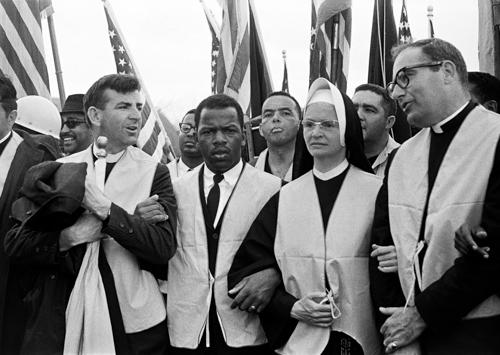
John A. McDermott and Sister Mary Peter discuss Catholic Church's Participation in Civil Rights Movement
Sep. 15, 1965 John A. McDermott and Sister Mary Peters discuss Catholic Church's Participation in Civil Rights Movement. Includes interview with unknown Catholic man opposed to nuns' and priests' involvement. Includes song "It Isn't Nice" by Judy Collins.
-

Rev. George Morey and Jim Lee Osborne discuss life in the Appalachas compared to life in Chicago; part 1
Jul. 29, 1966 Interview with Rev. George Morey and Jim Lee Osborne. They discuss southern country living and compare it to urban life and stereotypes. Studs reads a short excerpt from an article written by Mike Royko, columnist from the Chicago Tribune, who also interviewed Jim Lee Osborne. Also includes a short excerpt from an interview with Billy Jo Gatewood, another Appalachian transplant to Chicago.
-
Lily (Rose Rigsby) Lowell and two men from St. Timothy's talk with Studs Terkel
1966 Discussion of Division Street: America [Continuation of interview at the end of 1925659-3-1]
-
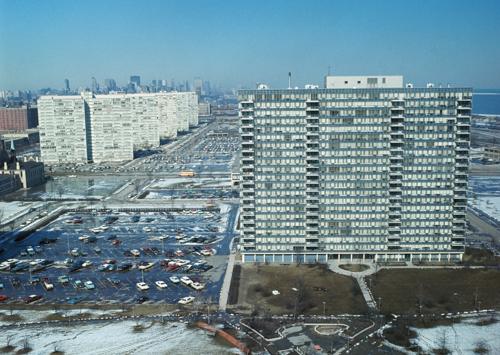
Interviewing Elizabeth Wood ; part 1
Feb. 6, 1964 Wood, the first (ca. 1950s) Executive Secretary of the Chicago Housing Authority, about her experiences as a social worker in the United States and at international programs funded by the Ford Foundation, and about public housing.
-
Florence Scala and Studs Terkel on the site of Hull House as it is dismantled ; part 1
Jul. 9, 1963 Florence Scala gives Studs Terkel a guided tour of the area around Hull House. Terkel talks to people in the neighborhood. Mr. Briata spoke of how he would go to Hull House once a week to take a bath. Mrs. Picardi liked the area because it had good schools for her kids. Together they visit Scala's favorite butcher, who will have to relocate his business after 40 years.
-
Florence Scala and Studs Terkel on the site of Hull House as it is dismantled ; part 2
Jul. 9, 1963 The tour continues on Maxell and Halsted Streets. Anita is sad to be leaving a place where she was born & raised. Mrs. Belmont said the mayor promised housing but they're currently living in a hotel. A 17-year resident of Hull House, Mrs. Morales says there will never be another place like it. The general feeling from everyone was that of sadness in having to leave their homes and businesses.
-
Allan Evans and Henry Jordan discuss "The Foundation Years" ; part 1
1970 Allan Evans and Henry Jordan, two young man who grew up in Chicago and attended Dartmouth, discuss their childhoods and adolescent dealing with crime. The two also talk about their gang, The Vice Lords, and the police brutality they experienced. Next, the group talks about the The Foundation Years, a project from Dartmouth.
-
Allan Evans and Henry Jordan discuss The Foundation Years ; part 2
1970 Allan Evans and Henry Jordan, two young man who grew up in Chicago and attended Dartmouth, discuss The Foundation Years project. They talk about trying to recruit friends to Dartmouth, their campus experiences, and their coursework. They also talk about their experiences going through the public school system in Chicago, where they point out many of the inequalities for black students.
-
Interviewing Peggy Terry and Roger Phillips
Jul. 13, 1976 Content Warning: This conversation includes racially and/or culturally derogatory language and/or negative depictions of Black and Indigenous people of color, women, and LGBTQI+ individuals. Rather than remove this content, we present it in the context of twentieth-century social history to acknowledge and learn from its impact and to inspire awareness and discussion. Terry is an organizer of poor Southern whites in Chicago's Uptown neighborhood
-
Interviewing St. Clair Drake, author of "Black Metropolis: A Study of Negro Life in a Northern City."
May. 10, 1976 A discussion with sociologist and anthropologist St. Clair Drake at the time of his receiving an honorary award from Roosevelt University on the themes of his convocation address. A fascinating deep-dive into race relations from the Revolution to the Bicentennial, touching on the contradictions, crises, and struggles that led to Black institutions and liberation. Studs plays several excerpts from previous programs with St.