Listen to New Voices on Studs Terkel our partnership with 826CHI-here! Read the Story


Showing 11 - 20 of 23 results
-

George Drossos, The Thacker Family, Mrs. Webb and Benny Bearskin discuss living in Chicago
1968 The third program of "Division Street: America" features four profiles: George Drossos, an elderly, Greek man, the Thacker family who recently moved to Chicago, Mrs. Webb, a corner store owner and Native American Benny Bearskin. George Drossos talks about first moving to Chicago and getting acclimated to the city. He recalls visiting other states for a month and then having that feeling of "nostos," or wanting to return home to Chicago. A mother of 15 children and 21 grandchildren, Mrs. Thacker said she doesn't like all the hoodlum business that goes on in Chicago.
-
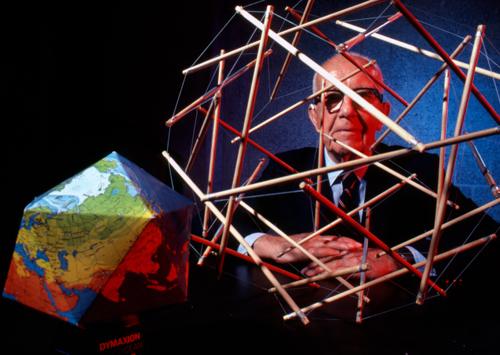
R. Buckminster (Richard ) Fuller talks with Studs Terkel
Jan. 20, 1965 A sprawling conversation with R. Buckminster Fuller including his great aunt Margaret Fuller, future communication, the nature of work, human nature, and physics.
-
Dr. Edward Twitchell Hall discusses urban life
Jan. 23, 1970 High rise buildings being built because of growing populations are detrimental to our environment, explains Dr. Edward Twitchell Hall. Problems include the lack of oxygen and the lack of greenery said Hall. The number of automobiles on the road and the large size of the cars is also problematic,
-
Hans W. Mattick and Father Robert Taylor discuss the scandal at Cook County Jail
1968 Content Warning: This conversation includes racially and/or culturally derogatory language and/or negative depictions of Black and Indigenous people of color, women, and LGBTQI+ individuals. Rather than remove this content, we present it in the context of twentieth-century social history to acknowledge and learn from its impact and to inspire awareness and discussion. Former Assistant Warden of the Cook County Jail, Hans W.
-
Rev. George Morey and Jim Lee Osborne discuss life in the Appalachas compared to life in Chicago; part 1
Jul. 29, 1966 Interview with Rev. George Morey and Jim Lee Osborne. They discuss southern country living and compare it to urban life and stereotypes. Studs reads a short excerpt from an article written by Mike Royko, columnist from the Chicago Tribune, who also interviewed Jim Lee Osborne. Also includes a short excerpt from an interview with Billy Jo Gatewood, another Appalachian transplant to Chicago.
-
Horace Cayton discusses is book "Long Old Road" ; part 3
Sep. 7, 1966 Content Warning: This conversation includes racially and/or culturally derogatory language and/or negative depictions of Black and Indigenous people of color, women, and LGBTQI+ individuals. Rather than remove this content, we present it in the context of twentieth-century social history to acknowledge and learn from its impact and to inspire awareness and discussion.
-
Frederick Wiseman discusses public welfare
Feb. 20, 1976 Discussing public welfare and interviewing Frederick Wiseman, director of the documentary film, "Welfare."
-
-
Interview with Raleigh Campbell, Nan Hardin and Johanna Saylor ; part 2
1964 Interviewing Raleigh Campbell of the Council of Southern Mountains, also Nan Hardin and Johanna Saylor: "Appalachian in Chicago"
-
Interview with Raleigh Campbell, Nan Hardin and Johanna Saylor ; part 1
1964 Interviewing Raleigh Campbell of the Council of Southern Mountains, also Nan Hardin and Johanna Saylor: "Appalachian in Chicago"