Listen to New Voices on Studs Terkel our partnership with 826CHI-here! Read the Story


Showing 61 - 70 of 230 results
-

Interviewing ex-convict turned probation officer, writer and lecturer Albert Race Sample
Dec. 4, 1984 Discussing the book "Race Hoss: Big Emma's Boy" with the author Albert Race Sample. Includes Sample reading a section of the book.Content Warning: This conversation has the presence of outdated, biased, or offensive language. Rather than remove this content, we present it in the context of twentieth-century social history to acknowledge and learn from its impact and to inspire awareness and discussion.*Please note: some sections have been edited out from the original recording due to copyright considerations
-
Herman Badillo discusses "A Bill of No Rights: Attica and the American Prison System"
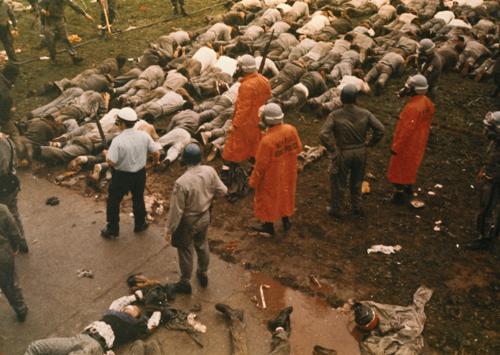
Jun. 26, 1972 Congressman Herman Badillo discusses the prisoner uprising at Attica Correctional Facility in upstate New York, and how race played a role in the unwarranted killing of inmates and the subsequent government and administrative cover up of the incident. Badillo reads excerpts from his book, "A Bill of No Rights: Attica and the American Prison System," and discusses prisoner rights, rehabilitation, and the endemic injustice and racism in the American prison system.
-
Jimmy Breslin discusses his book “The Gang That Couldn't Shoot Straight” ; part 1
Jimmy Breslin discusses and reads excerpts from “The Gang That Couldn't Shoot Straight,” his novel about a Brooklyn Mafia boss. Content Warning: This conversation has the presence of outdated, biased, offensive language. Rather than remove this content, we present it in the context of twentieth-century social history to acknowledge and learn from its impact and to inspire awareness and discussion.
-
Jimmy Breslin discusses his book “The Gang That Couldn't Shoot Straight” ; part 2
Jimmy Breslin discusses and reads excerpts from “The Gang That Couldn't Shoot Straight,” his novel about a Brooklyn Mafia boss.
-
Patricia Bosworth discusses her book “Anything Your Little Heart Desires: A Portrait of an American Family”
Jun. 24, 1997 Author and actor Patricia Bosworth discusses her book “Anything your Little Heart Desires,” which details her upbringing and her father’s life as a lawyer.
-
Sergeant Garland Davis discusses his profession ; part 2
Even though his life was threatened, when a young man told him his goal in life was to see Davis dead, Sergeant Garland Davis, continues to work in the youth crime division, in the hopes by be-friending the young people, they will do something positive with their lives. Davis also adds that the parents of these young people, along with the communities in which they live, play parts in the youths' behavior.
-
Sergeant Garland Davis discusses his profession ; part 1
An officer with the Chicago department, Sergeant Garland Davis, talks about his presence in the community, in hoping that some of the young people he works with see him as a friend and not solely as a cop. Davis also talks about the priority being helping the youth before their lives take a wrong turn into a life of crime.
-
Frank Donner discusses the article he wrote "Theory and Practice of American Political Intelligence" ; part 1
Surveillance, informants, and provocateurs are some of topics covered by Frank Donner with his article, "Theory and Practice of American Political Intelligence". Donner explained that intelligence practices exist so that everyone has something to fear.
-
Frank Donner discusses the article he wrote "Theory and Practice of American Political Intelligence" ; part 2
In his article, "Theory and Practice of American Political Intelligence," Frank Donner brings up the poisonous effect of surveillance on people's invasion of privacy. Donner explained people adjust their lives to it. Donner's last reflection is for people to not just be frightened by surveillance but rather to do something about it like study how much money is spent on surveillance and who is accountable.
-
Theon Wright discusses his book "Rape in Paradise"
Nov. 2, 1966 Discussing the book "Rape in Hawaii" and interviewing the author Theon Wright.